




Gwee told The Edge Singapore that her foray into TikTok livestreaming was accidental. She had shuttered her café due to health crises in her family and decided to give TikTok a try in late 2024 after a mentor recommended the platform to her.
“My first time going live, I was so nervous I couldn’t even last five minutes!” Gwee says. “I was incredibly shy. I actually used an avatar for my very first session to hide my face.”
Gwee came up with an unorthodox approach to overcome her stage fright: doing her initial livestreams in the wee hours. “I told myself no one was watching, which helped me find my voice.”
Eventually, she decided to take her livestreaming skills to the next level by joining the TikTok Live Host Academy in April 2025. She credits the academy for training her to operate the app effectively and matching her with different brands to kickstart her career as a content creator.
See also: When billions watch, every impression counts
“My manager there was truly my guiren (Mandarin term for ‘mentor’). She held my hand from day one, even attending my first physical merchant stream with me,” Gwee says.
To be sure, going from the F&B business to livestreaming was not without its risks. Gwee says she incurred a significant pay drop at the start because her income was no longer as stable. It took some time and consistent effort for her to make things work. “As I gained experience and built a stronger track record, I secured more merchant partnerships. My income has become much more stable,” Gwee says.
Today, Gwee draws a mid-four-figure salary working 80–100 hours a month as a TikTok content creator. “While I started on a purely commission-based model, I now command a mix of fixed rates and commissions from merchants.”
See also: Restoring trust and human authenticity in a synthetic internet
Livestream boom has endured post-Covid
Fledgling content creators like Gwee have become a crucial part of TikTok’s strategy to dominate the livestreaming space against rivals like Meta’s Facebook and Instagram. Besides providing training to aspiring sellers, TikTok says it will give trainees a $1,000 bonus if they complete 12 streams on a seller account within a month.
Livestreaming’s popularity skyrocketed during the Covid-19 pandemic, when restless consumers turned to social media to scratch their shopping itch. China, in particular, saw social commerce become a critical channel for companies hoping to move sales.
According to a McKinsey report from July 2021, China’s social commerce market grew by a compound annual growth rate of more than 280% between 2017 and 2020. This meant that the gross merchandise value of China’s social commerce market leapt from a paltry $3 billion in 2017 to an estimated $171 billion by 2020.
Livestreaming’s rise, however, was not inexorable. The past few years have seen it running into some speed bumps. For one, the gradual reopening of bricks-and-mortar stores as the pandemic eased suggested that brands would soon turn back to traditional marketing channels to hawk their wares.
That was in addition to the regulatory action that was brewing in countries such as China. The gold rush toward livestreaming had drawn the ire of Chinese regulators. In July 2024, the Office of the Central Cyberspace Affairs Commission issued a statement saying it would clamp down on fake and inappropriate content appearing on livestreams.
Chinese regulators were targeting content creators who masqueraded as finance or healthcare experts to sell related products. The regulators also set their sights on those engaging in blatant fraud, such as by selling counterfeit goods or inflating their viewership data.
To stay ahead of Singapore and the region’s corporate and economic trends, click here for Latest Section
These developments did not really hobble the growth of livestreaming platforms like TikTok. Engagement on such platforms has only grown in the years since the pandemic, as consumers see them as a credible alternative to traditional retail channels.
“During the pandemic, people had to turn to online platforms for consumption and TikTok emerged as a leading platform for live-selling as it combined entertainment with consumption,” says Natalie Pang, an associate professor and the head of the National University of Singapore (NUS)’s communications and new media department.
“People ‘discovered’ products while being entertained. These habits did not go away post-pandemic,” adds Pang.
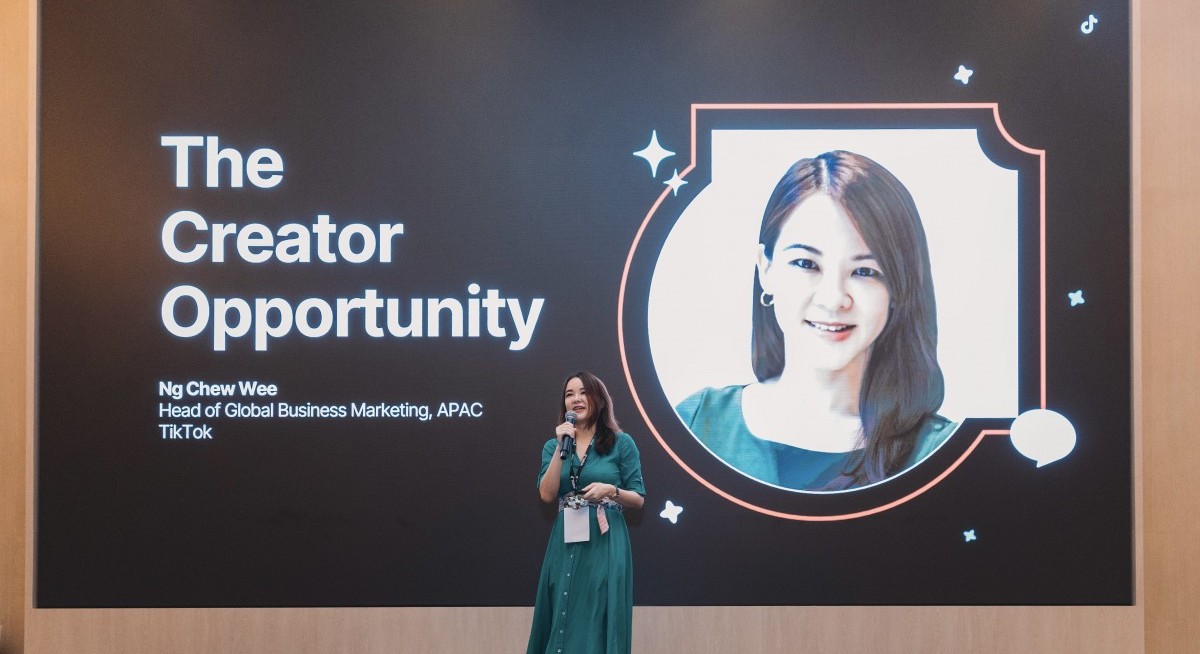
Notably, it is Southeast Asia, and not China or the West, that has become a bellwether for social commerce. “We are leading the way in social commerce globally. Whether it’s the US or Europe, they look to Southeast Asia for some of the best practices in social commerce,” says Ng Chew Wee, TikTok’s head of global business marketing for Asia Pacific.
The unexpected popularity of social commerce in Southeast Asia even altered TikTok’s product launch plans. TikTok Shop was first launched in Indonesia and the UK, but the company eventually rolled out the service to a wider release in Southeast Asia first.
“Many tech platforms don’t typically launch such a big product in Southeast Asia first, but because of the success of the initial launch in Indonesia, the rest of Southeast Asia got TikTok Shop earlier than other markets,” Ng says.
Social commerce’s popularity in the region should not come as a surprise, says Pang. She believes the “relational and conversational nature” of live-selling makes it a good fit for consumers in Southeast Asia.
Brian Lee, an associate professor and the head of the Singapore University of Social Sciences’ (SUSS) communications programme, shares Pang’s view. “The format aligns almost perfectly with the region’s social and cultural nature — trust-based, visual and communal,” Lee says, adding that Indonesian livestreamers have the added advantage of being able to tap their local community.
“Livestreams in local languages (including Javanese and Sundanese) build deep, hyper-local trust. The sense of gotong royong (Indonesian term for ‘mutual cooperation’) translates into viewers supporting their favourite local sellers as part of their community duty.”
Content creation is entrepreneurship
Content creators and live sellers that The Edge Singapore spoke to say that livestreaming is not just a casual side hustle. Doing well in it entails putting in a lot of time and effort to hone one’s craft.
Dave Peter Ho has over 10,000 followers on TikTok. Ho graduated from university in December 2024 and started livestreaming on the platform in April 2025, when he could not land a full-time job. It wasn’t expensive to get started, says Ho, whose biggest investment was a good microphone, which cost about $100.
“Over time, I have learned that it’s not just about streaming for the longest number of hours, but about becoming more efficient,” Ho says. “As a creator, my goal is to refine my approach so that I can achieve a certain level of sales within a shorter period of time. That means improving how I present products, understanding what my audience responds to, and planning my streams more strategically.”
Caitanya Tan, an actress and presenter with over 253,000 followers on TikTok, concurs. Tan says most of her videos are produced on her phone, relying on good natural lighting.
“Over time, I added tools where they made sense, like better audio or editing support,” Tan says. “But I think people, clients especially, overestimate equipment and underestimate clarity. A clear idea will outperform an expensive setup almost every time.”
Gwee, on the other hand, believes in the power of consistency. There is no better way to refine one’s streaming technique than by doing more livestreams.
In fact, Gwee is so passionate about her craft that she even watches replays of her past streams and her peers’ to see where she can improve. “I enjoy watching them to pick up best practices and stay inspired.”
Learning from his peers is something that Ho does as well. Instead of watching their livestreams, Ho says he prefers to speak to them directly to exchange tips. “We share experiences, challenges and best practices, which have been very helpful in helping me grow and stay relevant in this field,” he adds.
Tan says coming up with good content involved a change in mindset. Despite having experience performing on stage and hosting, Tan says she needed to adjust her style when she is creating content for her followers.
“On stage, you project,” Tan says. “On TikTok, you are talking to one person who might be watching alone in their room. The shift was from performing for people to speaking to them. Once that clicked, everything changed.”
Live-selling takes real effort and risk
People should not assume live selling is an “easy” job that involves just talking to the camera. The long hours needed to build and sustain a following mean there’s a real risk of burnout for content creators who do not pace themselves.
“Maintaining my own account’s traffic can be stressful, especially when I have spent so much time streaming on merchant accounts,” Gwee says. “At one point, I felt extreme burnout from streaming every day with low sales. I felt like giving up. I realised I needed to slow down to walk a longer distance.”
“I adjusted my routine to include things I love: my volunteering work, Pilates and yoga. Once my well-being improved, my energy during streams returned. You have to take care of yourself to take care of your business.”
That’s on top of the volatile nature of a content creator’s income, which can go through peaks and troughs depending on their luck.
“There’s a lot of uncertainty in this line of work, as it comes in waves,” says Ho. “During peak seasons or strong campaign periods, it’s possible to reach five-figure monthly earnings. However, during lulls, income can drop significantly, sometimes even to zero. It’s not a fixed or stable salary.”
This makes financial planning particularly important for those who want to rely on content creation as their primary source of income.
“Being self-employed means I don’t receive employer CPF (Central Provident Fund) contributions, paid leave or medical benefits, so it requires a lot more financial discipline and planning,” Ho says, pointing to the gap in contributions that he receives as part of Singapore’s state-run pension system as compared to a salaried employee.
To save for his retirement, Ho sets aside some savings and makes monthly CPF contributions regardless of his performance. Instead of whiling away his time during lulls, Ho uses quieter periods to refine his product assortment and content strategy.
“Given the volatility of this line of work, I’ve always kept the option of returning to a corporate role in mind. With the way things have been this year, I might explore getting into a corporate role,” Ho says.
NUS’s Pang and SUSS’s Lee believe that the low barriers to entry in livestreaming mean it is unlikely that a small group of content creators will dominate platforms like TikTok. That’s good news for new entrants like Ho and Gwee, who only started streaming last year.
“While it is quite likely that there will be a few ‘stars’ that are popular and dominate attention, we should also be mindful that platforms such as TikTok have generally low barriers to entry, so there will always be new content creators and live sellers that emerge,” Pang says.
According to Lee, platforms are gradually morphing into a “tiered ecosystem” with two types of content creators — the top 1% who can land premium brand deals and micro-livestreamers whose followings may be smaller but are far more loyal to the niche the live seller specialises in.
“For example, a streamer specialising only in strictly halal make-up products for sensitive skin in Indonesia may have a loyalty that no generalist star can replicate,” Lee says.
Furthermore, it is in the interest of platform owners to avoid a “winner takes all” scenario in which some creators capture the lion’s share of viewership on the platform. “While short-term consumer utility may benefit from concentrated viewership, long-term content diversity and overall social welfare are adversely impacted,” Lee says.
“Platforms would recognise this tension. The policy interventions — adjusting traffic allocation algorithms — can rebalance viewer distribution after all.”
Going beyond the lockdown boom
It has been nearly five years since countries eased their nationwide lockdowns due to Covid-19 and physical retail has made a comeback. That performance is likely to hold despite ongoing geopolitical uncertainties such as the war in Iran, say HSBC analysts Joy Wang, Rayson Khoo and Gokulapriyan V in a March 11 report.
“Heightened macro uncertainties are likely to weigh on leasing sentiment, further extending already elongated decision cycles for business space, particularly in office,” HSBC’s analysts write. “Retail, by contrast, offers a more defensive proposition driven by domestic consumption.”
According to the report, REITs such as CapitaLand International Commercial Trust (target price: $2.70), Frasers Centrepoint Trust (target price: $2.65), Mapletree Pan Asia Commercial Trust (target price: $1.45) and Suntec REIT (target price: $1.45) are seeing near 100% occupancy rates for their retail properties as at end-December 2025.


That said, content creators believe that livestreaming is here to stay.
“Livestreaming has definitely evolved a lot since the Covid period,” says Ho. “However, I think livestreaming has matured rather than declined. Buyers are now more familiar with the format and may realise that livestream prices can often be more competitive compared to physical retail stores.”
While Ho concedes that the field has become much more competitive now that more creators and sellers compete for attention, creators can stay ahead by differentiating themselves from the herd and building up trust with their audiences.
User attention has become more fragmented in a post-Covid world, adds Tan. With people heading back to the office and catching up with friends in person, livestreaming just does not command the same attention as it did when they were cooped up at home.
“People are outside, living their lives again. But that also means low-quality content gets filtered out faster. So if anything, the bar has been raised,” Tan says, adding that she does not measure her performance solely on views.
“If you’re only looking at views, it will always feel stressful. I pay more attention to the quality of engagement. Are people thinking? Are they responding? Are they coming back? Virality is unpredictable. But resonance is something you can build.”
In fact, the changing nature of consumer behaviour could result in live selling and content creation becoming part of the discovery and conversion process for brands seeking to reach customers.
“In my view, livestreaming today complements offline retail rather than replacing it,” Ho says. “Some people may still visit stores to see products physically, but they may choose to purchase through livestreams if they find better deals or trust a creator’s recommendation.”
Gwee believes customers now see brick-and-mortar stores as a “showcase” to engage with products. Most sales are made online through live sellers like herself. “Many people still hesitate to buy when they are physically in a shop, but after seeing us demonstrate the product repeatedly on TikTok, they feel confident enough to click buy.”
“I started shopping online during the pandemic and I haven’t stopped,” she says. “The habit is here to stay.”




