


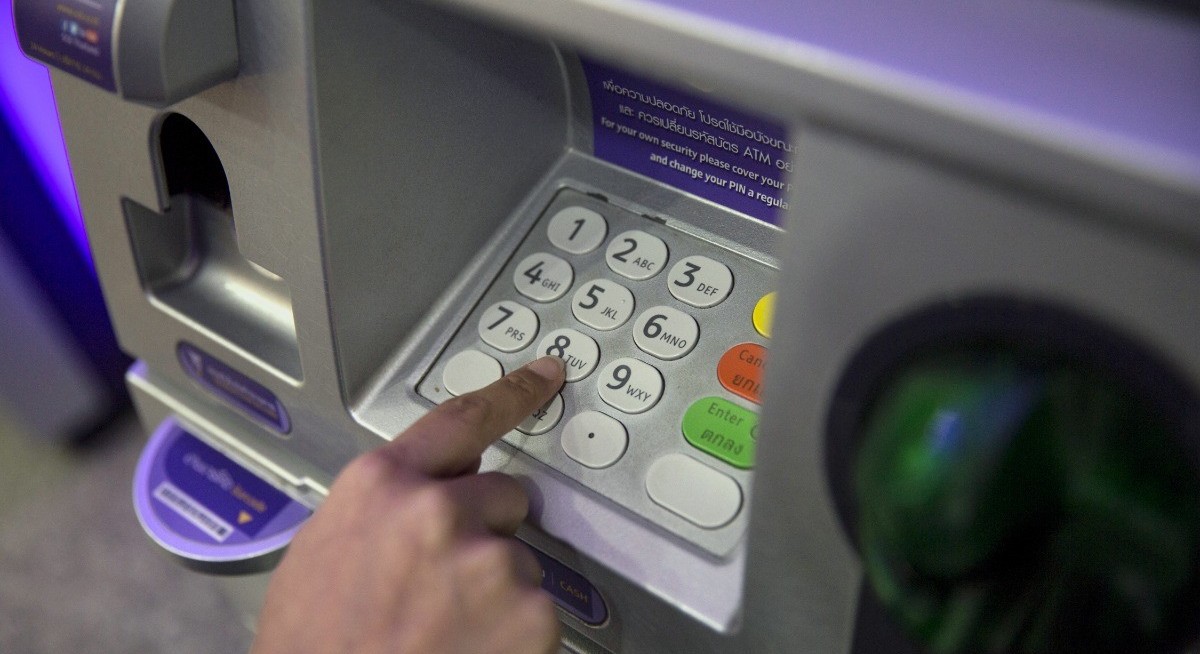


(Jan 28): Thailand’s central bank is tightening controls on large cash withdrawals after flagging two unusual transactions of more than US$6 million apiece, days ahead of national elections on Feb 8.
“We found a 250 million baht withdrawal — who needs 250 million baht in cash?” Bank of Thailand governor Vitai Ratanakorn said at an economic seminar on Wednesday. “We also found another 200 million baht withdrawal made entirely in 100-baht banknotes. This is the moment the central bank has to act because this kind of activity undermines the economy.”
The combined withdrawals are worth almost US$15 million and come as the Election Commission examines allegations of vote-buying. A survey has found more than a quarter of prospective voters would back candidates who offer cash, the Bangkok Post reported separately.
The Bank of Thailand plans to roll out new rules within the next two to three months to tighten oversight of large cash movements. Banks would be required to carry out enhanced due diligence and report withdrawals above a threshold likely to be set at three million to five million baht, Vitai said, declining to speculate on whether the recent cash withdrawals were election-related.
The measures are part of a broader push by the central bank to move beyond traditional monetary policy and address structural problems, particularly money flows linked to the underground economy that weigh on long-term growth. Authorities are also tightening oversight of baht-denominated gold trading to curb so-called gray money and ease pressure from the currency’s rally.
“No one needs three million to five million baht in cash to buy something,” Vitai said. “If you’re buying land or assets, it can be done through transfers or cheques.”
See also: Yen carry trade a ‘ticking time bomb’, warns BCA Research
Encouraging electronic transactions would make money flows easier to track and reduce illicit activity, he added. “If transactions move through the banking system, the grey-money problem becomes much easier to manage.”
Vitai, who became governor just under four months ago, said the central bank has long had the legal authority to monitor large money movements but has rarely exercised it. “We’ve had this power for decades, but we haven’t used it,” he said. “If we don’t act, no one else will.”
Gold trading
See also: Alphabet taps sterling, Swiss franc markets in mega debt deal
Separately, the central bank has imposed a 50 million baht daily cap on online gold trading starting in early March. The limit will apply only to new trades, not to gold already held by investors, and the threshold could be lowered once policymakers review the data, Vitai said.
Thailand has also introduced new reporting rules effective Jan 26, requiring major domestic gold traders to report transactions exceeding 20 million baht.
“Rising gold prices create immediate pressure on the baht,” he said. “I hope these measures reduce dollar selling and help stabilise the currency.”
The baht has gained nearly 10% over the past year, making it the second-best performer among Asian currencies tracked by Bloomberg. Its strength — amplified by dollar-selling linked to gold trading — has weighed on exports and tourism, adding to economic headwinds.
Vitai said the central bank has intervened aggressively to curb volatility, while complying with international rules.
“We’ve acted at full capacity to manage the baht, without crossing the line into currency manipulation,” he said.
Uploaded by Felyx Teoh




