


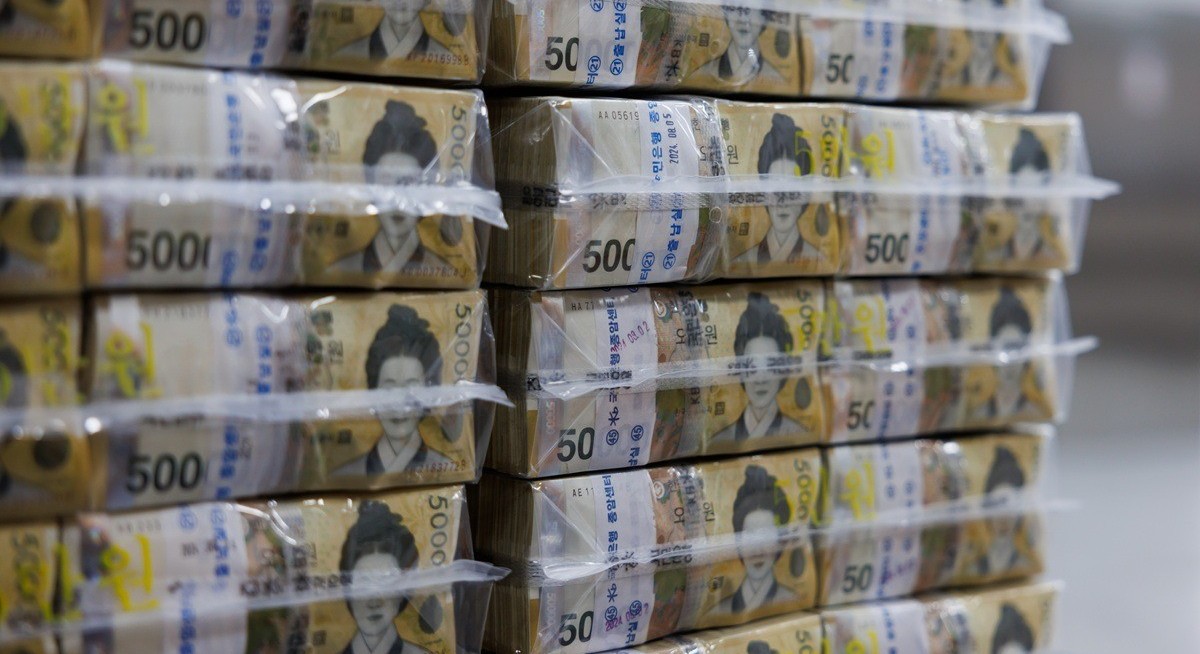


(Dec 16): South Korea’s state-run pension fund is set to take a larger role in ensuring currency stability as the nation battles weakness in the won.
The National Pension Service (NPS) will be more flexible in its hedging, its management committee said on Monday, without elaborating. The fund also extended the duration of its US$65 billion ($83.88 billion) foreign-exchange swap agreement with the Bank of Korea for another year until end-2026.
South Korea is seeking to shore up the won after persistent stock outflows and overseas investment sent the currency tumbling 8% in the second half of this year. The NPS, the nation’s largest institutional investor with about US$542 billion of foreign assets, has often helped counter pressure on the won through hedging and foreign-exchange operations.
“Because NPS trades in such large sizes, its market impact is significant,” said Minhyeok Lee, an economist at Kookmin Bank in Seoul. “These measures can ease the recent imbalance in onshore supply and demand of foreign currency.”

A more flexible hedging policy gives National Pension greater leeway to support the won. At present, it caps its combined strategic and tactical hedging ratio at about 15% of its global assets, and executes this through various methods including selling dollar forwards.
See also: Xi faces calls for stronger yuan in rare public currency debate
Strategic hedging
In particular, for the strategic FX hedging framework for which NPS has now signalled a more flexible approach, the fund is obligated to hedge up to 10% of its foreign-currency assets if the exchange rate reaches a level that deviates significantly from its long-term average over more than 20 years, Bloomberg reported in December last year.
Meanwhile, the swap arrangement allows National Pension to source its dollar requirements directly from the central bank, helping reduce demand for the US currency in the FX spot market.
See also: Yen outperforms G-10 peers on growing BOJ rate hike bets
The NPS this month has restarted selling dollars to support the won. The won fell 0.3% to about 1,472 per dollar on Tuesday. It is trading close to its weakest level since 2009.
Hedging level
The new hedging approach is expected to trigger dollar sales at around 1,470 to 1,475 won, according to Citigroup Inc.
“FX market stabilisation measures need to address two trade-off conditions: how to maximise the signalling effects while keeping the triggering conditions broad and flexible, and how to balance the explicit cost of FX hedging with its potential benefits,” Jin-Wook Kim, Citi economist in Seoul, wrote in a note.
Gyeong-Won Min, an economist at Woori Bank, said the flexible approach could be meaningful if it implies more leeway around the current 10% cap on strategic FX hedging. The hedging ratio would need to be managed more dynamically to have a larger influence on the market, he said.
Uploaded by Liza Shireen Koshy




