


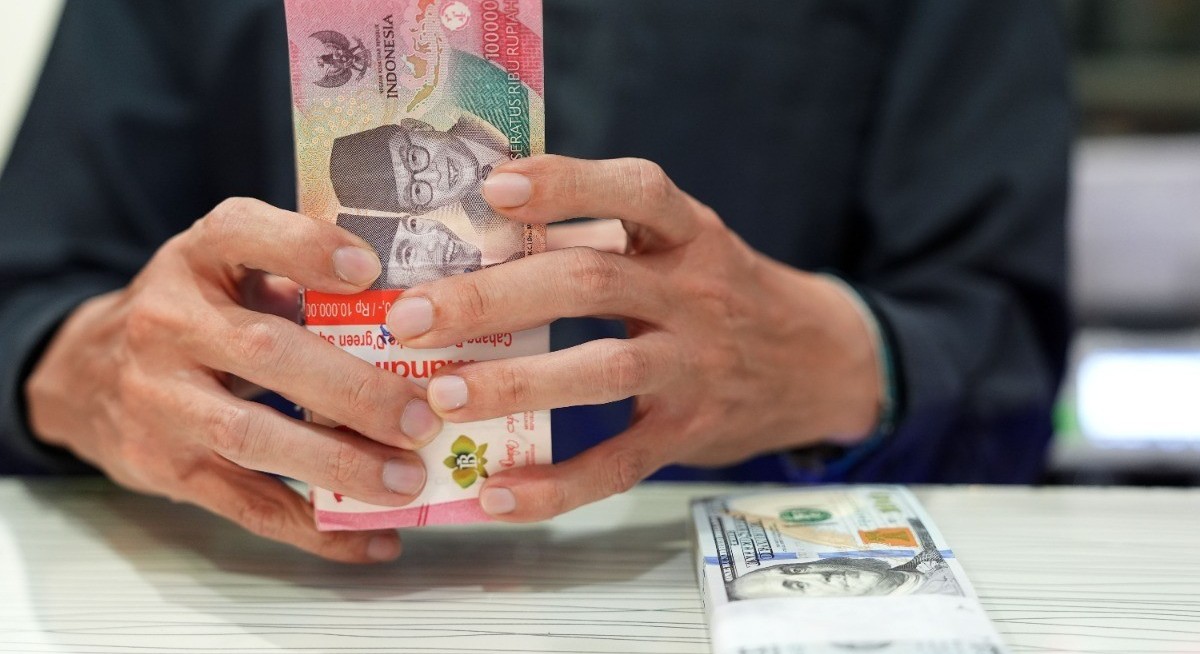


(June 10): The surprise hike in Indonesia’s interest rates on Tuesday helped the rupiah rebound from a record low, but analysts say it likely won’t restore long-term investor confidence in President Prabowo Subianto’s management of the economy.
Investors want clarity around Prabowo’s fiscal plans and measures to make Indonesia’s markets attractive, according to Citigroup Inc and Australia & New Zealand Banking Group Ltd. The lack of confidence means even Bank Indonesia’s back-to-back rate increases of 75 basis points in recent weeks don’t go far enough to make its bonds rewarding to foreign investors, Robeco Group said.
“For sentiment to improve sustainably, greater policy clarity and reassurance for investors will be needed,” said Krystal Tan, an economist at ANZ in Singapore. The rupiah’s recent weakness “reflects both heightened global volatility and ongoing investor concerns around policy consistency, fiscal sustainability and governance,” she said.
Indonesia’s policymakers have stepped up efforts to reassure investors over the past week as its currency fell to a series of record lows. Global funds have been selling the nation’s bonds and stocks on concerns over how Prabowo plans to take greater control of the country’s resources and revenues and spend that on massive public programmes. The nation’s 10-year bond yields may need to rise as high as 8% to lure back global funds, according to Citigroup and Robeco.

Indonesian finance minister Purbaya Yudhi Sadewa reassured lawmakers on Tuesday that he will uphold the statutory budget deficit cap of 3% of gross domestic product and tap more income from natural resources. Central bank governor Perry Warjiyo led a call with US and European investors late Tuesday to take questions on the rate increase and plans another Wednesday morning in Asia.
See also: Pound, gilts rise after UK Prime Minister Starmer resigns
But the widening fiscal deficit, policy uncertainty around commodities exports, the risk of a sovereign rating downgrade and MSCI Inc’s possible reclassification of the nation’s stock market to frontier have all pressured assets.
“We have not seen much announced in terms of structural policies that addresses the perceived deterioration of the investment climate,” Citigroup economist Helmi Arman wrote in a note on Tuesday after the rate hike.
Bank Indonesia raised rates by 25 basis points in an off-cycle meeting on Tuesday, after making a 50-basis-point increase last month. Economists expect it to act again at a scheduled board meeting next week.
See also: Singapore dollar set to gain despite hawkish Fed, analysts say
The rupiah strengthened for a second day on Wednesday but it has still weakened about 7% versus the dollar this year, the worst performer in Asia. The 10-year bond yield has surged about 130 basis points since the start of 2026 and reached as high as 7.51% on Tuesday. The nation’s benchmark stock index has tumbled more than 30%.
Demand for sovereign bonds at an auction on Tuesday fell to one-year low, according to data compiled by Bloomberg. The finance ministry’s debt management office sold only 26.35 trillion rupiah (US$1.5 billion) of bonds and bills, compared with an indicative target of 36 trillion rupiah.
There are some issues that are out of Prabowo’s control. The war in Iran has pushed up oil prices globally, straining Jakarta’s budget for fuel subsidies.
That risks further widening the country’s current account and fiscal deficits, especially if the president continues to pursue an expansionary growth agenda, while revenues remain weak and debt costs are rising, said Faisal Rachman, an economist at PT Bank Permata in Jakarta.
In addition, investors expect the Federal Reserve to raise rates to contain the inflationary impact of the Iran war. That will pressure emerging markets everywhere, which will need to follow suit to maintain interest rates differential.
If the rate hikes succeed in bringing back some investors, the inflows are expected to concentrate at the short-end of the curve “as policy uncertainties are likely to continue to weigh on the longer-end,” said Wee Khoon Chong, Asia Pacific market strategist at BNY in Hong Kong.
During previous periods of rupiah weakness in 2022 and 2025, inflows returned when the extra yield on Indonesian bonds over Treasuries was at around 250-to-315 basis points for the five-year note, and 250-to-350 basis points for the 10-year, Citigroup strategists Rohit Garg and Gordon Goh wrote in a separate note on Tuesday.
To stay ahead of Singapore and the region’s corporate and economic trends, click here for Latest Section
“We see 6.8%-7.5% and 7.1%-8% as broad ranges worth watching for the five-year and 10-year, respectively, where yields may start to look more attractive to foreign investors,” they said.
The 10-year yield climbed 13 basis points to 7.41% on Tuesday, putting the spread over similar-maturity Treasuries at about 290 basis points.
“I would imagine if we get towards 8% it will become very tempting for investors to re-enter the market” with moderate inflation allowing a jump in real yields, said Philip McNicholas, Asia sovereign strategist at Robeco in Singapore.
Yields at those levels may draw in enough investors to halt the rupiah’s plunge, but they would also raise long-term borrowing costs, which can set off alarm bells when a country’s spending path is already raising concerns.
“The issue currently being debated by the market is whether the policies taken are capable of maintaining investor confidence and turning that potential into growth that can truly be enjoyed by capital holders,” said Liza Camelia Suryanata, head of research at PT Kiwoom Sekuritas Indonesia. “The market is still waiting for proof of whether the medicine given is truly capable of curing the disease.”
Uploaded by Evelyn Chan




