


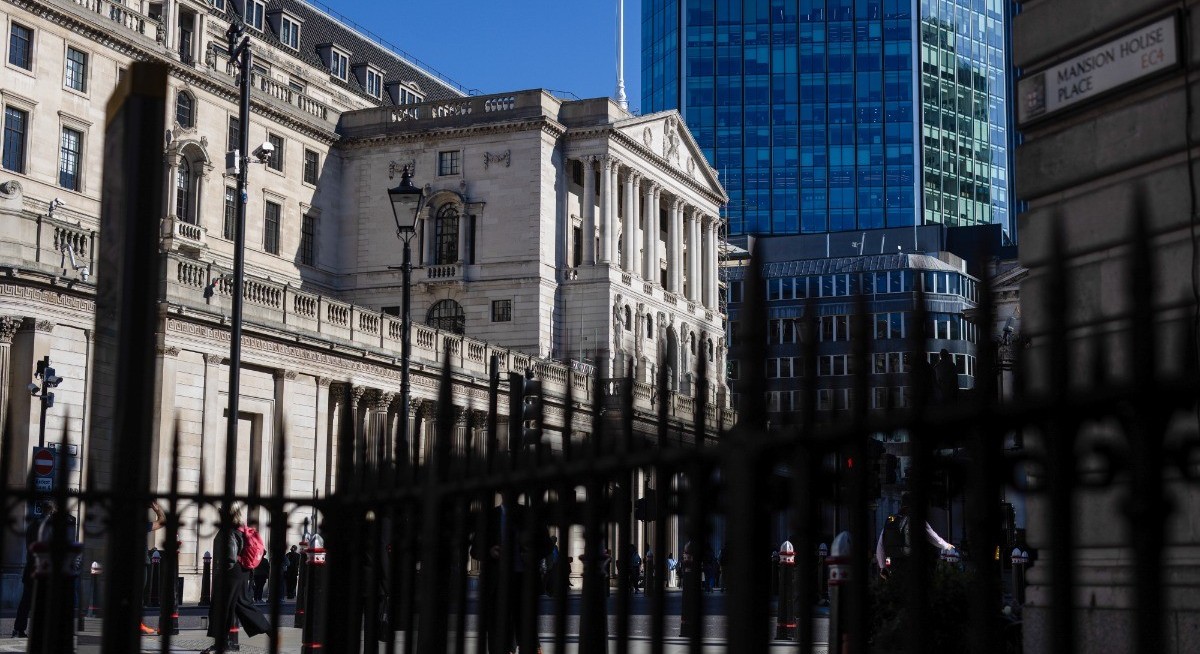


(June 22): The Bank of England has scrapped plans to limit how much firms and households can hold in UK stablecoins and instead introduced a temporary £40 billion cap for the total issuance of each coin.
In a new draft code of practice for the use of systemic stablecoins, issuers will also be able to hold a greater share of interest-bearing UK government bonds as the main backing asset for the cash-like digital currency than previously planned.
The changes, which come after a period of consultation with the industry, aim to make sterling stablecoins more commercially viable and easier to administer while also protecting users, the BOE said.
Its framework is an effort to modernise money in an increasingly digital economy. The UK's central bank and financial regulator is attempting to encourage digital innovation and attract retail users by ensuring stablecoins are as trusted and safe as regular money.

Stablecoins are tokens pegged to a currency like the dollar designed to make payments faster and cheaper, particularly across borders. Their use is growing rapidly, driven in part by landmark US legislation and support from US President Donald Trump’s administration that has attracted mainstream financial firms.
See also: Singapore adds crypto firm Bybit to its investor alert list
Trump sees dollar-backed stablecoins as a tool to bolster demand for US government debt and strengthen the dollar’s global dominance. With over 90% of the market dollar-based, the UK risks falling behind. The BOE is now moving fast: the new regime is scheduled to be in place by the start of 2027 and has been updated to make issuance and commercial use more attractive.
Katie Harries, head of policy for Europe at Coinbase Global Inc, the cryptocurrency exchange, said the rules “deliver among the strongest stablecoin regimes in the world.”
Provisional guidance last year would have limited holdings of systemically important sterling stablecoins to £20,000 for individuals and £10 million for businesses, with some exemptions. The BOE has replaced that with an overall £40 billion limit per stablecoin, which it believes is roughly equivalent to the initial guidance but far simpler for issuers to manage. The limit will be gradually raised before being removed altogether, the BOE said.
See also: Crypto clear winner of US proposal to scrap decades-old stock rule
It has also changed backing asset arrangements. Under the updated plan, stablecoins can be backed by 70% short-term interest-bearing gilts and 30% unremunerated central bank reserves, having previously recommended a 60:40 split. The revision will allow issuers to make a better financial return. It said the 30% reserves level will be final.
“The shift from holding limits to issuer limits is far more aligned to their policy intent and much more practical to implement,” said Varun Paul, senior policy director for financial markets at Fireblocks, a digital assets platform. But he said the 30% central bank reserves requirement “will still put UK stablecoin issuers at a disadvantage".
The BOE is concerned that stablecoins could cause deposits to rush out of the banking system and reduce the supply of credit to the economy, harming growth. UK banks fund a large share of their loans with deposits, unlike the US, which complicates the introduction of stablecoins.
The central bank expects about three dominant sterling stablecoins to emerge, with around £40 billion of demand for each one. In total, that would amount to about 2.5% of the £5 trillion of customer deposits held by the UK banks. The BOE said it had “carefully reviewed respondents’ feedback on our proposal to use holding limits on individuals and businesses to manage the risks to credit provision".
The BOE sees stablecoins as an equivalent to cash, not as a form of savings, and believes they could be used by ordinary households and businesses, not just in crypto markets. The coins cannot offer interest and can only offer customer rewards based on spending use, much like a grocery store card. Users must also be able to exchange their stablecoins into cash within a day.
The 30% central bank reserves requirement is designed to ensure issuers have sufficient liquid assets to meet withdrawal demand in the event of a run, like the one experienced by Silicon Valley Bank in 2023. Those central bank reserves will be held directly with the BOE to avoid any intermediate risk by going through the traditional banking system.
Stablecoins will not be protected by the £120,000 UK bank deposit protection limit, with the BOE describing its regime as safe but not guaranteed.
The digital money environment is rapidly evolving. Commercial banks are looking at issuing tokenised deposits, another form of digital money that typically pays interest. Central banks are also developing central bank digital currencies. An update on the progress of the UK CBDC, or "Britcoin", which the BOE is developing with the UK Treasury, is scheduled for later this year.
Uploaded by Arion Yeow




