




In those early years, Singapore’s economy was growing rapidly and business for Choo Chiang was brisk. With construction and manufacturing activities humming along in the developing city-state, there was steady demand for electrical cables, cable trunking, power tools, circuit breaker boxes, and various knick-knacks without which building and construction work could not be completed. These products are required not only during the construction phase but also during regular renovations and fit-outs.
However, things did not always turn out the way Lim wanted. When Lim wanted to open another shop after a decade, his partner, unwilling to bear the start-up costs, shot that idea down right away.
In September 1988, Lim grit his teeth and bought out the partner’s share for $50,000 — a princely sum in those days. “I had to borrow a portion of it from my wife,” recalls Lim.
In 1991, having assumed full ownership of the business, Lim incorporated Choo Chiang Marketing (CCM). Besides the shop at Dunlop Street, Lim set up another physical presence at Ang Mo Kio, serving as both a retail outlet and a warehouse.
See also: Yoma’s comeback
Numerous more branches were to follow, along with the expansion of Choo Chiang’s product portfolio. The company’s growing size and reach make it more attractive for brands to distribute their wares through it. On the other hand, the buyers, including contractors and tradesmen, appreciate the convenience of buying all, if not most, of what they need under one roof.
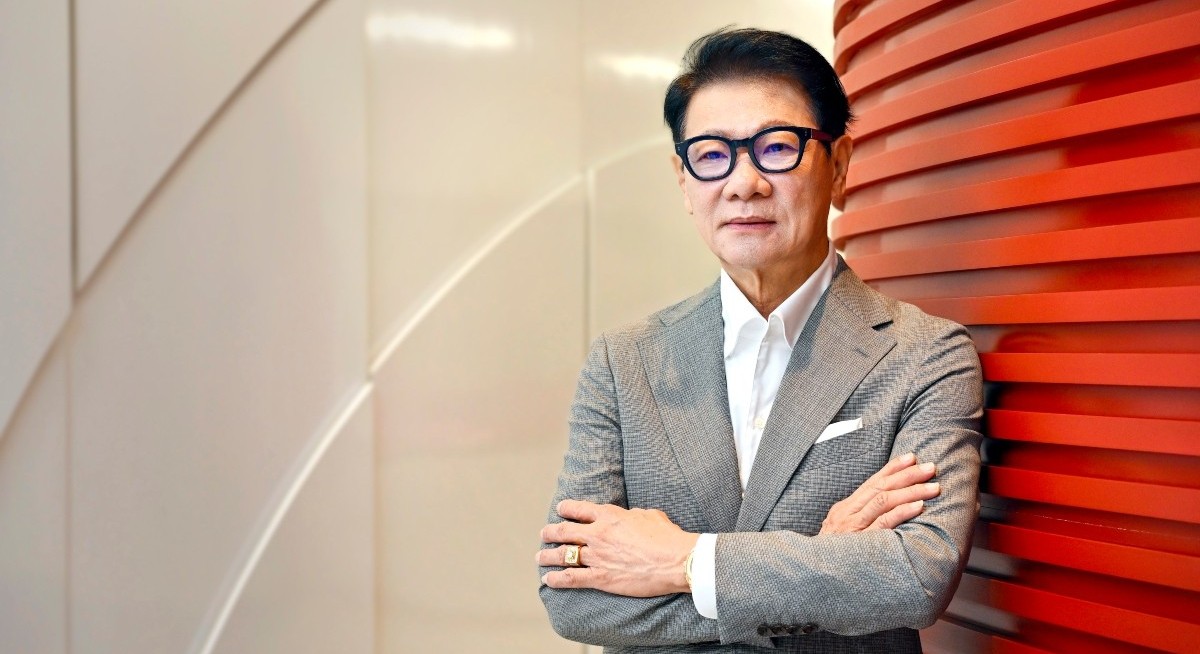
Fast forward to the present, Choo Chiang Holdings (SGX:42E ) , with Lim as the executive chairman, is now a leading local distributor of parts and accessories for the building and construction industry and the group is now set for prime time after recently transferring its listing from the Catalist to the Mainboard.
Choo Chiang carries products from around 30 brands, including Honeywell, Schneider Electric, Philips, ABB, Mistral, Bosch, and KDK. In addition, Choo Chiang began introducing its own house brands, CCM and CRM, which Lim says give him better margins.
See also: Pain relief for GI Joes, giant leap for iX Biopharma
Steady dividend, sticky customers
By 2015, the company had grown to nine outlets, generating revenue of more than $70 million and earnings of $5.9 million in 2014. Fuelled by an appetite for further growth, Choo Chiang made its Catalist debut on July 29, 2015, with 33.28 million shares offered at 35 cents, raising more than $11.6 million. At 35 cents, the IPO was priced at 12.41 times historical earnings.
In the decade since, Choo Chiang’s share price has stayed relatively stable at 45 cents on June 8, even though numerous other small and mid-cap stocks have moved and, in certain cases, significantly so. In the most recent FY2025, Choo Chiang’s earnings reached $9.5 million on revenue of $93.1 million, which, at this price level, implies a P/E multiple of around 10 times — lower than its valuation at the time of IPO.
The stock is also thinly traded. If investors are taking notice of Choo Chiang, it is for its steady and relatively generous dividend payout, which has ranged from 2.6 cents to 2.9 cents per year. Naturally, the payout benefits Lim the most, given his stake of more than 63%.
Choo Chiang’s ability to pay out steady dividends can be attributed to the recurring nature of its business. Lim claims that Choo Chiang, because of the convenience, has a sticky relationship with the customers. “Once they start using our electrical products, they will tend to come back to us and replace them, as we are a one-stop shop for them to get all the products that they require,” he says.
Of course, the way to sell customers what they need at the point that they want is to maintain a large inventory. “We need to have sufficient inventory on hand to ensure that we can supply all our customers so that they do not have to travel across the island to get the products that they need,” Lim explains.
As indicated in Choo Chiang’s latest FY2025 annual report, its total inventories stood at $21.96 million, slightly lower than the figure of $22.54 million recorded in FY2024. This accounts for almost 32% of its total current assets, which are nearly $70 million.
To stay ahead of Singapore and the region’s corporate and economic trends, click here for Latest Section
Certainly, there are some risks to a distributorship business model. There is always a risk that some unsold electrical products and accessories could become obsolete. “Therefore, I will tend to be careful in my inventory purchase and will try to clear out those inventories quickly to ensure that they won’t turn obsolete,” Lim says. In FY2025, the company set aside a provision of around $321,000 for stock obsolescence.
Cash-and-carry or short-term credit
While most distributors tend to offer credit terms to their customers to drive sales, Choo Chiang prefers the traditional settlement method: cash and carry. “I would prefer our customers to purchase products with us on a cash-and-carry basis to ensure that we have a minimal amount of receivables,” Lim says.
Despite his stand, Choo Chiang still provides credit settlement to the majority of its 4,000 to 5,000 customers. “They can apply for an account with us. Previously, our credit term was between 90 and 120 days; now it is only 30 to 60 days,” Lim claims.
As at Dec 31, 2025, Choo Chiang has trade receivables of just $6.74 million against its cash and cash equivalents of $37.18 million. Cash flow generated from operating activities was up from $9.97 million in FY2024 to $12.21 million in FY2025.
For new customers, the credit term is strictly set at 30 days. For customers who are private limited companies, Lim will require a personal guarantee before doing business with them.
Choo Chiang’s trade receivable turnover days for credit sales stood at 61 days for FY2025, compared to 59 days in FY2024. The company has set aside a manageable $1.3 million in loss allowance on trade receivables for FY2025.
Meanwhile, as the wider economic landscape is fraught with risks and challenges stemming from the Middle East conflict, Lim is running Choo Chiang in “business as usual” mode, with no significant changes to procurement or supply.
Portfolio of investment properties
Like every other businessman, Lim believes in the investment merits of real estate. Besides the distribution business, which makes up the vast majority of Choo Chiang’s top line, the company maintains a property investment business as well — something it has been doing even before the 2015 IPO.
In FY2025, Choo Chiang recorded a revenue of $93.1 million, of which $92.5 million came from the distribution business segment, while the remaining revenue was from its property investment segment.
The company owns 14 investment properties held for rental income and an additional four properties used as retail branches or warehouses for its business operations. With a debt-free balance sheet and a sizeable cash balance, the company can invest in properties to diversify its portfolio.
In February 2024, the company announced the acquisition of five units of a new food factory at Food Ascent, located at 45 Tuas South Avenue 1. This project is an 8-storey multi-user ramp-up food factory by Soilbuild Group. At its FY2024 AGM, the company told shareholders that those units are expected to generate a yield of 6% to 7%, which beats returns from fixed deposits.
Morland Fu, CFO of Choo Chiang, adds that while the company has been acquiring properties, Choo Chiang is willing to divest some of these assets once it reaches a certain level of returns. The most recent divestment was in December 2024, when Choo Chiang sold a freehold commercial unit at 421
Tagore Industrial Avenue for $2.8 million. This property was held at a net book value of $1.6 million. Fu expects the company to maintain active management of its investment properties not only for capital gains but also to generate recurring rental income.
Progressing to the next level
Choo Chiang has kept a low profile for years, but was in the news recently for joining the list of Catalist companies transferring their listing to the Mainboard.
The company notes that over the past four financial years (FY2022 to FY2025), it has maintained stable margins and sustained profitability, with earnings ranging from $9.02 million to $11.8 million. “Given our market position, stage of development and financial stability, the listing transfer is deemed to be timely and appropriate,” the company adds.
Choo Chiang believes that a Mainboard listing will give it a more visible profile, reach more investors and, hopefully, improve trading liquidity and enhance valuation over the medium to long term. The transfer was completed on May 7. According to Fu, the company had met several fund managers, including those in the Equity Market Development Programme.
Meanwhile, with the upgrade in listing status, Lim is not resting on his laurels. He is eyeing further growth for the company by acquiring other businesses, including suppliers further up the value chain. At the same time, Lim will further broaden the range of higher-quality electrical accessories. “I will also want to expand our own in-house proprietary brands, CCM and CRM, and improve our margins as well,” he says.




