


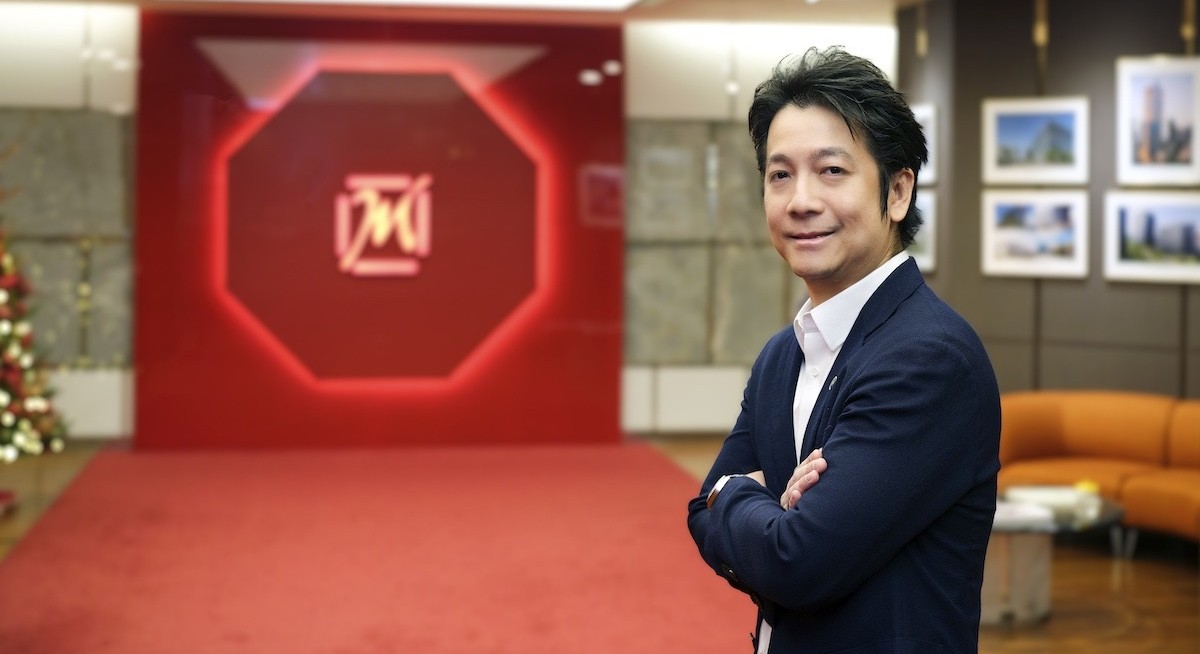


Erwin Wuysang-Oei, CEO of Metro’s retail arm, views the group’s business plans as modernising what a department store stands for while retaining the trust and familiarity that Metro has built over decades. “[The] Retail [arm] has always been the core pillar of Metro strategy,” he says, which drives the group to build its proprietary intellectual property (IP) and “multi-level concept ecosystem” to revitalise the Metro brand.
Wuysang-Oei took the helm of Metro (Private) Limited on Oct 1, 2025, and had served as COO since November 2023. He has been with the company since 2012.
He also emphasises the importance of giving shoppers a reason to return more frequently, not only during major sales periods. Wuysang-Oei emphasises an omnichannel offering that allows customers to interact with the brand online and offline.
For the group, the retail segment is also a brand asset. Metro remains one of Singapore’s few home-grown department store names still operating at scale in prime malls, and its continued presence supports relationships with landlords, suppliers and partners even as retail becomes a smaller slice of group earnings.
See also: Indonesia’s Danantara wealth fund sees senior management shakeup
Legacy business
Metro Holdings is best known to investors for its property exposure, including recurring rental income from investment properties and participation in development projects, rather than for department store expansion. With only two department stores left, Metro’s retail segment now operates more like a focused brand and cash-generation business than a growth engine.
To be sure, Yip Hoong Mun, group CEO of Metro Holdings, says: “Retail has long been a key business segment for Metro and we remain committed to enhancing and innovating the business amid a rapidly changing retail environment.”
See also: Relocation specialist Chasen rides chip growth; eyes more solar panel projects
In Metro’s 1HFY2026 ended Sept 30, 2025, retail is positioned as a continuing business with a clear operating goal: defend market position in two locations, sharpen assortment and execution, and keep the cost base tight.
Overall, the group recorded a loss of $16.0 million in 1HFY2026, compared to earnings of $3.6 million a year ago. This loss came on the back of a 13.9% y-o-y decline in overall revenue to $41. 6 million from $48.4 million, with lower contributions across all segments — retail, sale of property rights and rental income.
Focusing on the retail segment, which accounts for the largest share of revenue, revenue was 13.6% lower y-o-y to $38.8 million from $44.9 million last year, driven by lower sales at both Metro Paragon and Metro Causeway Point. The group expects pressure on retail margins, amid a highly competitive trading environment, to continue to affect results.
The group’s financials indicate that the majority of its revenue and income from its property segment is recognised under share of results of associates and share of results of joint ventures, as the group prefers to partner with others in property development projects. Both shares of results of associates and joint ventures declined in 1HFY2026.
The department store business competes for two distinct target audiences: Paragon on Orchard Road attracts tourists and affluent shoppers. In contrast, Causeway Point caters to the daily needs of nearby suburban shoppers. This split requires different merchandising and customer strategies — shopping for luxury gifts in town versus grocery shopping in the heartlands.
Wuysang-Oei describes the department store’s role as evolving from a one-stop shop for everything to being a curated destination that saves shoppers time and reduces choice overload. “Metro is not just a commoditised retailer, we want to be a curator of brands [and] be a fashion statement,” he says.
While the group focuses on brand mix and marketing campaigns rather than footfall, Wuysang-Oei notes that a key operational constraint is limited physical space and cost. Department stores are expensive to run. They are staff-heavy, inventory-heavy, promotion-heavy, and they sit in malls where rents and service charges can be significant, even in a consignment-led model. That pushes management towards sharper category choices, faster rotation and tighter stock discipline. In practice, the retail playbook tends to focus on categories that reliably drive traffic and build loyalty in Singapore department stores.
To stay ahead of Singapore and the region’s corporate and economic trends, click here for Latest Section
Wuysang-Oei notes that customer loyalty ensures repeated spending. While the group’s omnichannel offerings aim to maintain constant customer attention, its loyalty programme has also created customer stickiness. “When you have a very strong loyalty programme, it’s easy for you to connect with your customers wherever they are,” he says. He also highlights that Metro is competing not just against other department stores, but against shoppers’ habits — with discretionary spending spread across experiences, travel, entertainment subscriptions and online impulse purchases.
Rejuvenation over expansion
With no plan to add stores, Metro’s retail “growth” is essentially productivity growth. That means three things: improving the offerings, experiences and engagement.
Department stores that survive tend to be narrow in focus and become better curators of their offerings. Wuysang-Oei emphasises raising the relevance of its goods and services while refreshing the shop floor. He cites the group’s partnership with South Korea’s department store giant Shinsegae International to bring South Korean brands exclusively to Metro Singapore. The way Wuysang-Oei sees it, these global tie-ups will drive the group’s efforts to create an “immersive concept” that offers differentiated brands compared to local and international competitors.
He is also aware that Metro Causeway Point will eventually face competition from lower-priced retail in Johor Bahru once the Rapid Transit System (RTS) is operational, facilitating faster, more convenient travel between Singapore and Johor Bahru.
Metro Paragon may also face uncertainties in the coming months, as it is expected to undergo an asset enhancement initiative (AEI). Wuysang-Oei states that Metro has been an anchor tenant in Paragon since 1987 and is in “constant dialogues” with the landlords on the AEI plans. “For us, the main priority is: How do I minimise disruption to our customers, business partners and staff?” he says.
Meanwhile, Singapore shoppers, particularly in prime districts, increasingly expect retail to feel like an outing, not a transaction — thus making the shopping experience a key growth factor. That does not mean turning a department store into a theme park. It means higher standards of visual merchandising, clearer zoning, faster service, and events that drive discovery, all directly tied to product categories with proven conversion. Wuysang-Oei signals that the store needs to be more than racks and counters. “We must give customers a reason to go to the offline stores,” he says.
While the offline experience is key to customer attraction, Wuysang-Oei also focuses on online engagement, where the group’s omnichannel offerings come in. Even when shoppers buy in-store, their journey is often online-first, where they compare prices, check availability, read reviews, and search for promotions. Department stores typically have an advantage in trusted brand authenticity and immediate fulfilment, but they need digital touchpoints that keep pace.
Wuysang-Oei sees it this way: despite several other department stores closing, the business model is a “sunrise industry” rather than a “sunset industry.” He still sees significant room for growth, although the group’s plans are limited to the two current stores, driven by rejuvenation efforts and strategic collaborations.




