


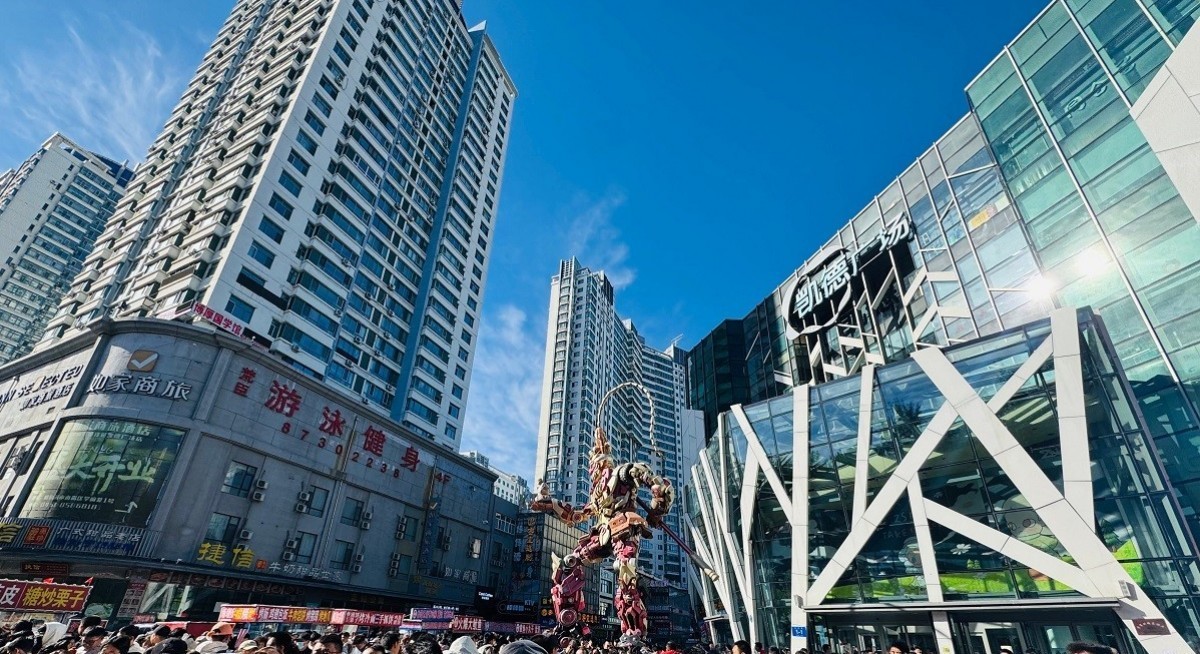


According to Chan, the REIT’s retail malls remained the most resilient asset class among the whole portfolio. Retail’s committed occupancy rate inched up to 97.2%, and occupancy cost lowered to 17.5% in FY2025.
“Our retail portfolio is generally more defensive and stands to benefit from government initiatives to boost domestic consumption,” says Chan.
Meanwhile, business parks and logistics assets are painting a less rosy picture for the REIT.
Committed occupancy rate at its business park portfolio stood at 86.7% and suffered a negative rental reversion of 8.1%, driven by the REIT’s strategy to deploy targeted rental incentives to preserve asset value and secure long-term tenancy.
See also: Lower student numbers call into question education as a structural growth theme
“Despite the weak overall environment, our business park portfolio generally outperformed some of the other sub-markets, and we have secured multiple new lease signings, led by two major electronics and ICT tenants, together leasing approximately 7,500 sqm,” says Chan.
While the REIT’s logistics portfolio committed occupancy rate stood at 98.1%, rental reversion was at a staggering negative rate of 24.5%. This was a result of prioritising occupancy rate through early renewal of anchor tenants at a much lower rental rate.
“Given the lease renewal of the anchor tenants, we expect our rent for the logistics portfolio to bottom out and remain stable in 2026,” says Chan.
See also: Chew Hua Seng’s next chapter
CLCT’s total portfolio value dipped 0.8% y-o-y, while cap rates remained relatively unchanged. However, individual assets like Shanghai Fengxian Logistics Park suffered a valuation decline of more than 14% as a result of the negative rental reversion.
On the capital management front, Yan Lintong, CFO Designate of CLCT, foresees the REIT’s borrowing cost to inch down by around 10 basis points in 2026. “The decline will not be significant in 2026 as we have some earlier interest rate hedges that have not expired, and our bonds are at a fixed rate. But we do note that our substantial portion of floating RMB loans will benefit us if the PBOC were to cut interest rates this year,” says Yan.
Yan says the REIT will continue to look for cheaper debt and will find ways to deliver more than the promise of the 10 basis point decline in cost of borrowing.
Separately, in terms of RMB loan proportion, while Yan states that CLCT will continue to seek out cheaper financing options, he is also mindful of the level of natural hedges as well. “About one and a half years ago, 35% of our debts were denominated in RMB and have now since moved up to 60%, which is above our own target,” says Yan.
Chan, meanwhile, adds that the long-term direction for CLCT is to get as much natural hedge as possible.
Coincidentally, this year CLCT is celebrating its 20th year of listing on the Singapore Exchange. Chan shared that the REIT has come a long way since then. “We learn a lot of things about China, and the dynamics are evolving. Right now, China has a very strong innovation-driven economy and is trying to grow their domestic consumption at the same time. With both themes, we are getting exposure from our retail malls and new economy assets,” he adds.
While he sees challenging times ahead for the new economy assets, the REIT will continue to drive efforts in attracting tenants to take up the spaces.
“You can say for the 20th anniversary year, we want to focus on continuing to ride on the consumption and new economy narrative. We have deep expertise in retail malls in China, and we want to leverage that. On the capital management front, we also want to start tapping more into the capital market for our financing as well,” says Chan.




