




“By listing on the Singapore Exchange (SGX), we are aligning our company with a market that will allow us to capture a generational growth opportunity at the convergence of AI and sustainable energy,” he says.
When it was listed in 2007, it was one of the first renewable energy companies focused on investing in, developing and operating wind and solar projects listed in Hong Kong.
CNE aims to drive the energy transition by delivering clean energy and low-carbon solutions. It says that it is “committed to delivering high-quality clean energy and professional services to foster sustainability and promote the harmonious development of both people and nature”.
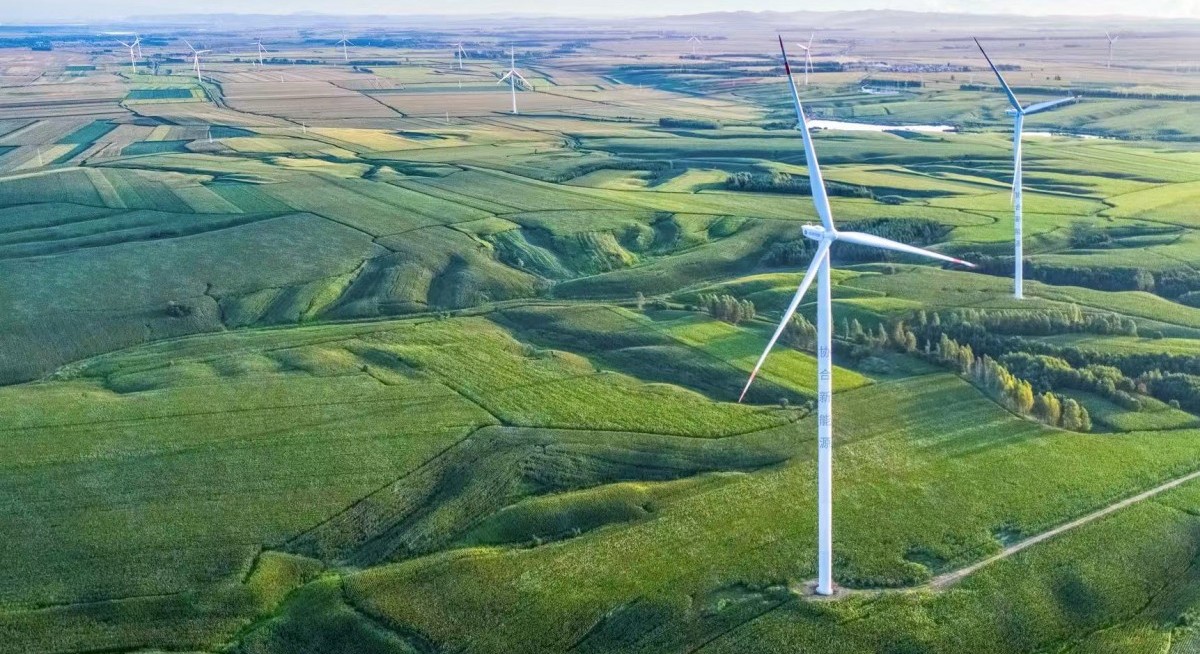
As of June 30, 2025, it holds equity interests in 91 grid-connected wind and solar power plants, with a total installed capacity of 6.025 GW and attributable installed capacity of around 4.78 GW.
See also: Trendlines portfolio company NICE Surgical granted US patent for purse-string stapler
In addition, CNE has wind power reserves of over 5.9 GW and solar power reserves of over 3.55 GW, which are suitable for future development with a prospective capacity.
Renewable energy development
At its inception, the company focused on engineering, procurement and construction (EPC) services, which made up the bulk of its revenue and formed a separate business segment. In 2013, the company shifted its focus to the investment, development and operation of wind and solar power plants. The process was completed in 2017, and power generation became the main revenue generator for the company, with the EPC segment being scaled down.
See also: SIA Engineering and Air India ink MOU to explore MRO collaboration
Currently, the business is divided into power generation and “others” segments. Power generation contributed 91.4% and 95.4% of total revenue in FY2024 and 6M2025, respectively.
For the financial years ended Dec 31 in 2022, 2023 and 2024, and the six months ended June 30, 2025, revenue from power generation amounted to RMB2.1 billion, RMB2.26 billion, RMB2.52 billion and RMB1.33 billion, respectively.
The “others” segment comprises renewable energy services, which include EPC services, operations and maintenance services, power sales and trading and energy storage. The company operates a finance leasing sub-segment for its existing customers. CNE says it is “in the process” of winding down the finance leasing sub-segment.
For the financial years ended Dec 31 in 2022, 2023 and 2024, and six months ended June 30, 2025, the “others” segment generated revenue of RMB286.2 million, RMB329.2 million, RMB236.1 million and RMB64.9 million, respectively.
CNE’s main customers include electric grid and electric utilities, as well as industrial, manufacturing and large-scale data centres — all of which are big consumers of energy. The State Grid Group, China Southern Power Grid Group and Harbin Xianben Wind Power Generation are listed as major customers of CNE in the introductory document.
Zhou says that CNE developed and invested in power plants in China during its early growth phase. The company then expanded into the US, Europe and Southeast Asia, developing and investing in renewable energy power plants.
The renewable energy industry is “highly competitive”, notes CNE. However, the company is confident competing against rivals based on its business model, quality, operating track record and reputation.
To stay ahead of Singapore and the region’s corporate and economic trends, click here for Latest Section
It says that it has built a model encapsulating the renewable energy value chain, which enables it to achieve lower costs, better quality control and economies of scale. For instance, CNE is capable of developing wind and solar power plants on its own, thus avoiding substantial acquisition costs and mitigating related risk exposures.
The company also believes in its strategic agility to adapt rapidly in an evolving industry, for instance, gaining a first-mover advantage from policy changes and adopting new technology for operations.
CNE says it is using advanced technology and big data to optimise daily operations. These tools not only boost efficiency but also create new revenue streams for the business. Crucially, the company’s business model lets it deliver the lowest levelised cost of electricity (LCOE), its main competitive edge. The LCOE of CNE’s wholly-owned wind and solar power plants was RMB0.2434 per KWh for 2024 and RMB0.235 ($0.043) per KWh for 6M2025. Using 2024 figures from the International Renewable Energy Agency as a comparison, the global average LCOE of solar photovoltaic power is US$0.043 ($0.055) per KWh while onshore wind is at US$0.034 per KWh.
Zhou says the company’s strength in greenfield power plant development is central to its success. “It is through our development process that we are able to locate the best sites and organically build relationships with all stakeholders, including customers, the grid operator, landowners and local stakeholders,” he adds. “By owning the development process from the start, we are able to control for quality and build the best projects for the least cost.”
CNE views volatility in power prices as a “tremendous” opportunity in locations where there are power markets. It claims to have developed a “best-in-class” algorithm to optimise its strategies. Typically, 70% to 80% of its sales are based on fixed power purchase agreement (PPA) rates, with the balance exposed to the market. This allows the company to manage risk and take advantage of market opportunities.

CNE’s global business division CEO Zhou Xiaole says that the secondary listing on SGX-ST is an “important step” in advancing CNE’s global business strategy. Photo: Concord New Energy Group
Singapore: a springboard to success?
Before listing on SGX-ST, the company relocated its headquarters from Hong Kong to the city-state in 2023, chosen as a ‘natural launchpad’ to accelerate CNE’s next phase of growth. “Singapore combines world-class digital and data centre infrastructure, a strong commitment to clean and innovative energy solutions, and a highly trusted regulatory and financial environment, while sitting at the centre of Asia’s fastest growing AI demand,” says Zhou.
“Going forward, we view renewable energy and AI data centres as inextricably linked and therefore a core focus for us is the development and deployment of sustainable and scalable clean AI solutions.”
In November 2025, the company unveiled a US$1 billion expansion plan. Zhou says falling LCOE for renewables and energy storage is opening up more opportunities to invest in overseas projects, with the growing data centre market clearly in sight.
“Simultaneously, the AI boom is a driving factor for our business, especially in the US, where there is a closed-loop relationship between large-scale data centre development and power development,” he adds. “Large-scale power infrastructure developers become data centre developers and vice versa.”
Zhou believes that CNE is capable of moving into the data centre space. “We are capable of developing and delivering the thing that is most in demand: hyperscale data centre sites that have access to clean and reliable power.” He adds that the US$1 billion will be channelled into the three to four GW of wind, solar and energy storage projects in CNE’s development pipeline. These projects are focused on markets and ecosystems where there is the “largest intersection of renewables and AI development”.
CNE is also looking to optimise its asset portfolio, deleverage and move towards a more asset-light strategy. This involves transferring and streamlining assets, as well as disposals, to boost liquidity and strengthen profit certainty.
For instance, CNE has announced a potential sale of two of its solar plants to SP Group and announced the establishment of a joint investment fund of around RMB1.8 billion with Taikang Insurance in China. Additionally, the company has announced plans to issue real estate investment trusts or REITs. CNE did not elaborate on the timing and size of its REIT plans when asked.
Zhou believes that AI is boosting the adoption of renewable energy and expresses confidence in the energy transition. “AI buildout, which is the primary driver of power demand growth, is being done by companies with a strong commitment to renewable power,” he says. “AI development and renewable power deployment are natural complements.”
“The outlook for clean, renewable power is strong globally. The cost curves for solar, wind and battery storage continue to make renewables both more competitive cost-wise compared to legacy fuels, but also the fastest buildable power resource. We feel very good about the overall outlook for our industry.”




