


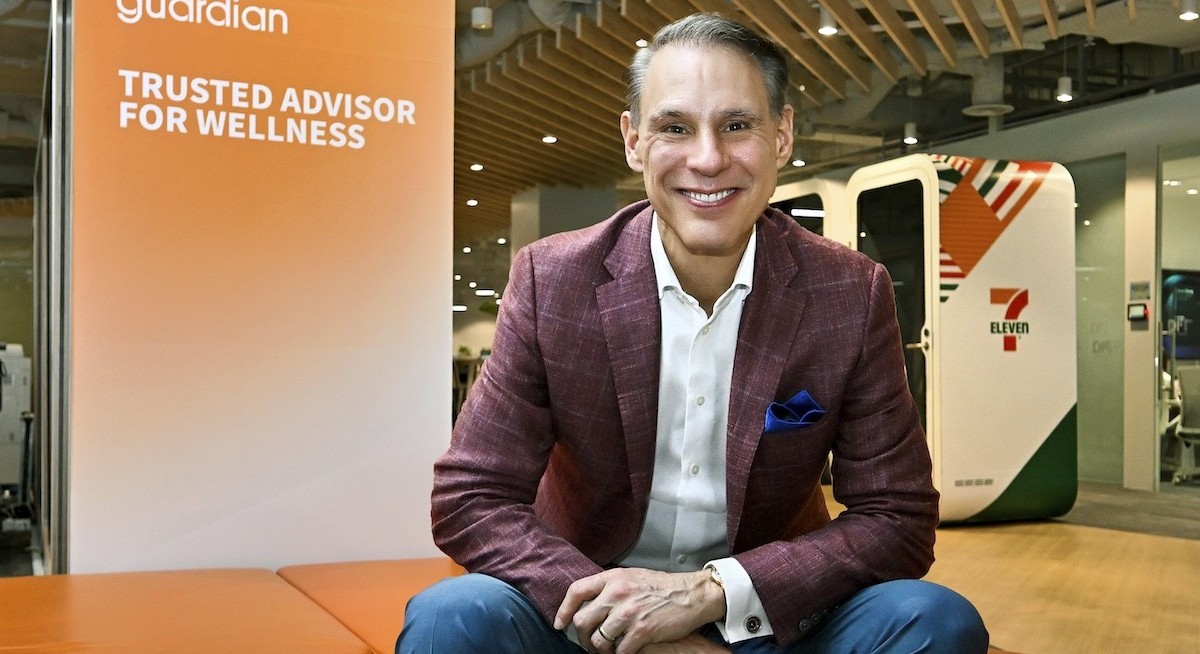


Among the various brands it owns or manages, DFI holds the exclusive franchise for the Swedish furniture brand Ikea in Hong Kong, Macau, Taiwan and Indonesia. As it happened, Southeast Asia’s largest economy was experiencing a booming e-commerce scene, where everything from live animals to bakso could be bought online.
DFI, behind Ikea’s back, began selling Ikea products on Shopee, which flew in the face of Ikea’s long-cherished model of letting customers open the drawers and bounce on the mattresses in its giant stores. After initial reluctance, Ikea decided there was no point in arguing against the better sales numbers and has given DFI the go-ahead to sell online in another market.
Perhaps this bit of rebellious behaviour from Price, who took on the CEO role in August 2023, was what the group needed. For years, DFI, a component of the Straits Times Index, was a stable business selling fast-moving consumer goods to an increasingly affluent middle class in Asia. Over the years, from its home base in Hong Kong, it has grown into one of Asia’s leading retailers, operating across 12 markets and selling everything from Billy bookshelves, Blackmores fish oil and Meadows potato chips to Genki Sushi and Lawry’s Prime Ribs.
However, as competitive pressures mount, sunk-in investments falter and with Hong Kong’s retail scene in the doldrums as mainland Chinese tourists no longer spend as freely as before, DFI became a company that no longer excites.
See also: MoneyMax taps pawnbroking and timeless gold to provide value across generations
Price, previously working for the likes of UPS, Walmart, DHL and Coca-Cola, moved quickly to tighten DFI’s focus, recycle capital, reset management structures and push for faster execution across the retailer’s sprawling Asian portfolio. The work is starting to show in the group’s financial numbers, business structure and DFI’s share price, which has more than doubled over the past year.
In its latest FY2025 ended Dec 31, 2025, revenue held steady y-o-y at US$8.87 billion ($11.29 billion). However, with a better sales mix and the divestment of loss-making stakes, DFI reported earnings of US$235 million, a stark turnaround from US$245 million in red ink in the preceding year.
Underlying profit attributable to shareholders, which DFI says is a more accurate measure of its ongoing business performance, rose 35% to US$270 million. In comparison, it reported a profit of US$235 million, compared with a loss of US$245 million a year earlier.
See also: GKE signs non-binding LOI to develop and operate warehouse in Dubai for up to 50 years
The group says the divestments of Yonghui, its long-struggling supermarket chain in China; department store Robinsons in the Philippines; and supermarket chains Cold Storage and Giant in Singapore and Malaysia, helped shift it from a portfolio business to a more focused operating company. With total divestment proceeds of approximately US$1 billion, DFI paid down debt and achieved a net cash position.
More pleasing to shareholders, DFI paid a bumper special dividend of 44.3 US cents per share, plus an interim dividend of 3.5 US cents, from the proceeds of the divestments when it announced its 1HFY2025 results. Along with the final dividend of 10.5 US cents, DFI is paying a total of 58.3 US cents for FY2025. In absolute terms, DFI will return US$740 million to its shareholders, compared with 10.5 US cents in FY2024.
“Effective execution of our strategy drove strong financial performance and higher shareholder returns in 2025, despite a challenging retail environment,” says chairman Lincoln Pan. “Our significant progress made in portfolio simplification creates investment capacity for strategic priorities, enabling greater value for our customers and accretive inorganic opportunities to drive sustainable growth and returns,” adds Pan, who is the newly-appointed CEO of Jardine Matheson, DFI’s parent company.
With the momentum, in FY2026, DFI is aiming for organic revenue growth of 2%–3% and underlying profit attributable to shareholders of US$270 million to US$300 million.
Accurate representation
Price concedes that when he first came on board, the retail business “was disappointing for customers”. On top of that, company morale was low, and the share price had sunk below US$3 — a fraction of the 2013 peak of more than US$13.
From there, Price set out on a turnaround defined by three priorities: customer-first, people-led, shareholder-driven. In its FY2025 results release, DFI says it executed against this strategic framework during the year, strengthening value propositions, expanding customer reach, deepening engagement through data and accelerating digital monetisation.
To stay ahead of Singapore and the region’s corporate and economic trends, click here for Latest Section
However, “customer first” for Price started with a critique of how DFI had been run. “I think we had the wrong approach that overly centralised key customer decisions in Hong Kong,” he says. “Our leadership did not reflect our team members and therefore didn’t reflect our customers”.
Price points out that roughly 70% of DFI’s customers and 66% of the employees are females. Yet, when he started, there were barely any women in management roles. That has since risen to 40% and he plans to get that up to half. “You just can’t make good decisions without fair representation,” he reasons.
As he refreshes the leadership bench, he is also reducing over-centralisation and empowering more local accountability. He applied consistent P&L reporting formats across the various markets, for example.
By putting those he thinks are the right people in charge, Price hopes they can help make the right decisions. “We found talent that knew Asia, not expats that did not understand the market,” says Price. In other words, the turnaround was designed not just to cut costs, but also to make the group more relevant to consumers of each market.
That operating reset soon gave way to a capital reset. The generous dividend and newfound focus on shareholders stem from DFI’s need to be sharper about its role as a listed company. Price introduced a total shareholder return (TSR) model, drawing on his experience at Walmart and UPS, blue-chip US-listed companies that are obsessed with their quarterly report cards to investors.
This focus on shareholders helps drive home the point that DFI is more aware of its role as a publicly-listed company rather than a loose collection of assets. This new focus also underpins DFI’s strategic approach — it should no longer be seen as a portfolio-holding company but rather as a focused operating company.
In practice, what DFI has done is to move away from assets where it lacks operating control or where the structural economics are less favourable. Price says minority holdings were frustrating because DFI could influence through the board but not actually manage the business. He also points to businesses where DFI lacked sufficient scale or a “clear right to win” and to formats on the wrong side of structural trends. DFI, for example, used to own just a fifth of Yonghui, the beleaguered China supermarket chain, before calling it quits.

For Singapore consumers, DFI’s key presence is its chain of Guardian pharmacies and 7-Eleven convenience stores
Everyday essentials
Amid all the divestment, Price emphasises that DFI is not retreating from Asia. In fact, this will remain its key market. With its leaner portfolio, the group is focusing on how Asian consumers are shopping today: they want convenience, value and more personalised retail experiences, whether offline or online. “We serve everyday essentials to Asians in Asia,” he says.
While the retail landscape is being reshaped by shifting consumer behaviour and digitalisation, DFI is leaning harder into health and beauty, convenience and omnichannel retail, areas where it believes it has a stronger right to win and better margins than in traditional supermarket formats.
“We are in the business of everyday essentials. No matter what happens, consumers will want to shower every day, pop into a 7-Eleven for a little treat or even have a reasonably priced meal at one of our restaurants,” says Price, adding that this strategy naturally hedges a bit more than premium retail.
That is most visible at 7-Eleven. DFI has been repositioning the convenience chain away from lower-margin cigarette sales and towards higher-margin ready-to-eat (RTE) offerings, a common way to have a quick meal, often by perching on bar-counter-like fittings in stores. Price is betting that this consumption habit, popular in Japan’s ubiquitous convenience stores, will gain traction among Hongkongers and mainland Chinese alike, given Japan’s popularity as a travel destination for them.
In FY2025, RTE accounted for 24% of sales generated by the convenience stores — up 1 percentage point from FY2024 — as consumers across markets sought more convenient, higher-quality and value-driven meals. DFI plans to expand the RTE food bars to 1,250 locations in southern China and roll out RTE-focused store revamps across Hong Kong by 2028. In Singapore, 7-Eleven also reported robust like-for-like sales growth, which DFI attributes to a stronger RTE proposition and promotional campaigns.
That strategy fits current consumer behaviour. The convenience customer is no longer just buying a drink or a pack of gum. Increasingly, the mission is breakfast, lunch, an afternoon snack or a quick meal between errands.
The same push towards higher-value, more differentiated retail is evident in health & beauty, operating under the brands Mannings and Guardian. DFI aims to strengthen both brands as “trusted advisors for wellness”, supported by technology-enabled, personalised services, such as skin, scalp and health assessments, which are driving higher purchase conversion and basket size. The group plans to expand these capabilities to 25% of its health & beauty store network.
The latest step is DFI’s partnership with Becon, a Samsung-backed company, to launch an AI-powered skin and scalp assessment tool across more than 400 Guardian and Mannings stores in Hong Kong, Indonesia, Macau, Malaysia and Singapore. The move builds on a 2025 proof of concept that, according to DFI, delivered strong customer engagement, purchase conversion and basket growth.

DFI is launching an AI-powered skin and scalp assessment tool across its Guardian and Mannings stores in the region
DFI is also building up its own private-label business, dubbed “own brand”, as part of the bid to better serve consumers across its food, health and beauty segments. The group is not treating private label simply as a margin lever, but as a way to build exclusivity and deliver clearer value to shoppers.
In its latest results, DFI says its own brand push is driving higher customer loyalty and sales penetration through greater exclusivity and value. At the same time, a tighter product range and more cross-selling across different formats have lifted margins and sales productivity. That matters in a market where consumers are becoming more price-conscious but are still willing to spend on products they see as functional, yet differentiated.
The strategy also builds on foundations that were already being laid before Price took over. DFI’s own supermarket brand, Meadows, was launched in 2019 to offer better value. Rather than a side offering, Meadows and other own brands will be more central to how DFI sharpens its value proposition in food and deepens wellness positioning in Guardian and Mannings.
But of course, an intimate understanding of the customer is critical. According to Price, DFI’s previous strategy for its own brands was to bring in an “expat from Europe”. While cultural differences can be studied, it isn’t intuitive to do so. “How does she understand how Asian women feel about skin [and skincare products]?” he says.
Going digital
The portfolio reshaping is only one side of the story. The other is how Price wants the remaining businesses to operate.
That is where the Ikea example is instructive. Price says traditional big-box retail models have become less relevant as customers change how they shop. He argues that Ikea’s standard format, with a huge footprint and thousands of items, is not always well suited to dense Asian cities and smaller homes. DFI has therefore been resetting its Ikea proposition by opening smaller stores, cutting the range of furniture and furnishings and emphasising the popular Ikea restaurant franchise even more. At the same time, it began selling more aggressively through digital channels.
As Price recalls, when DFI put Ikea on Shopee in Indonesia, the Swedes were nervous. However, he reasons that doing so was an intentional test of the brand’s ability to adapt to customer behaviour in Asia. That willingness to test and to move faster than the wider organisation may be comfortable with seems to fit Price’s risk profile.
In DFI’s view, digital can become a more meaningful earnings lever. It wants to strengthen omnichannel capabilities, accelerate innovation of its own brands, and deepen digital monetisation and leverage data more effectively. From 6.4% in FY2024, it is targeting an online sales mix of 7% to 10% by 2028.
Similarly, in China, DFI in May 2025 entered into a partnership with Dingdong (DDL), a fresh-food e-commerce player, to build a digitalised cross-border supply chain system. Through DFI’s Wellcome supermarkets, they provide Hong Kong customers with a diverse selection of quality products at competitive prices, targeting HK$100 million ($16.3 million) in sales in the first year of its launch. The first phase began last April and six types of DDL products are sold in nearly 280 Wellcome stores, as well as through Wellcome’s online shop and food delivery platform Foodpanda.
“We realised that most of [the supermarket business] in Hong Kong was controlled by middlemen, traders and agents who added margins on top of margins. We went straight to DDL to establish an exclusive deal, cutting out the middlemen,” tells Price, adding that this allowed supermarkets in Hong Kong to then be competitive, especially against those in Shenzhen, where Hong Kongers would frequently head over for cheaper shopping.
By cutting out the middle layer, Price says that products sold in Wellcome are just 1% more expensive than those in Shenzhen. “No longer is anyone motivated to go across the border to [buy groceries]. I believe Singapore will have to do the same thing with JB. I didn’t see the way for us to do that with our food business, which is why we’ve divested it,” says Price, referring to DFI’s sale of the supermarkets in Singapore. (see sidebar: Slimming down DFI)
Retail digital media
Interestingly, DFI, with its network of more than 7,500 retail outlets across the region, plans to leverage its physical presence to open another revenue stream. Dealing with customers, products, and brands day in and day out has given DFI not only a trove of interesting data but also the chance to put a physical medium in front of consumers as they stroll down the aisles in the form of a digital screen. Already, some 10,000 in-store digital screens have been installed, showing videos paid for by brand owners of the products. DFI plans to increase this number to 14,000 in the near term, thereby becoming “Asia’s leading omnichannel retail media network”.
Price claims a screen next to a product typically results in higher conversion. Traditionally, other market players that have implemented this media strategy enjoy margins of about 50% to 60% in this business.
In the US, retail giant Walmart is also on this, generating advertising revenue of US$6.4 billion in its most recent year, up 46% y-o-y, but accounting for only about 1% of total revenue. Price is using this benchmark as a target for DFI to attain by FY2028.
Price also points to the “yuu” loyalty ecosystem as a strategic asset because it increases cross-format stickiness. He says the programme allows customers to earn in one format and redeem in another, creating more exclusivity and share-of-wallet opportunities. He notes that yuu has achieved much stronger penetration in Hong Kong than in Singapore so far, with membership in Hong Kong exceeding five million, or roughly 70% of the adult population.
What DFI now looks like
Following the series of divestments and clear communication of its growth strategy, DFI’s share price has recovered to its level five years ago. However, for Price, there is plenty of work to be done. DFI’s food business remains challenging in parts of the region. Home furnishings are still being reset. The consumer backdrop remains uneven. But there is now less ambiguity about the direction of travel.
Price’s version of DFI is not trying to be all things in all formats and markets. It is trying to be more local in execution, more disciplined in capital allocation and more willing to challenge old retail assumptions. That does not make DFI a simple story, but it does make it more coherent.
Meanwhile, shareholders who are hoping for another bumper dividend from further divestments will need to temper their expectations. According to Price, DFI is done with selling businesses. “The divestment cycle of significance is right-sizing our cost of business relative to the resized format and revenue is done,” he says. “That’s not to say there will not be minor opportunities to improve, but it would not be a material one-time charge. I think we are confident we’re done with that process,” he adds.
Instead of divestments, DFI has returned to acquisition mode. “But it is only going to be in Asia, in the markets that we operate in today and it is only going to be if we’re confident that the price paid is agreed to our shareholders. I’m not overpaying for assets,” he says.




