


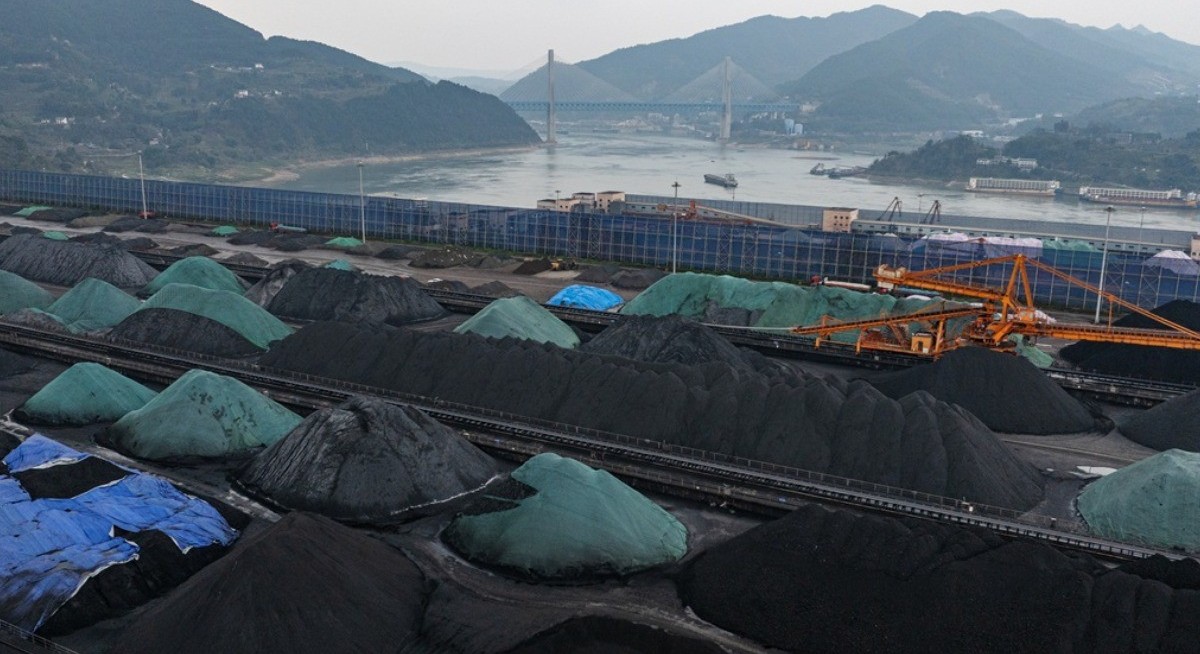


(June 26): China is leaving room for coal consumption to grow in coming years, as the stability of the world’s largest energy market continues to outweigh climate concerns.
“We will always prioritise energy security,” Wang Hongzhi, head of the National Energy Administration (NEA), said at a briefing on Friday to introduce the country’s new five-year plan for the sector, crediting the strategy for allowing China to successfully withstand the supply shock caused by the Iran War.
The new plan calls for strengthening coal’s role as backstop for the energy system. That includes enhancing coal resources in five existing production hubs, while allowing capacity to expand in central and eastern regions. Officials also gave a green light to further growth in the coal-to-chemicals industry.
Construction of new coal-fired power plants has boomed since a spate of electricity shortages in 2021 and 2022 as Beijing has touted the fuel’s role as a reliable back-up to intermittent renewables. China added 95 gigawatts of new thermal power capacity last year, the most since at least 2008, and requests for new permits in the first quarter of 2026 are ahead of last year’s record pace.
Meanwhile, the country’s coal-to-chemicals sector has grown rapidly in recent years, in part because the powerful mining lobby — heedful of the challenge from renewables in power generation — wanted to develop another source of demand for their product. Coal was given a further boost after the war in Iran pushed up prices of rival feedstocks such as naphtha and liquefied petroleum gas.
Softer target
See also: China and the new business reality
The new plan does put some limits on the expansion of fossil fuels, but experts view them as relatively weak, continuing a trend of China relying on clean energy to deliver bottom-up progress on emissions rather than enforcing tighter top-down controls.
The new road map reaffirmed the goal set in China’s overall five-year plan released in March, which called for coal consumption to reach a peak during the period. That’s a softer target than President Xi Jinping’s previous pledge to reduce coal use. The timeframe for completing the new dual carbon control system, which would include a cap on overall emissions, has also yet to be released.
While China’s direction of travel is towards lower emissions and eventual carbon neutrality, officials are signaling the journey will be slow and steady.
See also: DeepSeek plans to double staff across all departments
The goal of getting 50% of power from clean energy still allows fossil fuel generation to increase 10% over the period, according to the Center for Research on Energy and Clean Air. The new target on carbon intensity also leaves ample space for fossil fuels, which could be considered generous given that emissions from the power sector already fell last year.
“The headline targets are relatively conservative and should be read more as policy floors than as major new ambition,” said Qi Qin, a China analyst at CREA.
Storage options
Coal development should be limited to the lowest level required, Wan Jinsong, the NEA’s deputy director, said at the briefing. The plan also calls for coal to be repositioned as a source of flexibility for the power system, rather than a base load, to better support renewables.
At the same time, the government is looking to other technologies to offer versatility. China will “vigorously develop new energy storage and other flexibility capabilities, and minimise dependence on fossil fuels as much as possible,” Wan said.
To that end, the plan raises the country’s target for pumped hydro capacity to around 160 GW, from 66 GW at the end of last year, with battery storage to reach 300 GW, from 136 GW.
“Flexibility is moving from a supporting function to core energy infrastructure,” said Kevin Tu, managing director of Agora Energy China.
Uploaded by Liza Shireen Koshy




