


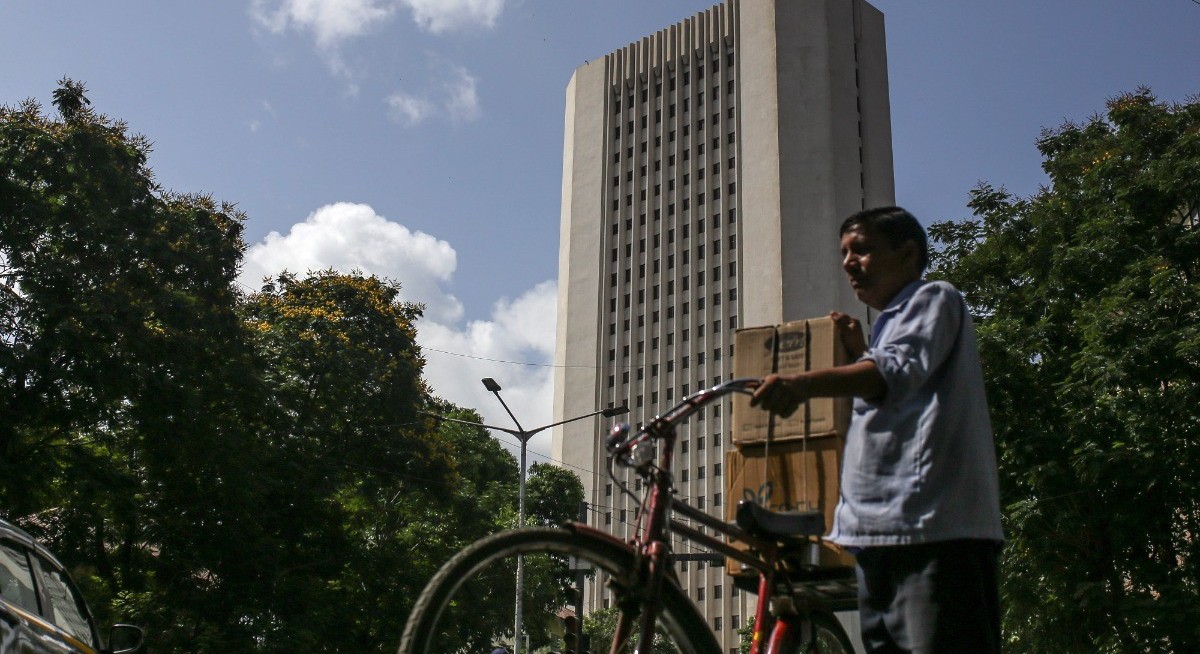


(June 30): India’s proprietary trading firms and stock brokers are bracing for a major overhaul of how they finance trading activity.
Starting July 1, the Reserve Bank of India will require bank guarantees issued to firms trading in capital markets to be fully backed by collateral, with at least half in cash. While the move reduces risk for lenders, it is expected to curb leverage among local trading firms, raise funding costs and limit their capacity to execute deals.
The measure is the latest step to cool a derivatives boom that turned India into a global options hub. Proprietary traders accounted for more than half of options turnover on the National Stock Exchange last year and the impact is expected to fall hardest on firms that rely on bank-backed funding to amplify returns.
“This is a body blow to the entire domestic prop industry,” said Karthik P, a partner at Karna Stock Broking LLP. Margin requirements in India are already among the highest in the world and the new regime will sharply curb local trading capacity, he said.

Until now, firms could use bank guarantees to increase the amount they could trade against pledged collateral. Requiring those guarantees to be fully backed with collateral will tie up more capital, leaving less available for trading. Effective trading capacity will shrink from roughly 1.7 times to about 0.85 times under the new framework, Karthik said.
See also: DBS Group completes debut US$1 bil significant risk transfer transaction
The higher funding costs come on top of the government’s Feb 1 hike in securities transaction taxes on equity derivatives and may reduce returns from cash-futures arbitrage, options market making and index arbitrage. Smaller firms with limited capital are expected to be hit the hardest.
Brokerages are also likely to adjust their funding models. Firms with ample capital or diversified funding sources should be better placed to absorb the changes while those that rely on bank funding may seek alternatives or tap internal capital.
Meanwhile, foreign high-frequency trading firms that operate through the foreign portfolio investor route or GIFT IFSC — a tax haven in the western Indian state of Gujarat — are unlikely to be affected because the rules do not apply to them, according to Tanmay Kurkoti, founder of QCAlpha Advisors, which manages multi-strategy portfolios.
See also: Maybank taps Evooq to improve wealth management service delivery
Jane Street Group, Citadel Securities LLC, Jump Trading Holdings LLC and Optiver Holding BV have expanded local operations, drawn in part by India’s options market.
“This norm hits Indian prop desks at brokers far harder than it hits foreign HFTs,” Kurkoti said. “The market is underpricing how lopsided that asymmetry is.”
Foreign HFTs with Indian operations can also obtain standby letters of credit from their parent companies, “offering a real funding cost edge” over domestic proprietary trading firms, he added.
“Single stocks will be the biggest casualty because the cost of warehousing single-stock inventory becomes uneconomical at current spreads,” Kurkoti said. “As a market maker and a trader, I expect the visible damage to show up by the September quarter.”
Uploaded by Arion Yeow




