


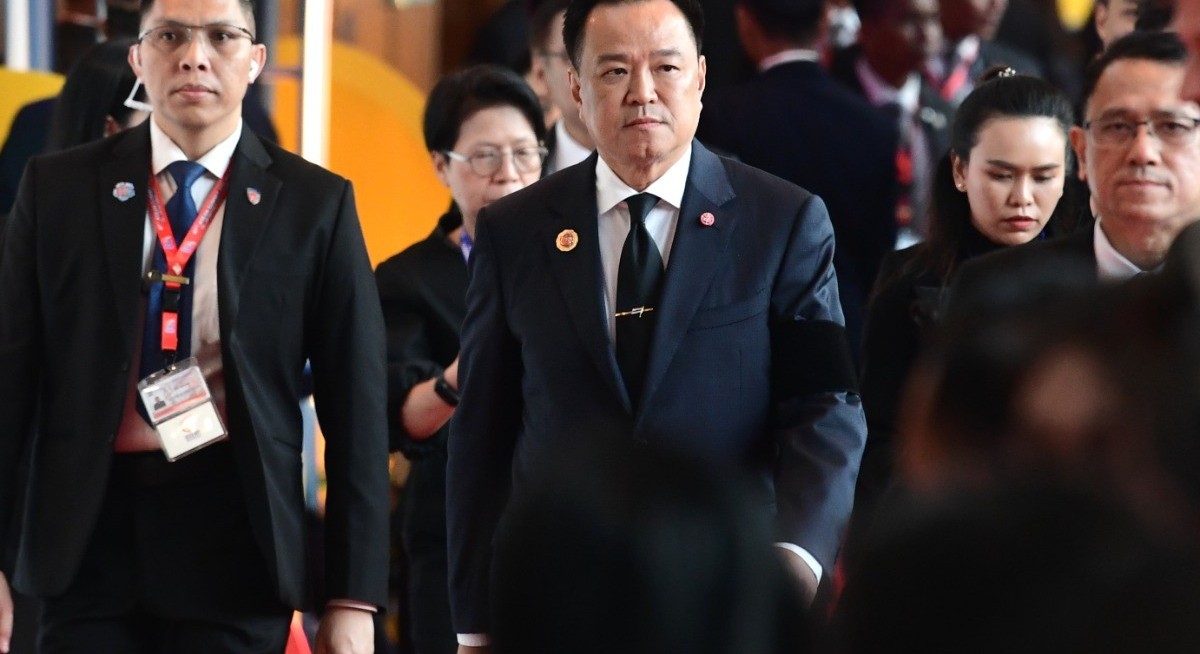


(May 18): Thailand’s Constitutional Court will hear a challenge to the government’s THB400 billion (US$12 billion or $15.7 billion) emergency borrowing plan, casting uncertainty over its response to rising energy costs.
The court said in a statement on Monday that it would review whether the decree, which allows the Finance Ministry to raise funds without parliamentary approval, meets constitutional requirements for urgent necessity, following a petition from 133 lawmakers.
The case comes as Thailand faces mounting strain from higher energy costs and weakening demand linked to the Middle East conflict. Fiscal room is limited, with public debt nearing the government’s self-imposed ceiling of 70% of gross domestic product.
Prime Minister Anutin Charnvirakul’s borrowing plan is intended to fund cash handouts to about 30 million people and support farmers, fisheries and small businesses hit by rising costs. Household debt is already among the highest in Asia at about 90% of gross domestic product. The government also aims to allocate about THB200 billion to accelerate the transition to renewable energy.
Critics argue that long-term investments such as energy transition should not be financed through emergency borrowing.
Standard Chartered economist Tim Leelahaphan said by email that the loan decree could become “complicated,” but added the government is likely to press ahead. A court ruling is expected within 30 to 60 days, he said.
See also: Thailand plans cost-of-living package even as GDP growth beats
Despite stronger-than-expected first-quarter growth of 2.8%, officials say additional fiscal support is needed to address the cost-of-living squeeze.
“Fiscal policy needs to take the lead,” Finance Minister Ekniti Nitithanprapas said on Monday, noting limits to what monetary policy can achieve.
The Bank of Thailand kept its benchmark rate unchanged at 1% in April, warning that further easing could prove difficult amid rising inflation risks.
Uploaded by Tham Yek Lee




