




Across Southeast Asia, governments and enterprises are directing investment into scalable infrastructure to keep pace with rising demand for digital services. For the enterprises that rely on it, the more immediate question is whether their artificial intelligence (AI) investments are delivering results.
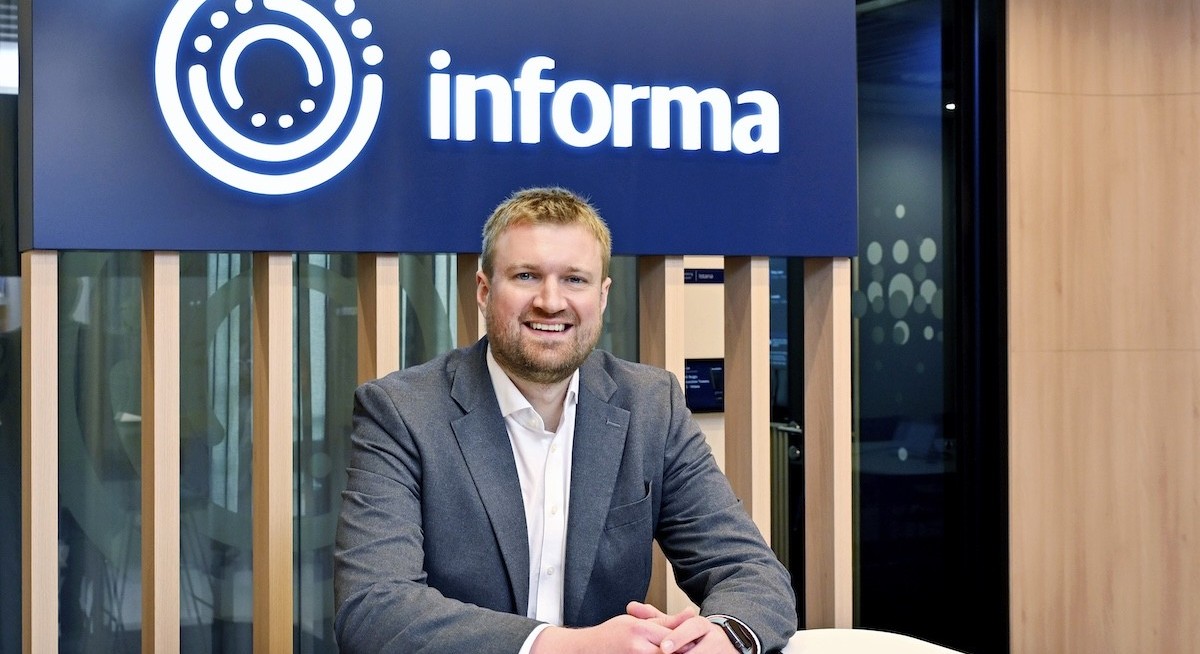
Tom Cuthell has a front-row seat to that tension. As VP of Future Tech at Informa Festivals, he oversees large-scale enterprise technology gatherings worldwide, including Asia Tech x Singapore (ATxSG), the annual festival co-organised with the Infocomm Media Development Authority (IMDA). Those events, and the conversations surrounding them, have given him a practical sense of where the region’s AI ambitions are colliding with reality.
“There’s plenty of appetite to invest [in AI], but organisations seem to struggle with the ability to scale AI and see profitability from the projects. It’s one thing to run pilots and test within a team or a division. Transforming an enterprise so that AI becomes part of workflows — the way things get done — is a bit more difficult. So, organisations feel the need to do more to prove it before they can justify more investment,” he says.

Enterprise buyers lean into AI while weighing returns, risk and readiness. Source: Informa Festivals
The scaling problem
See also: Thailand seen as Southeast Asia’s surprise AI stock winner
That gap between experimentation and execution is becoming harder to ignore. Southeast Asia has progressed through the experimentation phase faster than most, with more pilot projects and proofs of concept than in other markets, says Cuthell.
That same agility was an advantage when the task was getting experiments off the ground. It is less useful now that the task is converting those experiments into something a board will fund at scale.
The International Data Corporation (IDC) forecast last November that 45% of AI-driven digital use cases in the Asia-Pacific region will fail to meet their ROI targets in 2026, largely due to unclear business benefits and poor data foundations.
See also: SoftBank's Son calls AI bubble talk an ‘insult’, delays retiring
“Much of AI is only as valuable as the data on which it rests. Data governance and quality are critical,” says Cuthell. This is why enterprises that moved quickly to deploy AI on fragmented or poorly governed data are now confronting the consequences. Models underperform, outputs are hard to audit, and compliance risks accumulate as deployments proceed.
Cybersecurity sits directly alongside that. “With all the AI progress comes ever-increasing cybersecurity concerns. Cyber is a really big area of focus [for organisations],” he adds. Case in point: IDC projects enterprises in the Asia-Pacific will spend US$60.6 billion ($77.2 billion) on cybersecurity by 2028.
Governance adds another layer of complexity. Across Southeast Asia, AI policy remains uneven.
Vietnam became the first country in the region to pass a formal AI law in December 2025, while most markets continue to rely on voluntary governance frameworks with limited enforcement. For multinationals operating across multiple Southeast Asian jurisdictions, that patchwork creates compliance uncertainty on top of the operational challenges already in play.
These pressures are also reshaping how decisions are made. As regulatory requirements diverge across markets, regional leaders with implementation experience on the ground are gaining more say in how global AI strategies are adapted locally.
“Whilst AI strategy would probably remain, for the time being, a global responsibility, I would expect that execution would differ quite significantly by geography, and even by country, sometimes even by city [in future],” he says. “There’s more sensitivity to that now, with all the conversations around sovereignty and governance.”
Navigating the next phase
To stay ahead of the latest tech trends, click here for DigitalEdge Section
Singapore occupies a distinct position in that discussion. Cuthell points to the city-state’s neutrality between the US, Europe and China as a factor enabling more open conversations on AI ethics, data policy and governance. “People feel comfortable having very open and honest conversations about what are sometimes quite tough topics. Singapore lends itself to facilitating that,” he says.
That positioning also underpins the partnership behind ATxSG. Informa Festivals announced in January a renewed three-year co-organisation agreement with IMDA, committing both parties to expanding the event’s international footprint and deepening its focus on frontier technologies.
The arrangement gives ATxSG formal grounding in Singapore’s national technology agenda, which under Budget 2026 now includes AI missions across advanced manufacturing, connectivity, finance and healthcare, and a newly established National AI Council. “There’s a really nice alignment between the government and the private sector [in Singapore]. Very supportive policy creates a real enabling environment where innovation and entrepreneurship can flourish,” says Cuthell.
He believes the value of bringing those conversations together under one roof is practical. Enterprises working through the same scaling and governance challenges rarely have visibility beyond their own sectors.
Hearing how a logistics operator or a healthcare provider is approaching the same problems can change how a financial services executive thinks about where to place their next bet. “The more 360-degree view you have of the opportunities, the better decisions you can make, and the less costly the mistakes,” he adds.
Running from May 20 to 22 at Singapore Expo, ATxEnterprise 2026 will address what its organisers describe as the critical issues shaping Asia’s digital future. These span:
- The infrastructure driving Southeast Asia’s growth in cloud, data centres and digital networks;
- Cyber trust as a foundation for business continuity and public confidence in increasingly digital economies;
- Hybrid connectivity models combining 5G, satellite and terrestrial networks to support cross-border operations;
- Responsible AI deployment at enterprise scale, where the conversation across Southeast Asia is shifting from pilot experimentation to operational rollout with governance and regulatory alignment; and
- Innovation in regulated sectors such as finance, healthcare and critical infrastructure, where organisations are balancing rapid technology adoption against safety, oversight and long-term societal impact.
Notable speakers include representatives from the United Nations, the Asean Secretariat, the Singapore-MIT Alliance for Research and Technology, and the AI Asia Pacific Institute, alongside Nvidia chief scientist Bill Dally and Google Asia Pacific president Sanjay Gupta.
The AI Summit Singapore, running within ATxEnterprise, will bring that conversation to ground level, with practitioners from organisations already navigating the shift from pilot to production.
Among those sharing their experiences are representatives from ComfortDelGro, DHL, Keppel, NHG Health, OCBC, Pfizer and Singtel — the cross-sector mix of peers Cuthell argues enterprises need most right now.
Held concurrently at Capella Singapore, ATxSummit brings the conversation to the highest levels of government and industry. It brings together more than 60 speakers and over 4,000 senior leaders, government officials and technology practitioners from 50 countries for discussions spanning agentic and embodied AI, governance and safety, quantum technologies and the future of work. The previous edition drew more than 22,000 attendees from 110 countries.




