


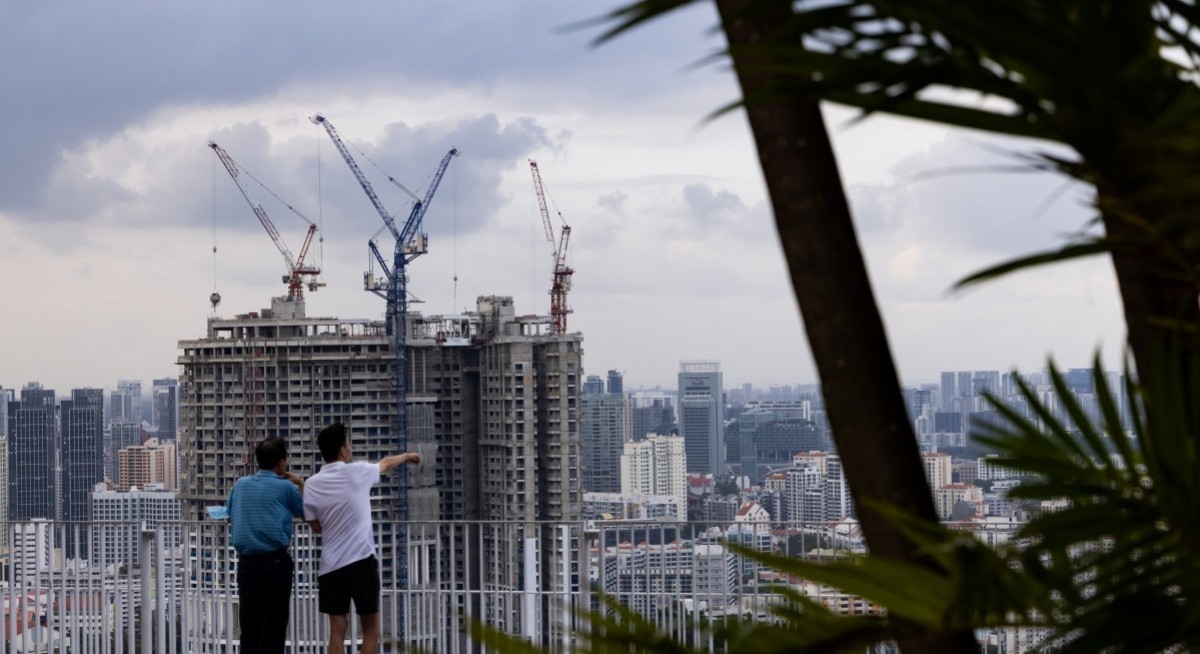


Every day, the world builds an estimated 12.7 million sqm of floor area — roughly the equivalent of adding the entire city of Paris in new floor space nearly every week.
In 2024, the global buildings floor area expanded by 1.7% to 273 billion sqm. This growth was driven largely by construction in emerging economies, including India and Southeast Asia.
The buildings and construction sector now accounts for nearly 50% of global material extraction, 37% of global emissions and 28% of global energy consumption.
Since 2015, global building energy intensity — measuring a building’s annual energy consumption relative to its size — has dropped by 8.5%. Green building certifications have nearly tripled over a decade.
See also: ‘Get your house in order’ before setting science-based targets: CLI exec
Since 2020, however, progress has slowed, as the green transition has not kept pace with the rate of construction, says UNEP.
Decarbonisation has stalled due to three main factors. First, construction is outpacing decarbonisation; new floor space is being added faster than energy systems are being cleaned up, cancelling out efficiency gains.
Second, renovation is too slow; millions of existing buildings remain inefficient and carbon-intensive due to low retrofit rates.
See also: US$82 bil return from US$13 bil in resilience measures for renewables: Zurich Insurance
Third, fossil fuel dependence persists; heating and cooking still rely heavily on fossil fuels, reflecting weak phase-out policies and low priority given to buildings in national climate strategies.
In 2024, renewable energy supplied just 17.3% of buildings’ energy demand, far below what is needed for a net‑zero pathway. To align with a net-zero pathway by 2050, the share of renewables in buildings’ final energy demand must rise from around 17% in 2024 to 46% by 2030.
On-site and local generation, especially rooftop solar, is critical for both decarbonisation and energy affordability — yet its share has stagnated. Investment in energy efficiency reached US$275 billion in 2024, contributing to cumulative investment of US$2.3 trillion since 2015.
Housing crisis
Residential buildings account for 77% of total floor area and around 70% of buildings’ energy demand, placing housing at the heart of both economic growth and climate action.
Energy-efficient, low‑carbon homes cut emissions and protect households from high and volatile energy bills — making homes cheaper to run for decades, says UNEP.
Countries and industry players can help close the housing-climate gap through four means, according to UNEP.
First, prioritising climate‑safe housing for low‑income families, where investments deliver the greatest social and climate returns.
Second, better urban and neighbourhood planning can boost resilience, reduce energy risks and protect communities. Third, the smarter use of materials and nature‑based solutions, including circular construction and reuse of existing buildings, can reduce cost and supply‑chain exposure.
Finally, certain passive design and technologies can lock in affordability over a building’s full lifetime.
“From homes and schools to hospitals and workplaces, buildings play a fundamental role in our lives,” says Inger Andersen, executive director of UNEP. “Buildings can either lock in climate risks or deliver safer, healthier, and more affordable living conditions. With half of the world’s buildings yet to be built or renovated by 2050, governments have a critical opportunity to drive zero-emission, resilient construction through better policies, codes and investment.”




