


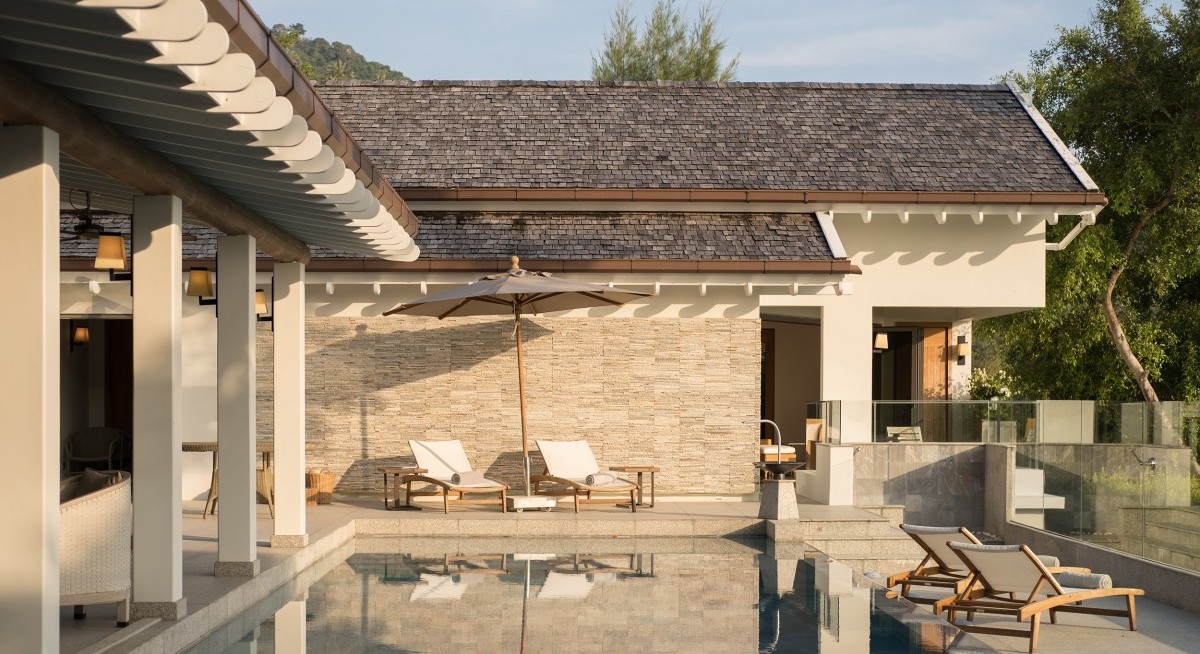


In Koh Samui, the most active segment today is hillside sea-view villas priced between US$1 million ($1.28 million) and US$3 million at List Sotheby’s. This part of the market sees consistent trades, often with professionally managed rental programmes delivering up to 10% gross yields.
The luxury segment in Koh Samui has a ceiling of around US$5 million to US$6 million. At that level, buyers can access some of the best properties on the island, including a cluster of three new villas at the Four Seasons — featured in the third season of American comedy drama White Lotus — which are currently being developed and achieving pricing above US$12 million.
In Phuket, activity is also strong in the US$1 million to US$3 million range, though many properties at that level do not offer sea views, which creates a different value dynamic.
The ultra-prime market in Phuket generally starts above US$5 million, with a natural ceiling around US$30 million, excluding a small number of outliers.
See also: Adaptive reuse of state properties allows for ‘urban experimentation’: SLA chief
Prices at the very top end, between US$20 million and US$30 million, are concentrated within Phuket’s established estates, with rare assets in enclaves such as Amanpuri and Cape Yamu. Amanpuri, in particular, remains a clear outlier, with tightly held inventory, extremely limited turnover and a level of discretion that sets it apart.
Buyers who arrive in Thailand’s resort markets soon notice how different the system is. There is no central public registry of verified sale prices. Transaction data is opaque and asking prices often reflect seller expectations rather than executable levels.
In many cases, serious inventory is circulated privately before ever reaching public channels. Access is structured, not open. Buyers who rely solely on listings are not participating in the actual, full market. They are seeing a limited version of it, and navigating beyond that requires guidance.
See also: Rents at Singapore’s prime offices rise for sixth straight quarter: CBRE
Singaporean families used to a more transparent system can find this disorienting at first. Most adjust quickly.
At the ultra-prime level, some assets are priced in US dollars, while others are baht-denominated. Currency can have an impact, but it is not always the deciding factor.
For those embracing this flexible, multi-jurisdictional approach, a phrase that comes up repeatedly is “home collectors” — buyers who rotate between three or four residences across countries, spending two to three months in each. Singapore remains the financial base; Phuket or Koh Samui provides a different dimension of living.
The two areas each serve distinct roles within that framework. Phuket is larger and more connected internationally and supports a deeper ultra-prime segment. Koh Samui is quieter, with lower density, while still offering relative value at the entry and mid-levels.
Both markets reward scarcity. Properties with strong topography, considered architecture and limited supply tend to hold value. Generic inventory, regardless of finish, tends to sit.
At the same time, liquidity remains selective. Pricing expectations do not always align with what the market will absorb, particularly in a system where visibility is limited.
This cross-border movement is unlikely to reverse. Thailand’s cultural appeal, hospitality and lifestyle offerings remain strong; Singapore’s structural constraints remain in place. For this segment of buyers, the shift is already underway. Singapore remains the engine room; Thailand is increasingly where the rest of life happens.

Felix Desjardins is head of acquisitions for Phuket and Koh Samui at List Sotheby’s International Realty Thailand
For more property trends and breaking news, visit City & Country’s microsite at theedgesingapore.com/cityandcountry




