

At Navigation Capital Group (NCG), we approach these challenges with a unique structural advantage: We are backed by a major Hong Kong-listed real estate conglomerate, yet we are operated by a seasoned, US-based team of development veterans. This dual perspective allows us to execute with local New York expertise while remaining deeply aligned with the cultural and financial expectations of the Asian investor.
Our latest project, Monogram New York, located at 135 East 47th Street, was conceived as a direct response to these cross-border challenges. Rather than viewing it merely as a residential development, we built Monogram as a strategic framework for how Apac capital can efficiently enter the New York market.

For investors evaluating US opportunities, the project outlines four fundamental pillars necessary for a successful acquisition today.
See also: CapitaLand unveils R&D gem Geneo
1. Strategic positioning in a revitalised commercial hub
The first and most critical decision in any real estate acquisition is location, but international investors must also focus on long-term infrastructure and tenant demographics.
While much of the foreign capital over the past decade concentrated on the 57th Street corridor or downtown neighbourhoods, the most significant municipal and corporate investments are currently focused on Midtown East.
See also: Coliwoo’s year of execution
Following the city’s rezoning initiatives, this district is undergoing a massive revitalisation. Monogram is situated at the centre of this shift, directly adjacent to the United Nations, Grand Central Terminal (which recently completed its US$11 billion ($14 billion) East Side Access expansion), and the forthcoming multi-billion-dollar JPMorgan Chase global headquarters.
From an investment standpoint, this proximity is highly strategic. It guarantees a consistent, high-credit tenant pool consisting of diplomats, international executives and finance professionals. For the investor, this location offers robust rental demand and long-term asset stability, rooted in New York City’s foundational economic engine.
2. Mitigating execution risk through asset readiness
The traditional model of purchasing pre-construction — often referred to as buying “off-plan” — carries inherent risks, particularly in the current macroeconomic environment. For an overseas investor, waiting two to three years for a building to reach completion means tying up capital in a non-yielding asset while absorbing the risks of fluctuating material costs and construction timelines.
A core tenet of our strategy with Monogram was to eliminate this execution risk. The building is fully completed and offers immediate occupancy. This allows international buyers to evaluate the physical asset rather than relying solely on renderings.
More importantly, it enables immediate capital deployment. Whether the property is intended for personal use as a pied-à-terre or as an income-producing rental, the asset is ready to generate utility or yield from day one.
3. Operational efficiency and turnkey delivery
Perhaps the most overlooked aspect of overseas real estate investment is the operational burden. Outfitting a luxury property in New York requires managing local contractors and interior designers and navigating extended lead times for furniture delivery — a process made significantly more difficult across a 12-hour time difference.
To streamline the ownership experience, Monogram was structured to offer a comprehensive turnkey solution. Buyers have the option to acquire residences with pre-installed, bespoke furniture packages, allowing for an immediate transition and enabling an investor to close on the property and have it fully operational within 24 hours.
Furthermore, we partnered with Anthology Group to manage the building’s operations. By implementing a hotel-grade management structure — including a 24-hour concierge and in-house property maintenance — we ensure that the asset is professionally maintained year-round.
This setup provides the overseas owner with the operational efficiencies of a luxury hotel, significantly reducing the friction of cross-border management.
4. Cultural alignment and disciplined design
Finally, in a market with substantial inventory, distinct architectural and interior design is a necessary differentiator for value retention.
However, design must also resonate with the buyer’s cultural expectations. To achieve this, we engaged Shanghai-based architectural practice Neri&Hu for their first residential project in New York City.
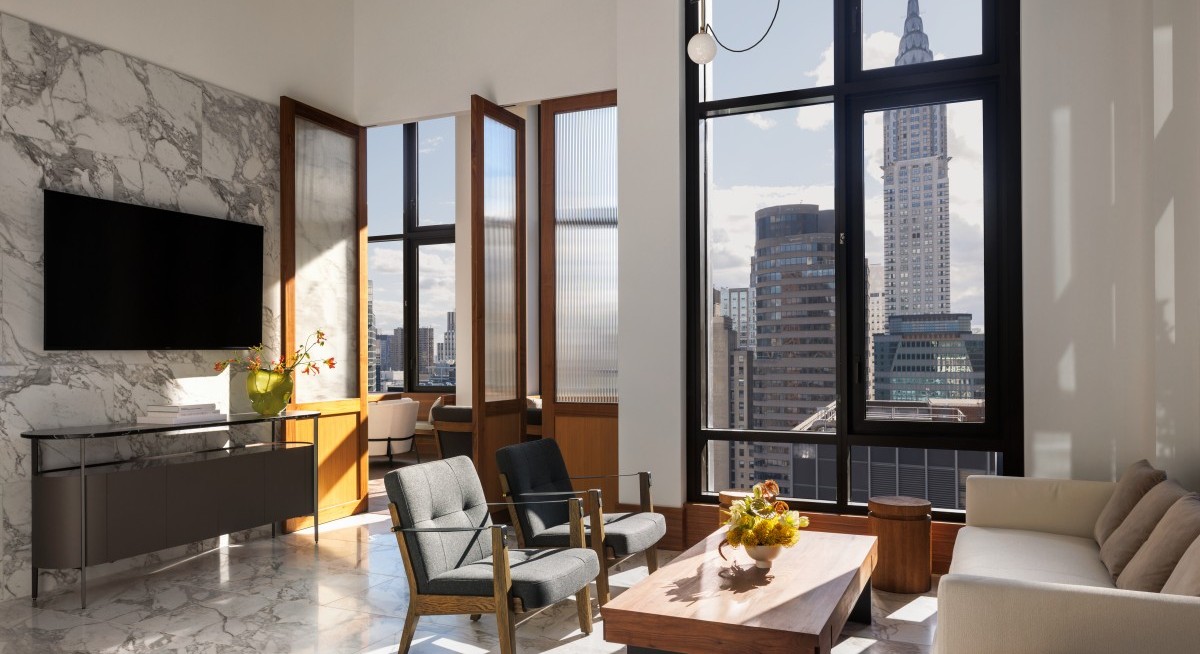
We selected Neri&Hu not only for their strong recognition in the Apac market, but also for their highly disciplined approach to space and materiality. For Monogram, they drew upon the historic Art Deco context of Midtown Manhattan, translating it through their signature lens of “refined domesticity” utilising a tactile palette of fluted oak, antiqued bronze and Calacatta Monet marble.
This design philosophy extends to the Crest Club, the building’s rooftop amenities pavilion, which features private wellness, reading and social spaces. The result is a highly considered environment that provides a sense of sanctuary and quiet efficiency — qualities that resonate strongly with frequent global travellers and discerning Asian buyers alike.
Patrick Zhu is the founder and managing principal of Navigation Capital Group, where he leads strategy, capital relationships and project execution