




On April 21, CICT announced it had upsized the private placement, raising $750 million. The new units were priced at $2.30 apiece and will start trading on April 29.
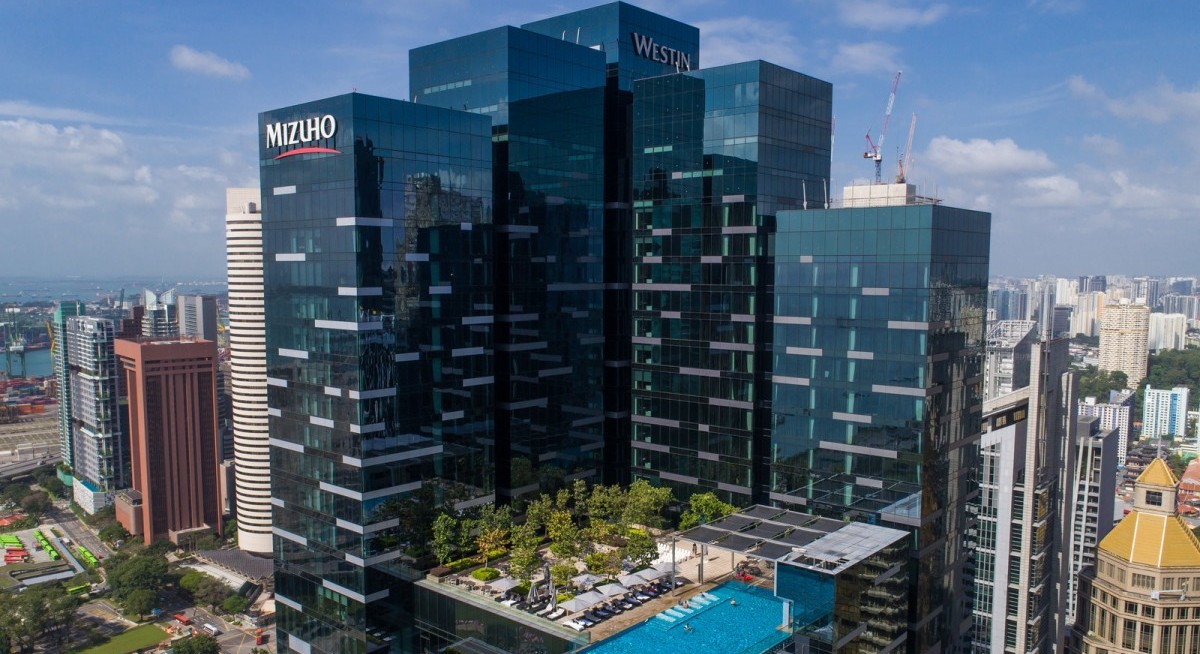
In the largest non-M&A transaction in the public market, CICT announced it will divest Asia Square Tower 2 (AST2) to Malaysia’s IOI Properties Group for $2.476 billion and acquire the freehold Paragon for $3.9 billion from Temasek-backed Cuscaden Peak.
The acquisition of Paragon is an interested party transaction. As such, approval from unitholders is required.
In a recent interview with City & Country, Tan Choon Siang, CEO of CICT’s manager, says: “Paragon is a super-rare and super-high-quality asset; the question has always been how to make it work. Through this transaction, we have demonstrated how we can potentially make it work. We can divest AST2. These two transactions have to go together. Without the divestment of Asia Square, it will be challenging to fund Paragon with debt and equity. The funding structure is a confluence of factors.”
See also: Malaysia’s IOI Properties to acquire Asia Square Tower 2 from CICT for nearly $2.5 bil

According to a bourse filing, CICT’s aggregate leverage would rise to 44% if the divestment of AST2 is excluded from the transaction. With the proceeds from AST2 and the $600 million from the private placement, pro forma aggregate leverage is 39.2%, higher than the 38.6% as at end-2025.
On the other hand, the divestment of AST2 without the Paragon acquisition and the inability to deploy capital would not have been practical for the REIT in the current era, with the three-month compounded Singapore overnight rate averaging 1.04%.
See also: Paragon acquisition extends CICT’s dominance as Singapore’s top retail landlord: analysts
The $1.4 billion gap between the price paid for Paragon and the divestment proceeds from AST2 will be funded by placement and debt.
“We have to think about how to marry the two deals together and it worked out quite well for us. The difference is about $1.4 billion,” Tan adds.
The divestment represents a 9.9% premium to the market valuation of $2.252 million as at Dec 31, 2025, and well above the acquisition price paid by CapitaLand Commercial Trust of $2.095 billion in 2017.
The exit yield is 3%, and the price works out at around $3,203 psf. Although this is lower than the estimated $3,280 psf at which Asia Square Tower 1 was sold to Singapore Central Private Equity Fund (SCPREF), it is higher than its $2,911 psf valuation as of Dec 31, 2025.
“We still like the office in Singapore, but in life, it’s always about trade-offs,” Tan says.

The transaction is accretive to both DPU and NAV
According to CICT’s press release, AST2 had reached a stable phase in its investment cycle, presenting an opportune window to monetise the asset.
Paragon is being acquired at a net property income (NPI) yield of 3.9% compared to AST2’s divestment yield of 3%.
Separately, the announcement indicates that DPU could rise to 11.83 cents on a pro forma basis following the divestment of AST2 and the acquisition of Paragon, compared with the FY2025 DPU of 11.58 cents.
The assumptions for the 11.83 cents DPU (which translates into an accretion of 2.1%) are the issuance of 261.8 million new units priced at 2.292 cents, along with acquisition fees and 50% of management fees paid in units.
However, with the upsized placement, the accretion is likely to be pared down to around 1%.
On the other hand, NAV is likely to rise from $2.09 per unit to $2.12 per unit.
“We are divesting a mature asset and reinvesting into a freehold high-quality, super-rare asset in the heart of Orchard Road, and Paragon obviously needs no introduction,” Tan says.
When queried about the relative defensiveness (or lack thereof) of Paragon versus suburban malls, Tan points to market-watchers, analysts and the media who say the Johor Bahru-Singapore Rapid Transit System (RTS link) is eroding suburban malls’ defensiveness.
Paragon has two components: retail and medical suites and offices. The retail component’s NPI yield is 4.1%, while the medical suites and office is 3.4%.
“Medical is very defensive because of the ageing population and medical tourism,” Tan says.
Paragon’s net lettable area (NLA) is around 714,915 sq ft, comprising 491,817 sq ft of retail and 223,098 sq ft of medical and office space.
According to Savills, there are fewer than 2,000 medical suites in Singapore, of which approximately 50% are located within hospitals. In contrast, the remaining 50% are available on the market, highlighting the value of such medical spaces.
Together with long-term structural demand drivers such as an ageing population and the growth of medical tourism, this scarcity underpins sustained demand for high-quality medical facilities, according to Savills.
Paragon’s immediate adjacency to the Mount Elizabeth medical cluster further positions the property to benefit from medical tourism.
“Orchard Road is defensive in the sense that we cater to both locals and tourists. Tourist numbers in Singapore have been on an uptrend in the last few years,” says Tan.
Tourism receipts in the first three quarters of 2025 reached a record of $23.9 billion, up 6.5% y-o-y, according to the Singapore Tourism Board (STB). This translates to a full-year 2025 performance of $29.0 to $30.5 billion, exceeding STB’s projections.
In addition, the recent conflict in the Middle East has highlighted Singapore as a safe haven, Tan continues.
“In the medium term, we might actually be able to capture a larger share of the tourism market and medical tourism,” he says. “We think the asset itself is likely to be defensive in the short to medium term, and we also own ION Orchard; its performance has surpassed our earlier underwriting assumptions,” Tan points out.

Valuation, AEIs
In April 2025, Paragon REIT, in which Paragon was the main asset, was privatised. At the time, Paragon was valued at around $2.9 billion. The difference in valuation, according to analysts, is that CICT is acquiring Paragon on freehold tenure, whereas Paragon REIT owned a 99-year lease on the land Paragon occupies.
“CICT is acquiring the freehold title from the SPV [special purpose vehicle]. When Paragon REIT was privatised, Paragon was leasehold and valued at $2.9 billion. Paragon REIT itself was privated at a premium to its NAV, which would have priced Paragon higher. The 10% to 15% premium for freehold places Paragon at around $3.5 billion to $3.7 billion, and the rest is likely to be from the decline in interest rates,” suggests an analyst.
In 2025, as part of the rationale for privatising Paragon REIT, the offeror, Cuscaden Peak, had stated that Paragon required extensive asset enhancement initiatives (AEIs) costing $300 million to $600 million to remain competitive along Orchard Road. This would negatively impact Paragon REIT’s NPI and DPU, the offeror had said.
“As with any asset that is in our portfolio, we will always try to seek the highest value that we can create out of the asset. After we buy over, we will take a look to see if AEI is necessary, if it’s good for the portfolio — for the asset, for unitholders — and decide what’s best,” Tan elaborates. “The calculation of accretion or the financial return to unitholders is based on the assets and the portfolio. At Paragon’s existing level of NPI, we can generate returns and accretions.”
Paragon, when it was owned by Paragon REIT, was a different proposition from Paragon held under CICT. In Paragon REIT, Paragon accounted for 72% of assets. Within CICT, Paragon is likely to account for around 13% of asset size.
“If we were to embark on an AEI — and we haven’t made a decision — we will do it such that it will not dent our cash flow as significantly and we will still maintain a stable DPU,” Tan says.
CICT has opted to partially finance the acquisition through a placement rather than a preferential offering, as the pricing is tighter and therefore more accretive to unitholders.
Placements are done overnight, which is swifter, and the certainty of completion is higher with a private placement, especially given a couple of preferential offerings that were undersubscribed in the past six months.
Photos: Albert Chua/The Edge Singapore, CICT
See also:
Paragon acquisition extends CICT’s dominance as Singapore’s top retail landlord: analysts
Malaysia’s IOI Properties to acquire Asia Square Tower 2 from CICT for nearly $2.5 bil
For more property trends and breaking news, visit City & Country’s microsite at theedgesingapore.com/cityandcountry




