




The growth underscores “strong owner confidence in Ascott’s brands and its proven ability to convert signings into operational properties at scale”, says Ascott in an April 20 announcement.
The group’s regional portfolio now comprises 200 operational properties and a pipeline of about 150 properties across Southeast Asia, spanning multiple typologies and markets. The group also plans to open more than 25 properties in the next 12 months.
Growth underpinned by structurally resilient fundamentals

See also: Muslim tourists set to drive US$310 mil in annual spend by 2030
Southeast Asia continues to be one of the most dynamic hospitality markets in the world and Ascott is well-positioned to capture the opportunity, says Serena Lim, chief growth officer of Ascott
Ascott says its expansion comes amid strengthening tourism fundamentals in Southeast Asia, supported by a “near-complete post-pandemic recovery” in 2025. In addition, intra-Asean demand, rising visitor spending and improving regional connectivity are driving travel momentum, according to Ascott.
That said, the hospitality market remains highly fragmented, says Ascott, with independent and unbranded properties accounting for most of the hotel supply in this region.
As a result, this region will continue to offer a strong pipeline for Ascott’s growth through signings and conversions, as more of these owners look to established international operators for brand strength, distribution reach and revenue capabilities, says Ascott.
Serena Lim, chief growth officer of Ascott, says: “Southeast Asia continues to be one of the most dynamic hospitality markets in the world and Ascott is well-positioned to capture the opportunity.”
Lim adds: “Our expansion is intentional and owner-led, anchored by long-term partnerships with owners who value our flex-hybrid model and its ability to deliver resilient outcomes. Supported by our multi-typology brand strategy, we have moved beyond our serviced residence heritage to unlock opportunities across a broader range of lodging types. The depth of owner interest and track record across Southeast Asia gives us confidence in both our pipeline and our ability to execute this expansion.”
Growing into new cities and markets
Ascott’s pipeline will extend its footprint into around 20 new cities across Southeast Asia, taking the company beyond established gateway markets and deeper into emerging leisure and business destinations.
New cities entering the Ascott portfolio include Phu Quoc and Nha Trang in Vietnam; Phuket and Hat Yai in Thailand; Labuan Bajo and Medan in Indonesia; Davao and Biñan in the Philippines; and Johor Bahru and Langkawi in Malaysia.
Ascott is also leveraging conversions as a key growth lever, with about “30% of the development pipeline in Southeast Asia” delivered through conversions. This includes three Bayview-branded properties in Penang and Langkawi owned by Oriental Holdings, which will be rebranded as Ascott Batu Ferringhi Penang, Oakwood Georgetown Penang and Fox Hotel Langkawi by 2028.
Conversion projects expected to open within approximately one year of signing include Citadines Mitra Bandung, Oakwood Pandanaran Semarang and Fox Hotel Nagoya Batam.
This “dual-track approach” — growing via new developments and conversions — enables faster market entry for Ascott where “opportunities exist, but greenfield supply pipelines are constrained”. In turn, this addresses supply constraints in certain markets and strengthens the group’s ability to scale efficiently across diverse markets and property types, adds Ascott.
Multi-typology expansion and upcoming properties
The opening pipeline reflects Ascott’s “multi-typology” strategy, which spans serviced residences, hotels, resorts, social living concepts and branded residences across brands such as Ascott, Citadines, Lyf, Oakwood, Somerset, The Crest Collection and The Unlimited Collection.

Resorts are emerging as a key growth segment within Ascott’s pipeline, with upcoming openings across Vietnam, Indonesia, the Philippines, Malaysia, and Thailand set to complement its ‘urban’ portfolio
Resorts are emerging as a key growth segment within this pipeline, says Ascott. Upcoming resort openings across Vietnam, Indonesia, the Philippines, Malaysia and Thailand will complement Ascott’s “established urban portfolio” and strengthen its balance across business and leisure travel segments.
Ascott also hopes to draw meetings, incentives, conventions and exhibitions (Mice) to Ascott Tay Ho Hanoi, set to become Ascott’s “largest full-service Mice hotel and a landmark events and hospitality destination in Vietnam’s capital”.
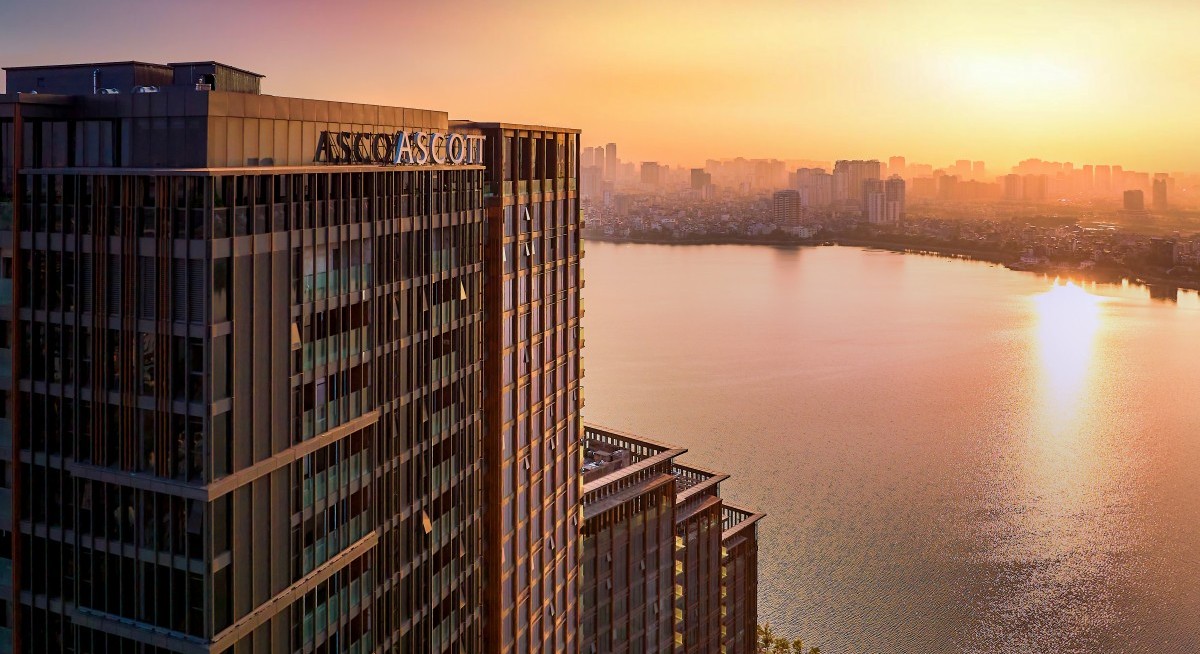
Located on the shores of West Lake in Hanoi’s upscale Tay Ho District, the property features a convention centre with 13 flexible event spaces — including Hanoi’s largest pillarless hotel grand ballroom with capacity for up to 2,000 guests.

Ascott Tay Ho Hanoi features an international convention centre with 13 flexible event spaces, including Hanoi’s largest pillarless hotel grand ballroom with capacity for up to 2,000 guests
The convention centre is already operational. When fully open in 2027, the property will also offer 1,165 hotel rooms and serviced apartments as well as premium wellness facilities including a spa, gym, indoor and outdoor swimming pools and yoga rooms, alongside 10 dining concepts and a sky bar overlooking the lake.
Ascott Tay Ho Hanoi combines long-stay living, hotel accommodation and world-class Mice facilities under one roof, firmly establishing Ascott’s credentials in Vietnam’s fast-growing meetings and events market, according to the group.
This comes as Asean’s fastest-growing tourism market recorded 21.2 million international arrivals last year, becoming the third-most-visited destination in Southeast Asia.
Other upcoming openings slated for 2026 include heritage- and lifestyle-led projects such as 1926 Heritage Hotel Penang by The Unlimited Collection and Lyf Chinatown Singapore, alongside developments such as Somerset Clarke Quay Singapore (part of CanningHill Piers) and Ascott Ortigas Manila.
Wong Kar Ling, Ascott’s chief strategy officer and managing director, Southeast Asia, says: “The upcoming wave of openings reinforces Southeast Asia’s role as both a core growth engine and a showcase for Ascott’s multi-typology brand strategy. As we scale across cities and resort destinations, disciplined execution remains our focus — from efficient conversions to reliable delivery on the ground.”
Wong adds: “We are particularly excited about our upcoming resort openings across the region, which will meaningfully expand our leisure offerings and open up new destinations for Ascott Star Rewards members to explore and enjoy their rewards.”
In February, Ascott announced it signed a record 19,000 units across 102 properties globally in 2025, marking 27% y-o-y growth.
In 2025, Ascott entered more than 10 new cities across Asia Pacific and Europe, growing its global footprint to over 230 cities in more than 40 countries. The company now operates and has under development more than 1,000 properties with over 176,000 units globally, according to a Feb 9 announcement.
The flagship Ascott brand recorded 10 new signings, expanding its global portfolio to 87 properties including operational and pipeline assets.
Photos: The Ascott




