




1 Hotel Tokyo will anchor the next-generation Tokyo World Gate Akasaka, a mixed-use development project in Minato City, Tokyo. The Tokyo World Gate Akasaka site spans 17,980 sqm with a total floor area of 236,000 sqm.
The 43-storey tower includes modern office spaces, a hotel, serviced apartments and cultural facilities, complemented by green spaces.
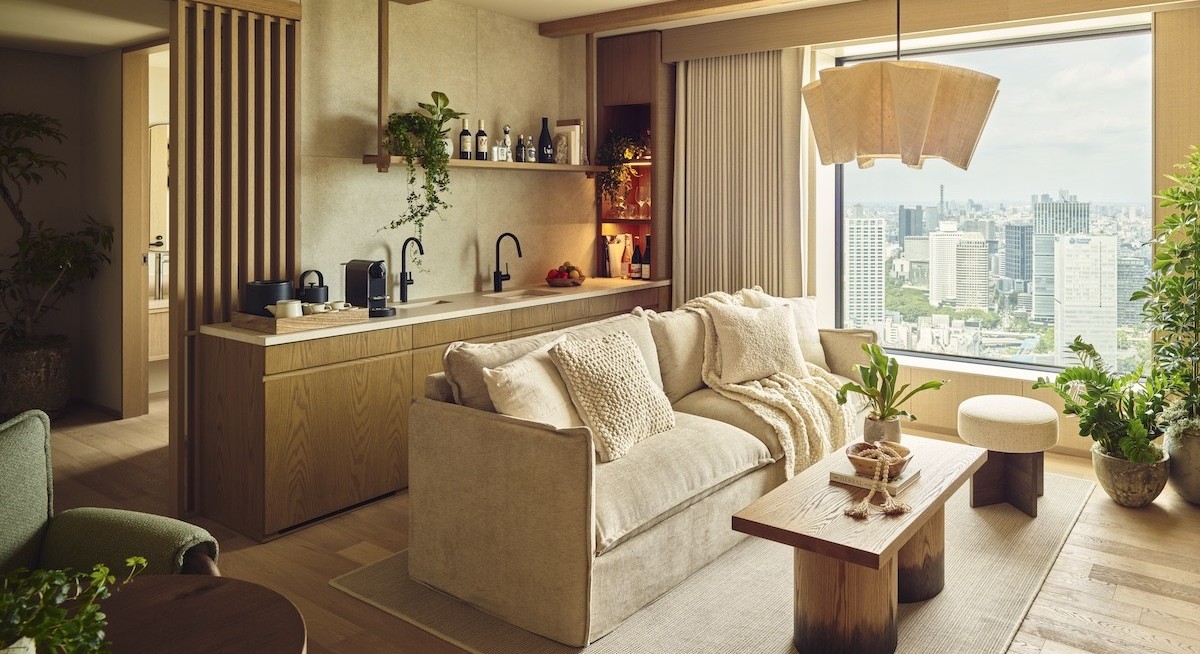
The hotel offers views of the Imperial Palace gardens, Tokyo Tower, and the city skyline. Biophilic design — a hallmark of 1 Hotels — guides the overall design vision, while Japan’s tradition of craftsmanship informs the details, uniting nature and artistry.

See also: 268-suite Waldorf Astoria Kuala Lumpur open for bookings from January
Tower King Room living area
“Design is at the heart of everything we do at 1 Hotels, and Tokyo gave us an inspiring canvas to create something that is both beautiful and responsible,” says Raul Leal, CEO of Starwood Hotels. “We approached every aspect, from material choices to wellness spaces, with intention, creating a hotel that is deeply connected to its surroundings and ahead of its time.”
Throughout the public areas, guests can easily connect to nature, from the outdoor green wall at the ground-floor arrival to preserved greenery woven throughout the interior spaces. Upon arrival at the 38th-floor lobby, guests are greeted by a vertical botanical installation and a sculptural entry vestibule clad in preserved moss, recycled timber panels and Oya stone (a historically significant local rock used by Frank Lloyd Wright in some of his iconic Japanese projects).
See also: 128-room Varel Singapore, a Tribute Portfolio Hotel, rises from former Selegie Centre site
The space unfolds into a Zen-inspired lounge surrounded by potted plants and built-in planters, as well as a garden with sculptural rocks and gravel.
Organic textures reflect the hotel’s nature-led sensibility, with materials chosen for their authenticity, depth, and tactile appeal, from sand-textured wallpaper to hand-raked plaster finishes. A ribbon of gravel along the walls evokes Japan’s tranquil streambeds. Together, these elements reinterpret Japan’s wabi-sabi aesthetic for a modern era.
The hotel has 211 guestrooms, including 20 suites, three exclusive Penthouse Collection suites and five accessible rooms.
Each room is designed with sustainable finishes, biophilic art made of preserved moss and recycled pallets, locally crafted decor and curated greenery.

1 Hotel Tokyo's signature restaurant
The hotel also includes culinary and bar experiences. The design of the food and beverage spaces reflects the brand’s nature-led philosophy and dedication to local craftsmanship, pairing natural materials with warm, tactile finishes and expansive views over Tokyo. Private dining rooms are adorned with artwork made from washi paper and dried botanicals.
From intimate meetings to weddings, the hotel offers more than 460 sqm of meeting and celebration space, including the Sakura and Camellia rooms on the 38th floor. These light-filled venues offer flexible layouts and dramatic views of Tokyo Tower and Tokyo Bay. As part of the brand’s Certified Sustainable Gatherings programme, events are supported with zero-waste planning, local catering and real-time environmental reporting.
Wellness is also a core focus to the 1 Hotel brand and 1 Hotel Tokyo will feature a spa with five private treatment rooms or couples’ suite. The hotel will also include a 24-hour gym and indoor pool.

Indoor swimming pool
The hotel has already achieved CASBEE S certification, Japan’s highest rating for environmental performance. Sustainability informed the hotel’s design from the ground up, including architectural materials, energy systems, operational practices and guest amenities.
The property uses smart energy-efficiency systems and extensive water conservation measures. Refill stations reduce single-use plastics, while the kitchens operate on a zero-waste, composting-first philosophy.
That same ethos carries through in the design details, from moss panels that connect guests to nature to the adaptive reuse of reclaimed wood. Public and guest spaces are adorned with works created by Japanese artisans using organic materials.




