




Sajal Kishore, Fitch Ratings’ head of Asia-Pacific infrastructure and project finance, says investors should look at where the facilities are located and whether they can serve and meet cloud-driven demand if the current fierce-paced AI demand slows.
While AI-related demand is expected to grow, he says it can be less certain because business models and technology could evolve rapidly.
“AI-driven growth can be more speculative and can be a bit risky because your underlying business models can change, and therefore the use of the data centre can become redundant,” he tells The Edge in an interview.
That is where location becomes critical, he says. “If, at that location, that data centre can be repurposed for cloud, then it sort of de-risks that facility, even if it is being used today for AI.”
See also: Asia-Pacific data centre market set to triple by 2030 as AI drives demand: Aprea
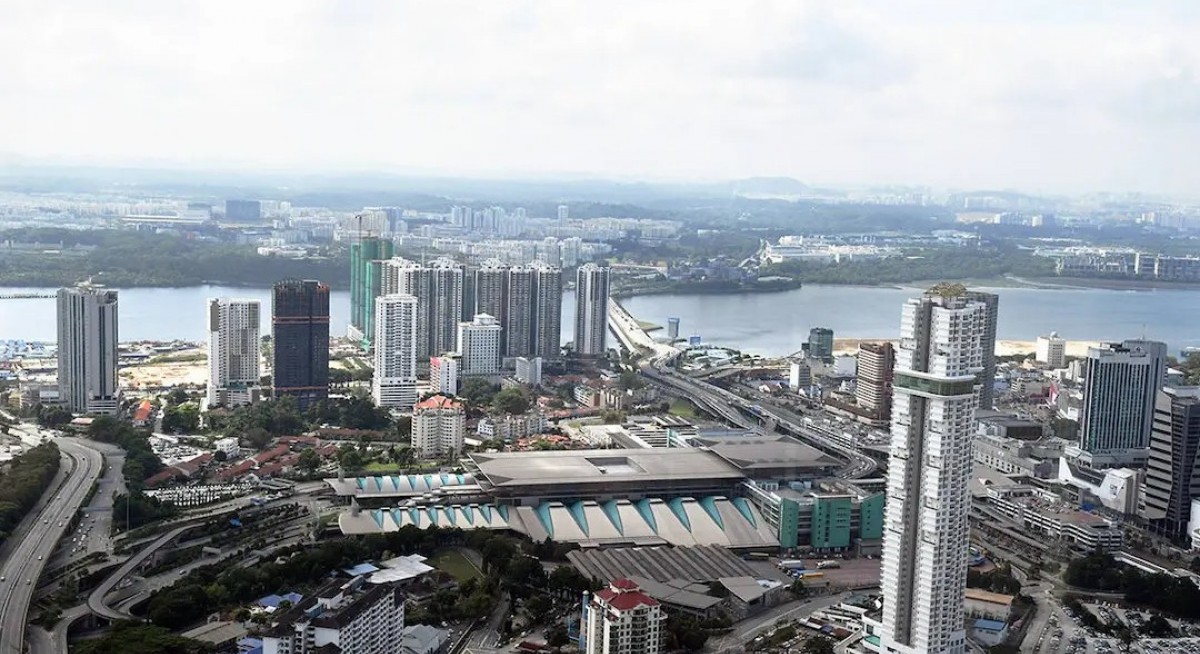
That’s where Johor has an advantage, Kishore says. He points out that many of the facilities being developed in Johor can also tap cloud demand or AI inference demand spilling over from Singapore, where land and power constraints continue to limit new data centre development.
In contrast, he says data centres built in remote locations solely for AI purposes are inherently riskier as they have fewer alternative uses should AI demand weaken.
Earlier in February, Malaysia’s Prime Minister Anwar Ibrahim announced that proposals for data centres in the country unrelated to AI have been stopped since 2024.
See also: Data centre developers expected to increase fuel cell investment tenfold to US$30 billion by 2030
“This policy validates our view that Malaysia is prioritising high-value, capital-intensive projects, formalising the dynamic of only approving larger AI data centres that require more capital. Hence, consolidation among well-funded platforms continues as the barriers to entry into the Malaysian market, particularly within Johor, increase and favour large established players over new entrants,” BMI, a research affiliate of the Fitch group, said in a May 11 report on data centres in Asia-Pacific.
The data centre sector in Asia has been experiencing strong growth, fuelled by robust cloud demand, increasing AI adoption and rising digitalisation across industries. “Cloud demand is really the bedrock supporting that growth,” Kishore says.
He says it is cloud computing — not AI — that is the primary driver of data centre demand across Asia. He estimates that roughly 70% of current demand is cloud-related, while AI accounts for about 30%. “Over time, you would see that switch in the complete reverse,” he predicts.
Malaysia has emerged as one of Asia’s fastest-growing data centre markets, benefiting initially from Singapore’s capacity constraints.
While precise figures remain fluid given the large pipeline of projects at different stages of development, Kishore estimates — based on reports — that Malaysia could have roughly 2GW of operational and planned capacity by year-end, exceeding Singapore’s current 1.4GW to 1.5GW. “So, it’s a big market.”
Kishore says Asia’s top data centre locations today — Tokyo (Japan), Singapore and Sydney (Australia) — are increasingly constrained by land, power or water, prompting developers to expand into the “next-best location”. Johor has benefited from this spillover as Malaysia’s relative abundance of land, power and water, coupled with demand overflowing from Singapore, makes it an attractive destination for investment.
“So that’s kind of spurred the data centre investments in Malaysia. And you’re seeing this spillover going to even Batam in Indonesia, and also Thailand,” Kishore adds.
He says data centre expansion will naturally spread to more locations as existing markets become increasingly constrained over time.
Just last week, Australian AI infrastructure firm Firmus Technologies said it would develop its first data centre in Batam with Singapore-based DayOne, as part of a strategic partnership with US chip giant Nvidia. It expects to win as much as US$30 billion ($38.81 billion) in committed off-take agreements in its first six years.
Kishore says he does not see oversupply as an immediate risk for Malaysia’s data centre sector, as the availability of power and water naturally limits the pace of new developments. As capacity constraints emerge in Johor, he says, new investments are likely to shift progressively to the Klang Valley and other parts of the country, rather than creating an oversupply.

The challenge of funding
An emerging challenge for the data centre sector is financing. Investor appetite remains strong, with new data centre announcements continuing across the region. “But financing is starting to become challenging because the amount of capital required for these facilities is quite significant,” Kishore says.
In Asia, most projects continue to rely on syndicated bank loans, but lenders are becoming increasingly cautious about AI-related risks, particularly contract renewal risk once initial leases expire.
Some Malaysian banks, he notes, are willing to lend only against the initial customer contract period, which forces developers to seek refinancing once those contracts mature.
With time, Kishore expects greater reliance on capital markets, structured finance and private credit for long-term financing, similar to funding models already common in the US.
Recently, Bloomberg reported, citing unnamed sources, that data centre operator AirTrunk, backed by private equity firm Blackstone, is close to filing confidentially for an IPO of a REIT in Singapore. The newswire had reported earlier in April that AirTrunk was seeking to raise about US$1.5 billion from the offering.
This story first appeared in the July 6 issue of The Edge Malaysia




