


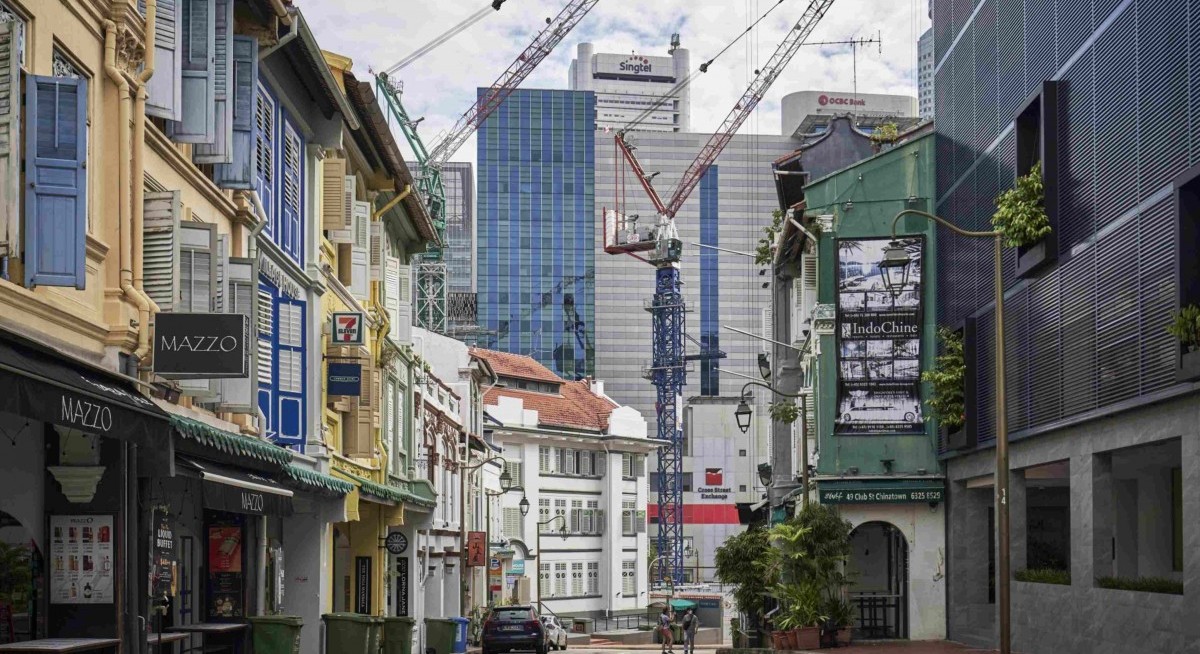


According to the firm’s mid-year Apac construction market insights report, released June 24, construction cost inflation across the region remained elevated in 1H2026 as key commodity prices continued to rise. Copper, a critical material for construction and infrastructure projects, saw prices rise by 9% to 18% q-o-q across Apac markets in 1Q2026. Prices are expected to increase by a further 1% to 6% in 2Q2026, though Singapore and Malaysia are likely to experience increases at the lower end of the range, notes Linesight.
Meanwhile, lead times for critical long-lead equipment (LLE) remain significantly extended globally, with some “more than doubling since 2021”. These specialised, high-value materials or machinery include generators, chillers, compressors, gas turbines and other equipment with extended manufacturing and delivery times.
Linesight estimates cost indices for major equipment categories will rise from a baseline of 1.00 in 1Q2024 to between 1.08 and 1.19 by 4Q2026.
“As geopolitical disruptions and macroeconomic uncertainty persisted and intensified in the first half of 2026, delivery risk has become the industry’s most pressing challenge to navigate,” says Scott Halyday, regional director for Southeast Asia at Linesight. He adds that earlier planning, more disciplined procurement and careful contractor selection are becoming increasingly important.
As rising equipment costs and longer procurement timelines become major risks, project delivery risks are increasingly driven by manufacturing capacity and supply chain constraints rather than on-site construction activity, says Neil L. Doyle, director of procurement and supply chain management at Linesight. “For mission-critical and high-tech industrial projects, LLE now accounts for around 35% to 40% of total capital expenditure, up from 25% to 30% historically.”
He adds: “The average capital cost per megawatt for LLE has increased by approximately 50% to 60% since 2021, driven by inflation in materials, components and labour, as well as capacity constraints and elevated order backlogs across key OEMs.”
The consultancy’s supplier survey also found that a quarter of suppliers across the global data centre supply chain are already operating above 80% capacity utilisation. By 2027, half of them expect to exceed that level.
See also: Singapore’s built environment must build a collaboration advantage
Apac among the strongest growth regions
While construction costs remain elevated, Apac is among the strongest growth regions for construction, underpinned by investment in digital infrastructure, advanced manufacturing, energy, transport and major public programmes, Linesight adds.

India leads the Apac region in data centre development, supported by a pipeline valued at US$114 billion ($147.79 billion), notes Linesight. The construction industry expanded by 7.2% in 2025 and this momentum is set to continue through 2026.
Malaysia’s construction industry is projected to grow by 3.5% annually between 2027 and 2030, driven by industrial, transport and energy investments. Singapore’s construction industry is forecast to grow by around 4% annually through 2030, supported by manufacturing and major transport and energy projects; while Thailand is expected to grow by 4.3% annually over the same period, driven by data centres, clean energy and smart industrial estates.
Among the sectors, data centres remain one of the strongest growth drivers, notes Linesight. Singapore continues to expand capacity selectively through its Data Centre Call for Application programme (DC-CFA2), which allocates new capacity based on stringent sustainability and energy efficiency requirements. Launched in 2025, the programme released at least 200 megawatts of new capacity.
Malaysia is also benefitting from spillover demand from Singapore, with Johor emerging as a key data centre hub alongside Cyberjaya, Kuala Lumpur and Negeri Sembilan. Taiwan is scaling AI and cloud infrastructure, while Japan’s expansion is increasingly shifting beyond Tokyo to other regions as land and power constraints intensify in core hubs.
Elsewhere, Australia is seeing data centre demand expand beyond Sydney into Melbourne and regional markets. In the Gulf Cooperation Council (GCC), large-scale AI and cloud ambitions remain strong, but recent conflict-related disruptions have exposed how sensitive these programmes are to physical and geopolitical risks, notes Linesight. Despite that, “the UAE and KSA are both pushing ahead with large-scale digital infrastructure plans”.
Looking ahead, Linesight says “conditions may moderate in the second half, provided that the Middle East conflict settles”. However, the broader economic outlook remains uncertain. The International Monetary Fund forecasts Apac economic growth to moderate from around 5% in 2025 to 4.4% in 2026 and 4.2% in 2027, assuming energy market disruptions remain temporary.

Regional inflation is expected to rise to about 2.6% this year from 1.4% in 2025 as higher oil and gas prices feed through to inflation, trade balances and fiscal pressures. Still, Linesight notes that the region’s fundamentals remain strong. “Diversified policy frameworks, ongoing infrastructure investment, and substantial fiscal buffers continue to support stability.”
However, the impact is uneven, with economies exposed to trade and tourism facing greater near-term pressure. “A gradual recovery is expected as conditions stabilise. Sovereign wealth assets and diversification strategies will remain key supports for medium-term growth,” adds Linesight.
Charts: Linesight




