


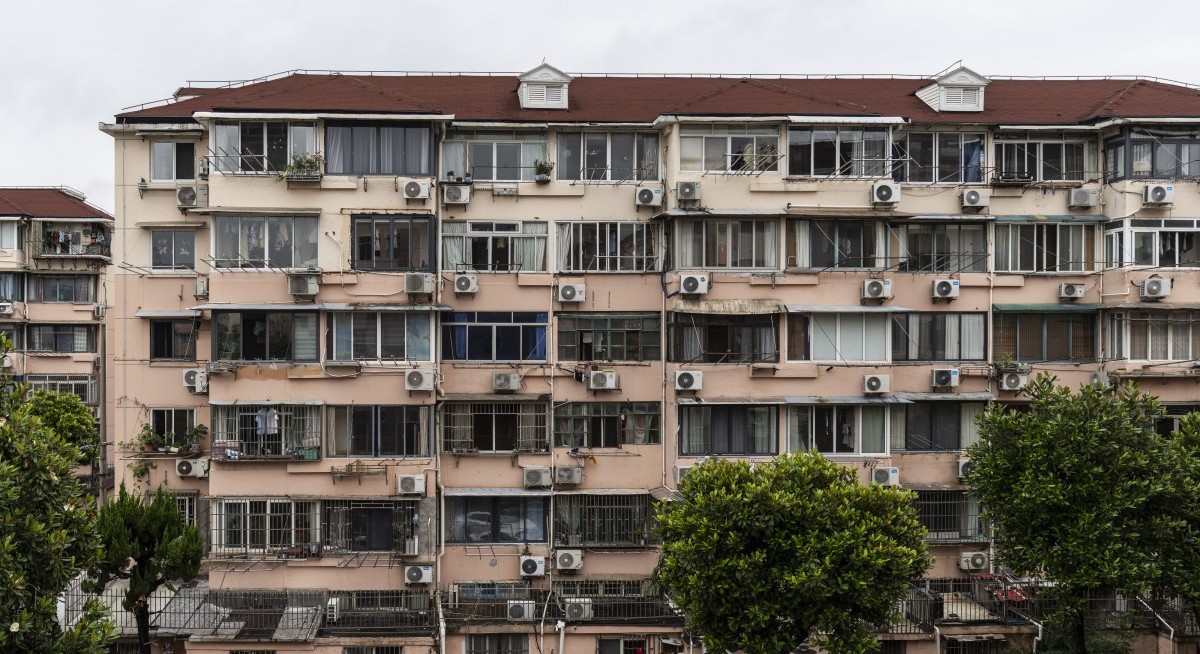


Five years into China’s real estate slump, homebuyers are finally starting to return. The catch for developers: they’re avoiding shiny, new apartments and concentrating on small, old ones.
Buyers in major cities are putting their money into flats that were largely built during a Soviet Union-inspired construction drive in the 1970s and 1980s. Known as laopoxiao — which translates as old, shabby and small — they tend to suffer from poor insulation and outdated plumbing.
Buyers are overlooking such flaws because the apartments are often located in attractive areas with good schools, public transportation and other amenities. That’s sent values of small homes higher, at least in some cities. The average price of Shanghai apartments smaller than 70 sqm climbed 2.4% from a November low through the end of April, defying a nationwide decline in the wider market, according to research firm Proptech Innovations.
The hyper-focus on small, aging homes suggests a broader recovery in China’s property market is still a long way off, despite rising optimism among Wall Street banks. But it’s also in line with Beijing’s efforts to encourage ordinary Chinese to use more of their money for consumption and investment, rather than rushing into property speculation.
“At first glance, it might feel like you’re living in a prison cell,” said Jason Lu, a landlord who owns a four-decade old flat in a Shanghai housing estate that has iron bars on the windows.
His pitch to potential renters is to look at the surrounding area. Within 200 metres, they can enjoy riverside views, a tennis court and access to the Lujiazui business district, he said. A subway station is also planned for the area.
See also: China omits job goal for first time in decades as AI spreads
Lu, 44, purchased the 32 sqm property for around US$290,000 ($374,883) in March, and spent more than double that for a bigger unit in the same complex. He is redecorating the smaller space for leasing. The larger apartment already has a tenant.
The units aren’t exactly cheap for their size. Combined, the price amounts to more than US$830 psf, nearly five times the average for new homes nationwide in the US, based on census bureau data.
China’s property slump has been a long-term source of pain for the economy, fuelling US$130 billion of debt defaults and pushing once-high flying developers like China Evergrande Group and Country Garden Holdings to collapse. Signs earlier this year that the selling pressure was easing proved short-lived: In May, the decline in both used and new home prices sped up, and analysts warn the market has now entered a traditionally rough season for sales.
See also: MiniMax joins China AI fundraising rush with US$2 bil deal

The scale of China’s property crunch means analysts have for years been on the look-out for green shoots that signal a turnaround, and demand for small apartments is the latest source of hope. But the data suggests another caveat: Even in this part of the market, the recovery is only occurring in the biggest cities.
When used-home sales in Shanghai jumped to a four-year high in March, about half of the transactions were for apartments priced lower than 2 million yuan ($380,000), according to Proptech Innovations. Beijing, Shenzhen and Hangzhou — a technology hub which Alibaba Group Holding and artificial intelligence company DeepSeek call home — are seeing similar behavior.

Poorer cities, many of which didn’t experience the Soviet-era building boom of the 1970s and 1980s, have also missed out on the recovery. That is reflected in broad gauges: While used-home prices in top cities rose around 0.35% in May, those in so-called tier two and tier three cities haven’t had a positive month since 2023, according to data compiled by Bloomberg.
Used-home prices in Shanghai fell about 15% between March and December last year, and were down more than a third from their peak levels hit in 2022, according to data from Centaline Group.
China’s local governments have made multiple efforts to revive the property market, so far with mixed results. More than 80 local governments this year raised borrowing quotas backed by the housing provident fund, a government savings program used to help people buy homes at lower interest rates than banks, according to China Index Holdings.
Shanghai, Shenzhen and other cities have expanded homebuying access to non-local residents, who were previously considered ineligible. Late last year, the central government also lowered the value-added tax on selling residential properties owned for less than two years.
The demand for older homes is unusual in China, which for years was obsessed with new projects. It means that cash-strapped developers, which are relying in part on demand returning for their glut of unsold properties, have little hope to benefit from the partial recovery.
A Bloomberg Intelligence gauge of Chinese developer shares has tumbled 24% this year, compared with a 2.7% gain in the benchmark CSI 300 index. Although a residential recovery may be starting in a few big cities, that won’t be enough to stem the pain of a countrywide slowdown, said Ting Lu, chief China economist at Nomura Holdings Inc.
“China remains in a long-lasting property bust,” he wrote in a report in May.
Chart and photo: Bloomberg




