


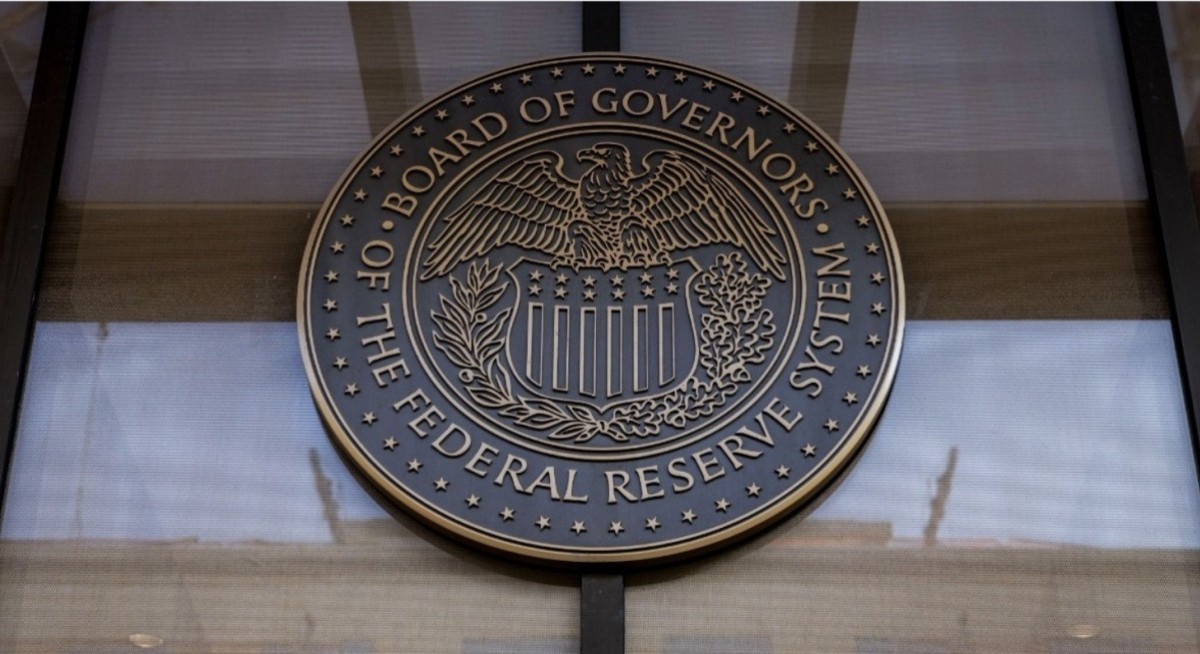


Although the US equity markets appear to be gravity-defying, rising risk-free rates (10-year US Treasury yields) would inevitably impact equities at some point. Although the Fed set US short-term rates, and Kevin Warsh, the new US Fed chair is under pressure to cut rates, the longer-term Treasury yields move with inflation expectations, economic growth expectations, and government borrowing needs.
If the current trend of the 10-year and 30-year Treasury yields is sustained, Warsh may be under pressure from markets to keep short-term rates unchanged. In fact, during DBS’s 1Q2026 results briefing on Apr 30, its CEO told media that DBS is expecting no rate cuts this year.
The relationship between risk-free rates and equities is complicated. But generally, higher risk free rates increases the required return on equity calculated in valuation models such as the capital asset pricing model.

See also: Firmer rates, hawkish Fed, banks at new highs

Despite the angst over de-dollarisation, Daria Parkhomenko, FX Strategist at RBC says: “In the coming months, there isn’t a clear reason to sell the USD, if the USD is a relatively high yielder in G10, there are consistent flows into US assets, and the USD is a ‘safe haven’ (even if not on strong footing).” Monthly flows show that despite Fed independence concerns in the summer of 2025, and the policy uncertainty surrounding Greenland in January 2026, foreigners were consistently buying US securities.
“If there are consistent net flows into the US, that makes it difficult to argue for USD weakness on this driver,” Parkomenko says.
See also: UBS initiates coverage on JustCo with a 12-month price target of $1.18
Nonetheless, the spectre of rising US risk-free rates has filtered through to Asia. Hence, although the Straits Times Index rose by 68 points week-on-week, it felt like the index closed the week of May 11-15 on a weak note. This is because the index tested an intra-day high of 5,015 and a closing high of 5,003 before retreating. This is the STI’s fourth attempt at clearing 5,040. ADX has fallen to 12, reflective of the STI’s sideways range. The DIs have turned positive, but with ADX in the pre-teens, an upmove at this stage is likely to be a low probability.
Quarterly momentum remains in declining mode. 21-day RSI is moving sideways. The weight of the indicators suggest that the STI could ease mildly. Support appears at 4,700. Resistance has been established at 5,040.




