


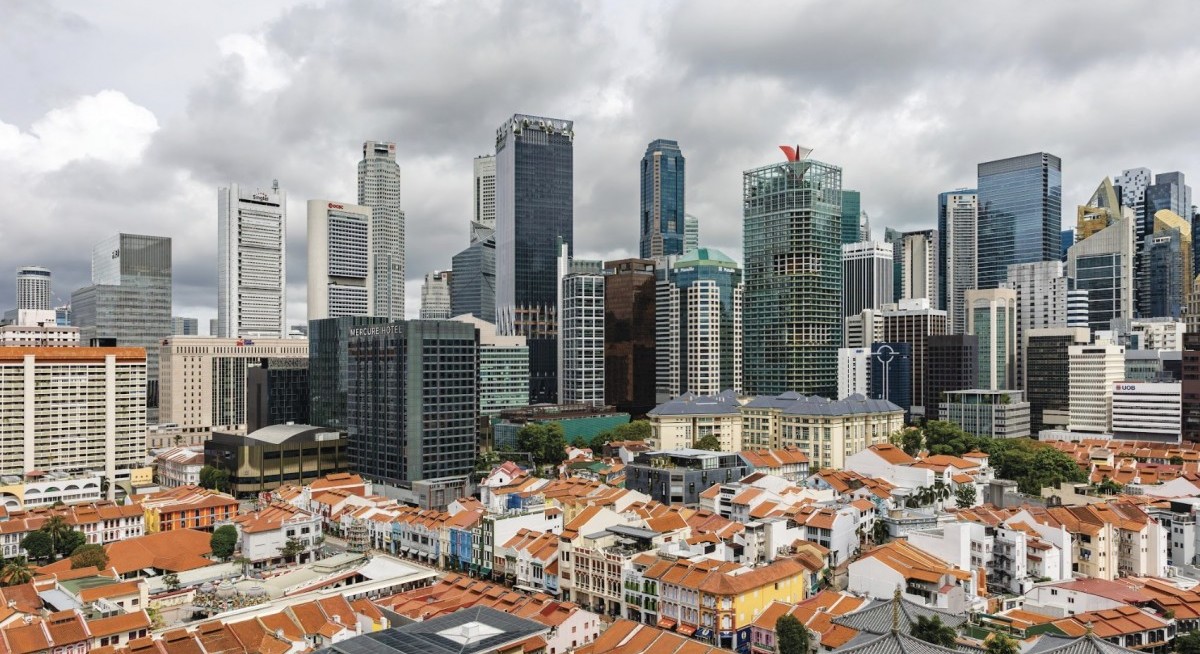


The REIT Association of Singapore (REITAS) represents the S-REIT sector and focuses on promoting the growth and development of the S-REIT industry. In addition to consulting with regulators and policymakers on issues affecting S-REITs, REITAS organises talks, courses, investor conferences and retail education events to promote understanding and investment in S-REITs.
The challenges and opportunities that REITs face over the next 10 years are turning out to be somewhat different from those in their early years, as asset classes and geographies have broadened, bringing new risks.
In 2002, the first S-REIT, CapitaMall Trust (CMT), listed with around $895 million of mainly retail assets, with an IPO price of 96 cents and a yield of 7.06%. CMT has transformed into CapitaLand Integrated Commercial Trust (CICT), with assets of $27 billion, and a market value of $18 billion. This makes CICT the largest REIT by market value in Asia. As a large, liquid blue-chip REIT, CICT’s distribution per unit (DPU) yield is below 5% (as at April 13). Its assets are mainly in Singapore and the DPU is transparent and mainly from operations. Annually, CICT pays out more than 90% of its distributable income, retaining a small portion for working capital.
As the S-REIT sector grew over the past 24 years, challenges emerged for various asset classes. The Covid-19 pandemic changed the way some societies behave, particularly in economies with large landmasses such as the US and Australia. As a result, the US office cycle went into a slump. Most recently, a Wall Street Journal report highlighted that an office building in Chicago, which fetched US$68 million 10 years ago, changed hands for $4 million ($5.11 million) in April this year.
No surprise, then, that US-based S-REITs are still grappling with tenants, leases, occupancies, and valuations. Were the managers of these S-REITs their own worst enemies? Notably, the details of lease structures, while articulated in their IPO prospectuses, may not have been adequately communicated to local retail investors, thereby exposing them to risks in unfamiliar markets. Three pure-play US office S-REITs are listed on the Singapore Exchange (SGX).
Since the onset of artificial intelligence (AI), data centres have become a popular asset class for investors. While many market watchers view power availability as a major requirement, data centres need to be upgraded regularly to keep pace with technology. Analysts have cited obsolescence as a challenge in the years ahead. Should investor education include the challenges facing the REITs they invest in? Of course, they should.
See also: Interest rates will continue to be a key driver of total returns for S-REITs
How should industrial REITs address the challenge of decaying land leases for industrial property in Singapore? On the other hand, not all freehold property is a panacea. Does location trump land lease? Nupur Joshi, CEO of REITAS since 2017, answers questions posed by The Edge Singapore on decaying land leases and the challenges of going overseas.

The Edge Singapore (TES): As the S-REIT market matures, how should REIT managers explain hot potato topics such as decaying land leases and the higher yields that properties on shorter land leases command?
See also: Capex, depreciation could rise as data centres focus on AI
Nupur Joshi (NJ): As the S-REIT market matures, issues such as decaying land leases are becoming more visible and better understood by investors. It is important to note that this is a feature specific to Singapore industrial properties, where land is typically leased from agencies such as JTC, and is not an issue seen in other asset classes or markets.
In Singapore, industrial land leases today are generally granted for 20 to 30 years, compared to longer tenures in the past. This reflects a deliberate policy approach. In a land-scarce country, the government needs to retain the flexibility to reallocate land to sectors that are most economically relevant over time, rather than locking it in for extended periods.
For REITs, however, this creates a structural tension. REITs are long-duration income vehicles, and investors expect stability and visibility of cash flows. When an asset sits on a shortening land lease, two issues arise. First, there is uncertainty over income continuity beyond the lease expiry. Second — and more immediately — this affects valuation. Property valuers typically use a combination of methodologies, including discounted cash flow analysis as a key approach. Where income streams are finite and shortening, the asset effectively behaves like a depreciating instrument. As the lease runs down, this puts downward pressure on valuations and, by extension, the REIT’s net asset value (NAV), particularly since the land lease has 15–20 years remaining.
This is also where the question of yields comes in. Properties with shorter remaining land leases typically trade at higher yields, reflecting greater risk and reduced income visibility. The key for investors is to assess whether the additional yield adequately compensates for the accelerated depreciation profile, taking into account how effectively the REIT manager is managing the overall portfolio’s land lease expiry profile.
Importantly, this is not an unrecognised issue. REIT managers are very cognisant of it and have been actively managing their portfolios to mitigate the impact.
One approach has been geographical diversification — acquiring assets in markets such as Australia, Europe or Japan where industrial land is often freehold or on significantly longer tenures. This helps improve the portfolio’s overall weighted average land lease profile.
Another strategy is active capital recycling, where managers divest assets with shorter remaining land tenures and redeploy capital into properties with longer leases or stronger long-term fundamentals.
For more stories about where money flows, click here for Capital Section
A third pathway is redevelopment. In certain cases, JTC is open to granting fresh or extended leases if the asset is redeveloped into a higher-specification facility aligned with future economic needs, typically supported by a clear business case and tenant demand.
In summary, this is not just a risk issue — it is also, at the hands of REIT managers, a portfolio construction and capital allocation issue. Ultimately, while lease decay is a structural feature of Singapore’s industrial property market, the key lies in how proactively and transparently it is managed and communicated to investors.
TES: With so much focus on AI and data centres, is it time for a change in regulation for S-REITs to enable them to retain more distributable income than the allowable 10% to counter obsolescence, depreciation and the like? Some data centre REITs, such as NTT DC REIT, have articulated the importance of a capex reserve.
NJ: The rise of data centre REITs does raise an important question for the S-REIT market. Data centre assets typically require more ongoing reinvestment than traditional real estate sectors, whether for power, cooling, fit-out upgrades or periodic technology refreshes. It is therefore understandable that the market is questioning whether the current distribution framework remains fully fit for purpose for this asset class.
That said, it is useful to distinguish between a regulatory constraint and the broader tax transparency framework. While the minimum 90% payout requirement is linked to tax treatment, REIT managers in practice have a range within which they can operate. Most REITs tend to distribute towards the higher end of that range, given investors’ expectations for stable, attractive yields. However, data centre REITs may choose to operate closer to the lower end, reflecting higher reinvestment needs, while remaining within the framework.
We are already seeing this in practice, with some REITs setting aside amounts for capital expenditure or land-related reserves and distributing on that basis. In this context, the issue is less about regulatory change and more about investor acceptance of a different balance between current income and reinvestment. This may result in somewhat lower payouts in the near term, but supports the long-term competitiveness and relevance of the assets, particularly in a sector benefiting from structural trends such as AI and digitalisation.
Ultimately, the framework already allows for such an approach. The key will be clear communication from managers about how retained cash is used and whether it translates into sustainable long-term value.
TES: Investing in US-based office S-REITs has been a painful lesson for local investors. How has REITAS communicated the risks involved in investing in these REITs? Could investors have been made more aware of the differences in the way leases are structured in the US vs Singapore? Should REIT managers highlight these leasing differences when investing in US and Australian assets on behalf of the REIT?
NJ: Investing in US office S-REITs has clearly been challenging for many investors. However, this was not specific to S-REITs with US office portfolios, but reflected a broader structural shift in the US office market following the pandemic.
From REITAS’s perspective, investor education has always been an important part of our role. We regularly support seminars and investor platforms to help retail investors understand both the opportunities and risks of investing in S-REITs, including those with overseas exposure.
With the benefit of hindsight, one area that could perhaps be better appreciated is the difference in leasing structures across markets. In the US and Australia, factors such as lease tenure, tenant incentives and the structure of rental income can influence cash flow behaviour, particularly in weaker market conditions.
Looking ahead, it is helpful for REIT managers to highlight these differences more clearly when investing in overseas assets, so that investors can better understand how cash flows are generated and managed over time. More broadly, the experience reinforces the importance of looking beyond headline yields and understanding the underlying market dynamics when investing in overseas assets. Finally, while clear disclosures are important, investors also play a role in familiarising themselves with the relevant market dynamics and characteristics of the markets in which they are investing.
TES: How can local investors be made more aware of the impact of interest rates on the differences in investing in REITs with overseas assets vs REITs with predominantly local assets? For instance, when looking at DPU yield, different risk-free rates would imply different yield spreads across REITs.
NJ: As REITs have become more geographically diversified, the purist approach would be to reference each country’s yield spread against its local government bond benchmark. However, this can become less intuitive for investors to assess.
As a result, REIT managers often present yield spreads relative to the Singapore 10-year government bond yield as a common reference point. While this provides a consistent benchmark, it may not fully capture differences in underlying market conditions.
From an investor’s perspective, a couple of simple checks can be helpful. When assessing DPU yields, it is useful to consider not just the absolute yield but also how it compares with the interest rate environment in the markets where the REIT’s assets are located, as this influences the relevant yield spread. Investors should also look beyond the headline yield and consider how that yield is generated — particularly in markets where leasing structures and capital expenditure requirements may differ. Together, these provide a more complete view of the underlying risk and return profile.
TES: What, in your view, are the lessons learnt by REIT managers when they have acquired assets overseas? What are some of the challenges they encountered and how prepared were they for these challenges?
NJ: The expansion of S-REITs into overseas markets has been an important part of the sector’s growth. One important lesson is that success in overseas markets requires a much deeper understanding of local market conditions than many may initially appreciate. Due diligence standards, leasing practices and regulatory frameworks can vary significantly across jurisdictions, and these differences can have a meaningful impact on asset performance. This has also reinforced the importance of having strong on-the-ground asset management capabilities, rather than relying solely on third-party property managers.
A second lesson is that macro and country risks become more pronounced when investing across geographies. This includes not just interest rate cycles, but also political and sovereign risks. Currency risk, in particular, has proven to be more significant than many expected. Even where assets are performing well in local currency terms, both DPU and NAV can be affected when translated back into Singapore dollars, especially in periods of a strong Singapore dollar. This means that managers often need to deliver stronger underlying performance just to offset currency effects, which can be challenging in a weaker macro environment.
This also underscores the importance of portfolio diversification across markets, as countries may be at different points in their property and interest rate cycles. It is also why many REIT managers now place greater emphasis on natural hedging — matching foreign assets with debt in the same currency — as well as selectively hedging distributions back into Singapore dollars. At the same time, hedging comes with a cost, which needs to be carefully managed.
More broadly, where REIT managers invest overseas, there is also a strong case for building sufficient scale in those markets. Scale makes it more worthwhile to commit the time, resources and local expertise needed to understand and manage assets effectively.
Another lesson relates to the role of the sponsor. As S-REITs work with sponsors from different jurisdictions, there may be a need for greater familiarisation with the expectations of the S-REIT model and its investor base to ensure strong alignment over the long term.
Overall, with years of experience, these lessons are now much better understood, allowing REIT managers to take a more proactive and considered approach in managing overseas investments and mitigating associated risks.
TES: Looking ahead, how should REIT managers fortify their REITs given that the global order has changed and we are likely to be in an environment of increased volatility?
NJ: Looking ahead, a more volatile environment reinforces the importance of resilience and discipline in REIT management. In many ways, the sector has only recently emerged from a period marked by the pandemic and a sharp rise in interest rates. The lessons from that period remain fresh, and with largely the same management teams in place, REIT managers should be well positioned to navigate a more uncertain environment going forward.
In times of uncertainty, the priority is to maintain a strong balance sheet. This includes prudent gearing levels, well-staggered debt maturities and diversified funding sources, so that REITs are better positioned to navigate periods of tighter liquidity or a higher interest rate environment.
Second, portfolio quality and tenant resilience become even more important. Managers will need to focus on assets with strong underlying demand drivers and tenant profiles that can withstand economic uncertainty to ensure cash flow stability.
Third, risk management across geographies will remain critical. As REITs operate in multiple markets, they actively manage exposure to interest rates, currencies and local market cycles, and ensure that diversification is purposeful rather than just broad-based.
Another important area is capital discipline. In a more volatile environment, managers may need to be more selective in acquisitions, more proactive in capital recycling, and focused on deploying capital where it can generate sustainable returns over the long term.
Finally, clear communication with investors will be increasingly important. In periods of uncertainty, transparency around strategy, risk management and capital allocation helps build investor confidence and ensures that expectations are well understood.
Overall, the focus is less on reacting to short-term volatility and more on building structurally resilient portfolios that can perform across different market conditions.
TES: Finally, Singapore has its first internalised REIT, Alpha Integrated REIT (AIR). What are the lessons learnt from the internalisation process and how likely is it that other REITs may be interested in going down this route?
NJ: The internalisation of Sabana Industrial REIT, which was renamed Alpha Integrated REIT in October 2025, is an important development for the S-REIT market and reflects the continued evolution of the sector as it matures.
As this is still relatively recent in the Singapore context, it is probably too early to draw definitive conclusions, and the focus now will be on how the internalised structure performs over time.
Ultimately, much will depend on execution. The market will be closely watching how the REIT performs, including whether expected benefits such as cost savings and value creation are realised over time, and how this translates into outcomes for minority unitholders under the internalised management structure. Regarding whether other REITs may consider this route, I would expect it to be assessed on a case-by-case basis. Factors such as the REIT’s size, asset profile, sponsor relationship and strategic objectives would all be relevant considerations.
Overall, it is positive to see the S-REIT market continuing to evolve and explore different structures, as this provides optionality for the sector while maintaining its core strengths.




