




The way they see it, both analysts believe concern on energy security is driving demand for offshore assets. They cite evidence such as steady term rates of around US$8,500 ($10,800) per day for anchor handling tug supply (AHTS) vessels as well as “positive momentum” for high-spec jack-up units where rates increased by some 18% to US$100,000-140,000 per day.
In addition to assets, Loh and Mo expect stronger demand for offshore engineering solutions to extend the life of existing facilities. For this segment, they think two companies in their universe of coverage could benefit: offshore and marine solutions engineering giant Seatrium due to its deep technological capabilities in the upgrades and conversions of second-hand assets; and Beng Kuang for repair and life extension services.
Delving deeper into Beng Kuang which they recently initiated coverage on, Loh and Mo point out that the company is a leading solutions provider in high barrier offshore asset integrity services segments — corrosion prevention, and repair and life extension services. Coupled with operations in southeast Asia, the Middle East and Latin America, UOBKH believe Beng Kuang is “well positioned’ to capture strong demand for floating, production, storage and offloading (FPSO) repair services as the global fleet ages, in particular for corrosion prevention.
They also estimate that Beng Kuang’s acquisition of Asian Sealand Offshore and Marine (ASOM) to become a wholly-owned subsidiary will bump up the former’s earnings by three to four-fold over the 2025-2027 period. As such, they value Beng Kuang at 64 cents, or 12.1 times P/E which is 1.5 standard deviations above historical average.
See also: Men with a vision

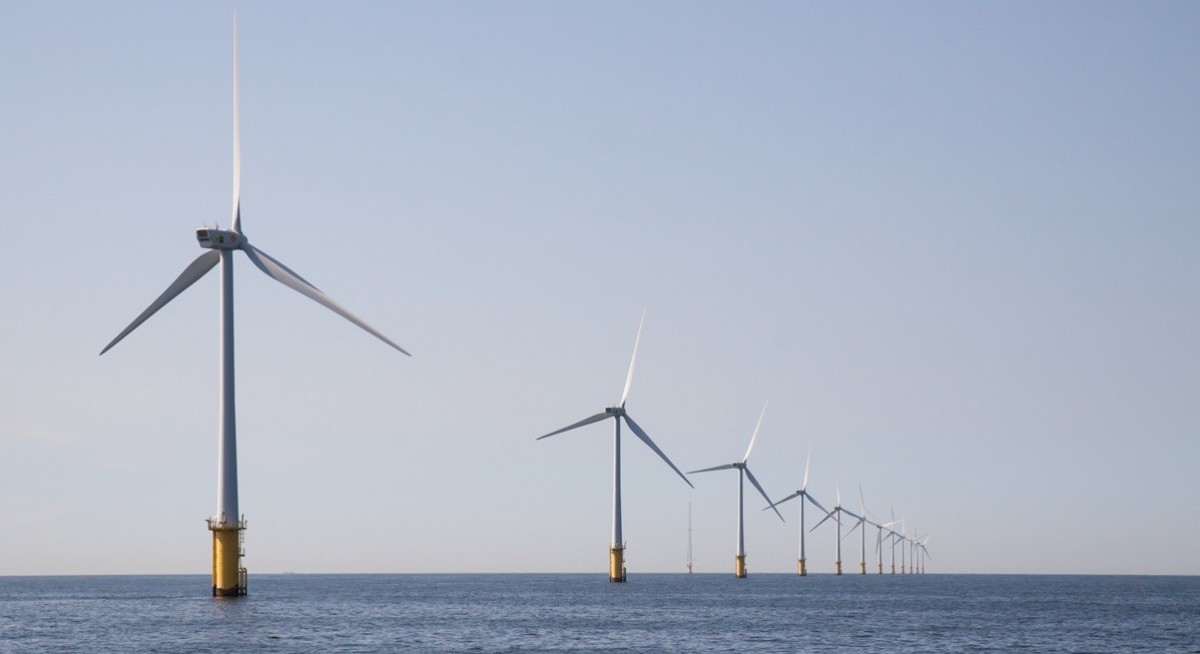
From a broad perspective, Loh and Mo expect a shift in mindset for businesses and policy-makers as offshore wind is now a “must-have” instead of a “nice-to-have”. They state: “In an ironic twist, the Trump administration’s anti-renewables stance and subsequent war on Iran, and the resulting US$100 oil price, have reignited the fervour for renewables, at least outside of the US. We believe that even in the event of a peace deal, energy security has risen to the top of many energy importing countries and thus could be a tailwind for offshore wind.”
According to their industry channel checks, offshore wind is recovering outside of the US. This is driven by Asian policy acceleration and energy security concerns. In addition, they also pointed out that the UK auctioned a record 8.4 GW of contracts. Presumably, Seatrium (which is involved in offshore wind projects in Europe) and Marco Polo Marine (with exposure to offshore wind projects itself and through Taiwanese subsidiary PKR Offshore) will benefit from this development.
“While we acknowledge that this recovery is off a low base, the future looks a bit brighter compared to 12 months ago,” write Loh and Mo.




