




At current levels, the STI trades at a 2026 P/E of 14.3 times, which is in line with the index’s 10-year average and an 8% discount to its long-term average of 15.4 times. “In our view, its current P/E valuation is not stretched, and we believe that P/E multiple expansion is eminently likely given the weight of fund flows into the market in 1H2026 and possibly into 2H2026 with the EQDP funds being deployed,” says Loh.
From another perspective, the STI is not expensive either. The index now trades at a P/B of 1.49 times, in line with its historical average and back to this level after 10 years. Loh notes that the discount has narrowed over the past three years, driven by improving return on equity (ROE). From just over 9.2% in 2022, Singapore’s ROE is seen to reach 10.4% for 2025 and then rise further to 10.6% in 2026.
End-2026 target of 5,000
UOB Kay Hian’s end-2026 target of 5,000 points is derived using a bottom-up methodology to set target prices for index companies within the team’s coverage and consensus targets for those not covered by UOB Kay Hian.
At this end-2026 target, the STI would trade at a 2026 P/E of 16.0 times, which is not deemed “egregious”, especially given the momentum from expected fund flows in 1H2026 from EDQP, where $3.95 billion out of the $5 billion has been allocated but not fully deployed. Loh points out that while the EQDP money is meant to be channelled towards the small/mid-cap sector, he “strongly believes” that large-cap stocks will benefit as well.
See also: Taiwan’s AI wealth is spilling across Asia and Singapore is positioning itself as the hub
This year, Loh recommends that investors remain invested in stocks with revenue certainty over the next 6–12 months and trade at reasonable valuations, yielding more than 5%. “Invariably, quality companies like those that we have chosen should enable them to withstand an economic downturn and yet be well placed to take advantage of a post-recession rebound,” he says.
This year, UOB Kay Hian expects 6.3% y-o-y earnings growth for the broad Singapore coverage. In comparison, earnings growth for the index stocks under coverage is estimated at 3.8%, in contrast to the expected 1.5% decline for 2025.
Loh points out that this year will be the first since the pandemic, during which all sectors are expected to contribute positively to the year’s earnings growth. Key sectors experiencing double-digit earnings growth include property, land transport, healthcare and plantation.
See also: Is the Chinese stock market an undervalued giant?
Among the top large picks by UOB Kay Hian for 2026 are CapitaLand Ascendas REIT (CLAR), CapitaLand Investment, City Developments, DFI Retail, First Resources, Genting Singapore, Keppel, OCBC and also New York-listed Sea.
For the property sector this year, UOB Kay Hian expects a moderate single-digit pace of price and volume growth for new residential launches. On the other hand, commercial and retail assets are likely to experience downward pressure. The exception would apply to Grade A offices, where supply appears muted over the next two to three years. Loh prefers large-cap property stocks with an appetite for M&A and the ability to continue divesting assets to recycle capital into their growth plans. The picks include CLI, which has been a laggard, and City Developments, which is expected to announce a special dividend alongside its FY2025 results this February, aside from a pickup in asset monetisation in 2025.
For CLAR, it is likely a beneficiary of rate cuts on the one hand. Also, it benefits from safe-haven-seeking liquidity that continues to flow into Singapore, observes analyst Jonathan Koh.
Within the plantation space, UOB Kay Hian likes First Resources, in possession of substantial leverage to crude palm oil prices while also having potential upside from Indonesia’s planned upgrade to B50 in 2026, given its status as a biodiesel producer, which previously benefited from B40’s expansion in 2025, state analysts Lester Siew and Muhammad Amerul Iqmal.
Gaming sector recovery
Genting Singapore, another laggard, is favoured by UOB Kay Hian too. “We believe that Singapore’s gaming sector will recover from the past few quarters’ lacklustre visitations and earnings momentum, lifted by accelerated international visitations and mega entertainment events in the pipeline,” says analyst Jack Goh, who expects the gaming sector’s gross gaming revenue and core profitability to witness modest growth together in parallel with higher spending per capita in Resorts World Sentosa (RWS), which Genting Singapore runs.
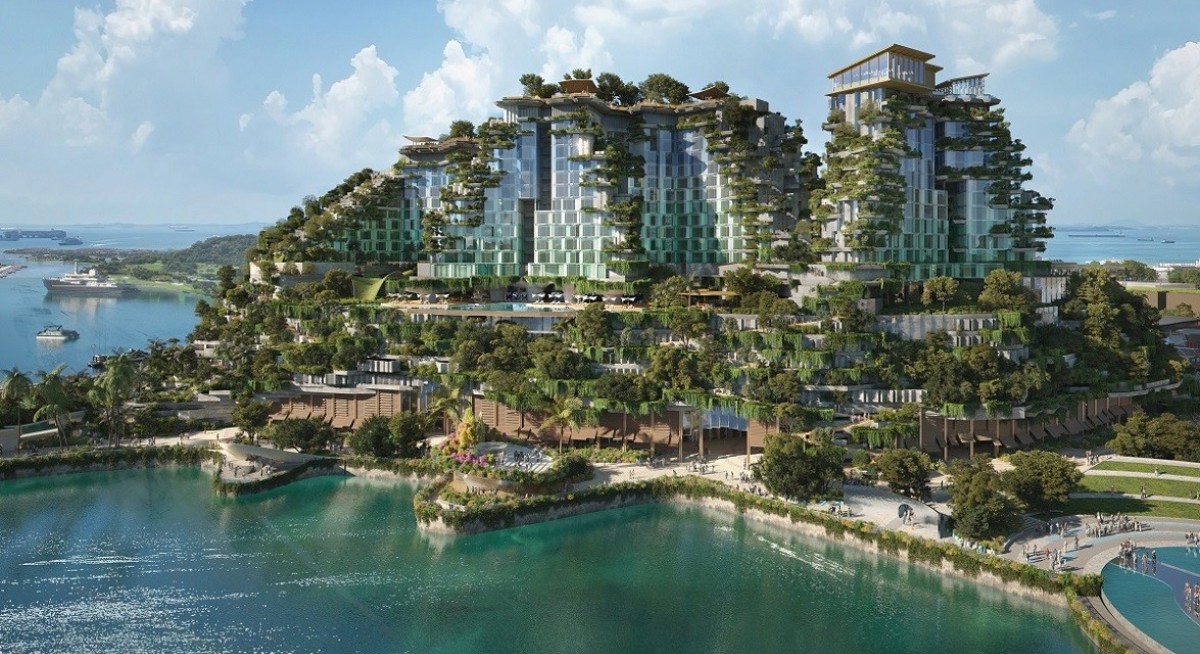
In the medium term, RWS’s mid-term growth should be underpinned by its $6.8 billion expansion plan. A steady pipeline of new attractions to open has been established: Illumination’s Minion Land at Universal Studios Singapore in February 2025; Singapore Oceanarium and Weave, a retail and dining venue, in July 2025; and the luxury all-suite Laurus hotel in October 25. Down the road, RWS is developing its 21,243 sqm Waterfront to add 700 hotel rooms. “We believe that Genting Singapore will benefit from the above positive newsflow, particularly given its steep valuation discount and robust earnings prospects coupled with an attractive yield of 5.1% in 2025,” says Goh.
Loh observes that industrial stocks have had a strong 2025, with share prices up an aggregate 20% as a result of continued progress on targets such as capital recycling, growth via M&A, and, in addition, greater transparency into revenue growth. His top pick is Keppel, which is expected to benefit from robust earnings in its infrastructure segment and revaluation gains from its fibre-optic business, Bifrost, which is likely to see additional investments in this unique asset class. Keppel is expected to announce a special dividend when it reports its 2HFY2025 results, Loh adds. For Sembcorp Industries, Loh likes its continued growth in renewables and in Singapore’s conventional energy.
For more stories about where money flows, click here for Capital Section
Koh believes that Singapore’s domestic stability and resilience will continue to attract liquidity from less stable overseas markets. Unlike in the heydays of net interest margin (NIM) expansion in 2022 and 2023, Koh expects banks to face NIM compression in 2025 and 1H2026 due to lower benchmark interest rates, although the pace of decline is expected to be slower in 4Q2025 and 1H2026.
Against this backdrop, Koh observes that the banking sector offers attractive value, with a low P/B of 1.59 times and a high 2025 dividend yield of 5.7%. His top pick, OCBC, is well-positioned to capture earnings growth from trade and investment flows across Asean. Its FY2025 defensive P/B of 1.33 times does not hurt either.




