


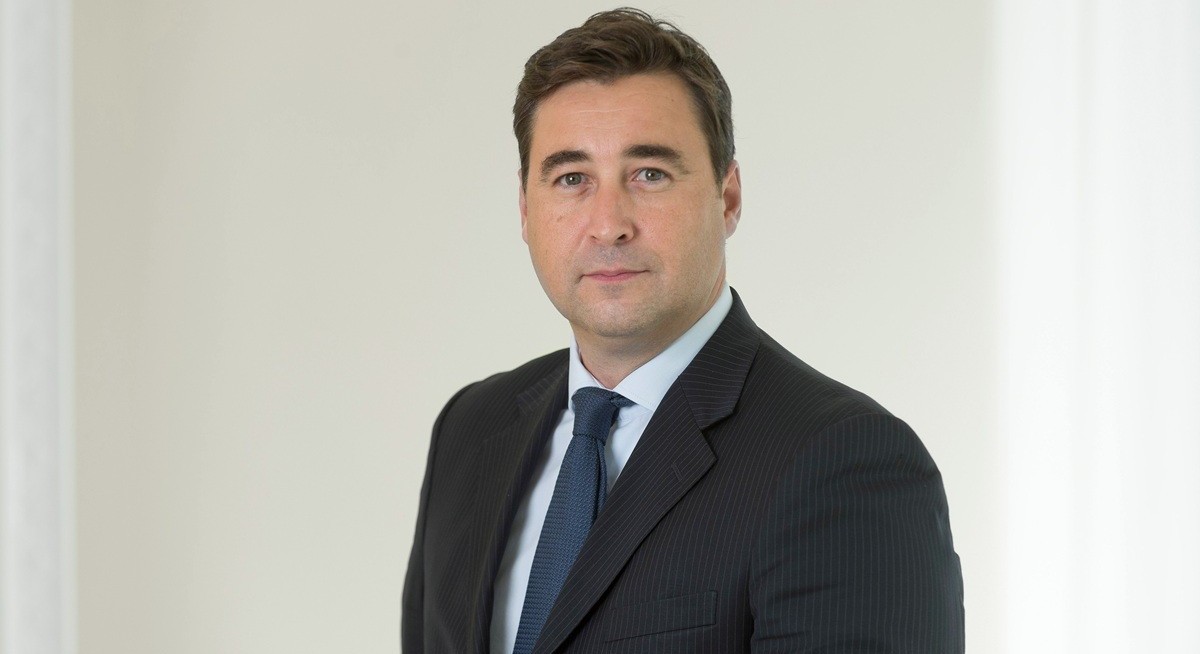


Gabert oversees Pictet’s real estate investments managed under its private equity segment, with total assets under management of over US$3 billion ($3.89 billion), diversified across all vintages, sectors and geographies. Pictet’s real estate multi-manager franchise has active allocation with over 50 general partners, in turn, channelled into more than 100 real estate investments holding stakes in more than 2,500 underlying real estate assets.
Such diversification is for good reason. Besides capital, real estate investments are also about some specific expertise. “We believe that real estate is an extremely local market. There are so many intricacies in every real estate investment. You need to have a local expert, a local or sectoral expert, someone who knows this asset or this asset class or this geography much better than the others,” says Gabert in an interview with The Edge Singapore.
In contrast, equity or fixed-income managers, wherever they are, can easily make decisions because information is easily available. “If you don’t know the streets, you will buy the wrong shophouses in Singapore or the wrong building in New York. You need to have ‘streetwise’ intelligence if you really want to deliver outstanding returns and also be protected from bad investments,” he adds.
Mission critical real estate
Just two decades ago, commercial properties drew more than half of total real estate investments. The total volume of real estate investment has increased, but the proportion of funds flowing into commercial buildings has declined to below a fifth. A similar pattern has occurred with retail properties. In its stead, data centres have emerged as a hot new real estate class — forming what Gabert calls a “fundamental shift”.
See also: We are not at the peak of the AI cycle: Eastspring
From an investor’s perspective, the earlier focus on commercial properties in financial centres makes sense because they typically only need to deal with a single large business tenant signing multi-year leases.
However, during and after the pandemic, commercial assets have remained “extremely challenged”, as working from home, even partially, has become an ingrained habit for many. The lower occupancy has a direct impact on demand for office space, he adds.
For Gabert, retail is another real estate sector under strain, due largely to the growing popularity of e-commerce, which already accounts for easily a third of retail spending — and even more in countries like China.
See also: World Cup: Not just a major sporting spectacle, but also a growing investing theme
For example, in the US, malls, which used to be the places where the young and old alike would gather to socialise and shop, are becoming less and less popular as more shopping is done online. “That has an impact on the valuation in the spaces that were used,” he says.
In contrast, demand for logistics has grown because of e-commerce volumes, which require more space for goods to be shifted from one point to another. As supply chains have been rebuilt because of disruptions, overall demand has also increased.
Also, demand for residential space has become stronger as well. For Gabert, the underpinning reason is the “predictability” in demand. “I don’t know if I have to go to the office in five years from now, but I know that we need to sleep somewhere. We always need shelter, at the appropriate price, appropriately set up, in an appropriate condition,” he continues.
“Right now, we have a massive global deficit in the supply of good shelter, and that is creating a massive investment play.”
In short, residential is “mission critical” as everyone needs to sleep, whether owning the space or renting one. Logistics, similarly, is also deemed “mission critical” for any international company.
“On the other hand, is retail really mission critical? Less and less. Is the office really mission critical? Less and less,” says Gabert.
Data centre bubble?
Meanwhile, data centres, by their nature, have also emerged as a mission critical real estate asset class, according to Gabert. To their operators and owners, they have little room for error. “Data centres have a kind of very unique set of physical, technological, governance and geopolitical importance,” he says.
For more stories about where money flows, click here for Capital Section
Data centres as an asset class gained prominence among most investors in recent years because of the massive spending in AI infrastructure. Pictet approaches this asset class with a certain level of experience. According to Gabert, Pictet has been investing in data centres for around a decade, and that has helped him become more discerning. “We’ve seen, and we’ve learned. We have our successes, and we’ve made a couple of mistakes.”
Within data centres, there are, of course, the good ones and not-so-good ones. Data centres may be a unique real estate class, but the old mantra of real estate investment also applies: location, location, location. A successful data centre needs two critical types of connections: power, without which the racks of servers could not function, plus the connection to the backbone of networks, without which data could not be transmitted.
New data centres are being built, armed with the latest equipment. However, they might suffer from a disadvantage: they may not be in ideal locations. “Are you well-connected to the electrical backbone? Are you well-connected to the fibre backbone? Are you in a cluster where you will be able to attract the best talent? Even if it is something which is digitalised, you will need engineers. You will need the right talents,” says Gabert.
On the other hand, older data centres may be more weathered, their equipment not the cutting edge, but they tend to be at locations that are “very important and unique and irreplaceable,” he says.
Gabert observes that the data centres are being “weaponised” — not merely in the context of a technology arms race. Both capacity and data sovereignty, ongoing issues for years, will be even more so in this new geopolitical context.
The massive AI infrastructure capex boom has led some market observers to caution that a bubble is forming. Gabert will not be drawn into saying whether the capital flowing into data centres has sent this asset class into a bubble.
However, he points out that there is some form of “downside protection” for data centre investments. Under-utilised office assets can be converted relatively easily into other uses, such as residential, but it is more difficult to do the same for data centres. It always comes back to the physicality, the physicality of the location and the physicality of the asset, which has very little optionality, he says.
At the same time, developers of data centres need to be “extremely precise” in finding the “right idiosyncrasies” in order to generate value. On one hand, there are not that many data centre tenants, given how the operators tend to be the few big tech companies. The market might be favourable to landlords today, but the “shift of power” might sway towards tenants a few years later, he says.
Even though data centres are a relatively new asset class, there have been enough exits that Pictet is able to make enough for him to form a view that returns from investing in data centres for Pictet are “definitely comparable” to other real estate investments.
Deficit, rising rates
Beyond data centres, Pictet favours another real estate investment: residential, which Gabert calls a “very strong” asset class, which, because of unmet demand, has helped support values. “You have a natural need, it is mission critical, it is in very high deficit,” he says. For example, in Germany, there is a shortage of 1.4 million residential units, he adds.
One reason why supply is not growing quickly enough to meet this demand imbalance is the surging cost of construction, which Gabert says has gone up “dramatically” amid recent geopolitical tensions that have raised the cost of materials and other related expenses.
At the same time, social pressures mean housing prices cannot rise enough to fully cover higher costs without hurting affordability. “There is a massive deficit of residential, but then there is a question of affordability and the social impact of the affordability of residential globally,” says Gabert.
But demand and supply dynamics are not the only forces shaping real estate investments. Given the sector’s reliance on leverage, the direction of interest rates also plays a key role in investment decisions.
The real estate market enjoyed a major boom in the wake of the Global Financial Crisis, when interest rates were slashed to near zero to support the economy. With few alternatives for yield, real estate became a key income-producing asset class, driving strong price gains.
The posture now, amid the uptick in global inflation, is for central banks to hold rates steady — rather than cut them. Some commentators are even suggesting rate hikes.
Gabert is careful not to give a prediction, but he has sketched out several scenarios and will respond accordingly. Instead of fretting over where rates are moving, Gabert’s view is to underwrite what he can control. “We need to adapt, we need to always have a pessimistic view on the curve. If not, you can forget your downside protection.”
For context, the rate movements, regardless of the direction, are not going to be at the kind of magnitude seen over the past decade and a half. For real estate investors, who like certainty and not volatility, that is good news. “We are investing and still long,” says Gabert.




