


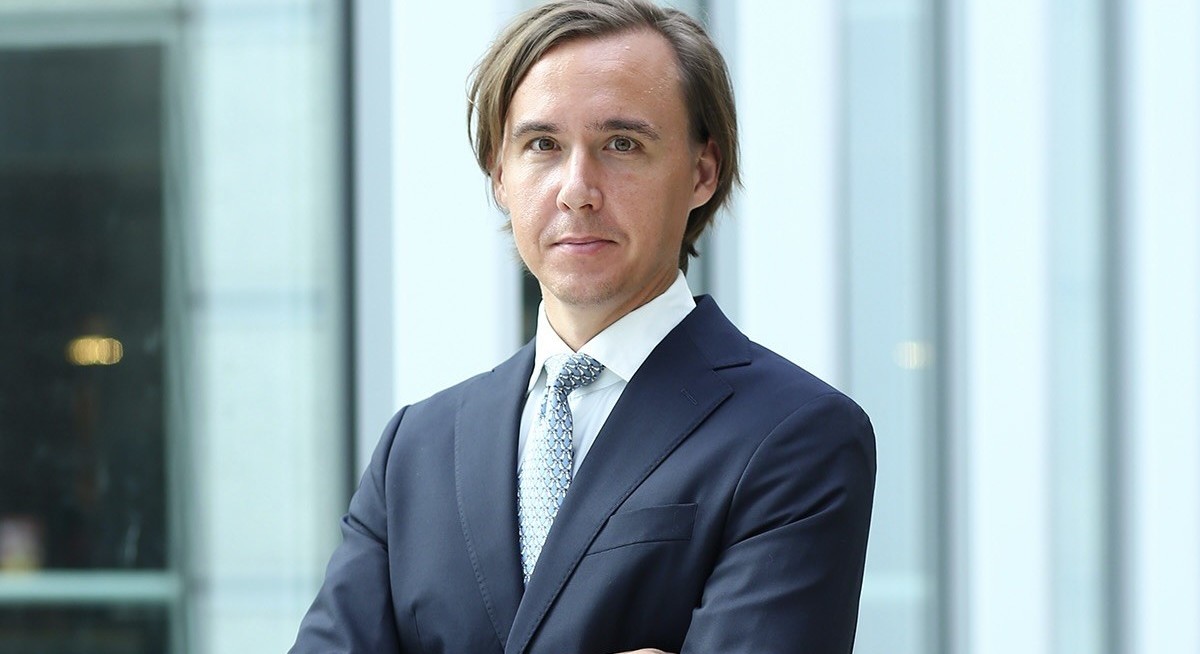


While most funds rely on the skill and judgement of their managers to pick stocks, BlackRock is leaning on its tried-and-tested systematic investing approach to uncover the market’s ever-elusive alpha. Launched on April 27 under the EQDP, BlackRock’s new Asean systematic active equity (SAE) strategy fund, the BF1 Advantage Asean Equity Fund, will adopt a quantitative active approach without any bias toward growth, value, or other investment styles.
“We see systematic investing as a natural evolution of active investing,” says Filip Mena-Berlin, who manages the portfolio with his colleague Ryan Kim. “While traditional active and passive strategies each play important roles, systematic approaches combine the discipline and scalability of technology with active decision‑making informed by data and human insight.”
BlackRock’s EQDP fund will hold between 100 and 300 securities, with approximately half of them going to small- and mid-cap local companies. The rest of the portfolio will be invested in Asean markets, including Malaysia, Thailand, Indonesia and the Philippines. The fund is available to both institutional and retail investors.
“Rather than relying solely on traditional valuation metrics, the strategy continuously incorporates new information on fundamentals, investor sentiment and market dynamics, allowing it to adapt as conditions evolve,” says Mena-Berlin, adding that this allows BlackRock to cover companies consistently and even identify segments that may not be actively covered under the traditional approach.
See also: Valuing companies using discounted assets
According to Mena-Berlin, the Asean SAE strategy does not target any specific industries or sectors within Singapore or Asean. Instead, the fund is designed to take active risk primarily at the stock level by investing at scale across both developed and emerging Asean markets. The fund’s objective, he says, is to avoid concentrating capital in narrow segments of the market.
“By operating at scale with broad participation across the universe, the strategy seeks to provide structural liquidity over time — creating a virtuous cycle in which increased activity attracts more participants and in turn, further deepens liquidity.”
‘Competition is good’
See also: Cash is king, until it is not: Lombard Odier
It has been nearly a year since the MAS appointed the first batch of EQDP fund managers in July 2025. The first three funds to be picked were Avanda Investment Management, Fullerton Fund Management and JP Morgan Asset Management. AR Capital, Amova Asset Management (formerly Nikko Asset Management), BlackRock, Eastspring Investments, Lion Global Investors, and Manulife Investment Management were part of the second batch that was announced in November. The next batch of fund managers is expected to be announced in mid-2026.
On the surface, having more EQDP fund managers in the mix could result in elevated valuations. After all, fund managers who are quicker to deploy their capital could end up pushing stock prices. Having more competition may actually be a good thing, says Mena-Berlin.
“Increased participation and coverage by EQDP managers can be beneficial for the market as a whole,” he adds. “Broader analytical coverage and investor engagement across a wider set of companies can help improve price discovery, transparency and liquidity over time [thus] supporting healthier and more resilient equity markets.”
Increased trading activity for specific small- and mid-cap stocks would not affect the efficacy of BlackRock’s strategy, says
Mena-Berlin. Besides, having more fund managers in the mix does not mean that they are all engaged in a zero-sum game against one another. “All EQDP managers have a role to play in supporting the market, whether [it be] through price discovery, liquidity provision, listings or capital formation.”
Low volatility is not an issue
For years, the domestic stock market has been seen as sluggish and uninspiring. About half of the city-state’s Straits Times Index (STI) is made up of the three local banks: DBS Group Holdings, United Overseas Bank and Oversea-Chinese Banking Corporation. Coupled with a lack of IPOs and thin trading liquidity, this has cemented the market’s staid reputation.
Still, much has changed since the MAS convened its Equities Market Review Group in August 2024. The group wrapped up its work in November with the publication of its final report. Alongside proposing the EQDP fund, it also introduced measures including a dual-listing arrangement with Nasdaq and a $30 million “Value Unlock” programme aimed at helping listed companies sharpen areas such as investor relations, corporate strategy and capital optimisation.
For more stories about where money flows, click here for Capital Section
The new measures have helped to breathe life into the domestic market. IPO activity in 2025 was the highest since 2019, with some $2.8 billion raised from 13 listings. That is a huge jump from the $40.6 million that was raised from four listings in 2024.
Trading activity has been picking up as well. On March 12, the Singapore Exchange announced that its securities daily average value (SDAV) for February had risen by 45% y-o-y to $2.1 billion, the highest it has been since 2020.
While promising, that turnaround looks less impressive against the rally unfolding in South Korea’s stock market. A push by South Korean regulators for stronger governance and greater transparency, combined with tailwinds from the global AI boom, has sparked a wave of re-ratings. As of May 20, South Korea’s benchmark Kospi index is up more than 70% year to date, compared with the STI’s gain of just over 8%.
Investors, however, should avoid drawing superficial comparisons between Singapore and South Korea. Mena-Berlin notes that the gap between the city-state and South Korea largely reflects differences in index composition and investor base.
“Korea is one of the main dominant tech markets in Asia and has a heavy concentration in technology‑related stocks,” he adds. “Singapore’s equity market has demonstrated resilience through market cycles, supported by strong corporate governance, a stable regulatory framework and diversified earnings drivers.”
“Lower volatility does not preclude attractive returns. Systematic strategies are designed to deliver small, repeatable information advantages across a broad universe of stocks, rather than relying on large directional market moves.”
Still room to grow
By all accounts, Singapore’s attempt to revive its stock market has yielded it early success. On Feb 12, the STI passed 5,000 points for the first time, less than a year after it passed 4,000 points on March 28, 2025.
On May 20, Bloomberg reported that Singapore had become Southeast Asia’s largest stock market after its market capitalisation hit US$645 billion ($827 billion), higher than Indonesia’s US$618 billion. Indonesia’s stock market has weathered a beating following concerns over the country’s market transparency and governance.
“It is encouraging to see increased interest and improved sentiment toward Singapore equities following the announcement of the EQDP,” says Mena-Berlin. “However, equity market development is a medium- to long-term process.”
“Beyond near-term price movements, the more important measure of success is whether initiatives like the EQDP help to sustainably improve liquidity, broaden market participation and attract long-term capital.”
It remains unclear whether Singapore will continue topping up the EQDP fund. The fund was initially set at $5 billion before Prime Minister Lawrence Wong announced a $1.5 billion top-up on Feb 12 during his Budget 2026 speech.
For Mena-Berlin, beyond the size or frequency of funding, what matters most is the effectiveness of capital in catalyzing sustainable market activity. “Liquidity outcomes are strongest when investor demand is accompanied by a healthy pipeline of listings, active trading and a supportive market ecosystem. In that context, BlackRock welcomes Singapore’s broad and coordinated approach to equity market development.”
“While parts of the market have seen some initial re-rating and liquidity added, this has so far affected only a smaller portion of the overall universe,” Mena-Berlin says. “There remains meaningful runway for these initiatives to support a deeper, healthier and more resilient market environment.”




