


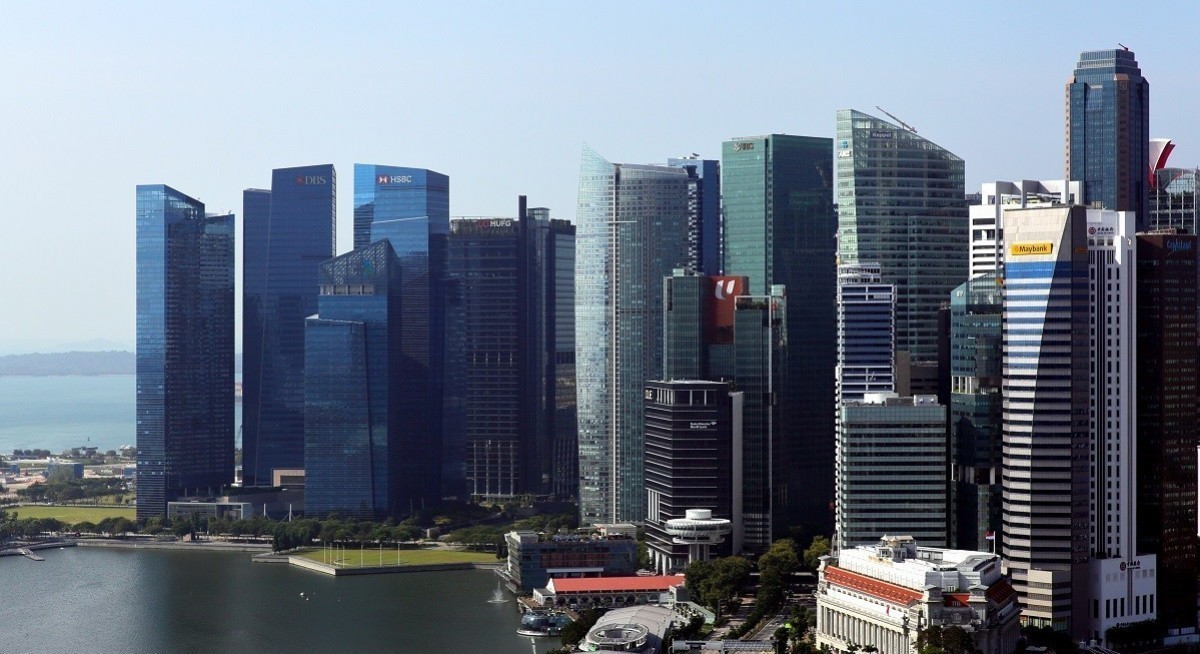


Against this backdrop, Singapore’s value-up agenda continues to anchor the market through governance discipline, capital efficiency and structural transparency rather than cyclical momentum alone.
Value Talk, Real Walk is a monthly column by Smartkarma, dedicated to tracking how Singapore Exchange (SGX)-listed companies are unlocking value through divestments, spin-offs, governance reform and disciplined capital return. Drawing on proprietary analysis and independent research published on the platform, each edition spotlights firms turning intent into execution.
The month in review
Our analysis focuses on a curated group of Singapore-listed companies characterised by active value realisation. May marked a period of consolidation across this universe, even as the broader market advanced to record highs.
See also: Justifying JustCo with an intrinsic value of 69 cents
Within the universe, large-cap names proved the most resilient, holding up as a defensive anchor on the strength of institutional ownership and balance-sheet quality. Small and mid-cap names, which had led earlier rebounds this year, came under short-term pressure, a familiar pattern when macro uncertainty pushes investors toward liquidity. Liquidity-oriented names within the basket held up comparatively better, reinforcing that trading visibility carries a premium in cautious markets.
At the sector level, consumer discretionary and real estate were the relative bright spots, holding broadly steady, while industrials saw the softest performance. The pattern suggests capital is rotating selectively toward quality and visibility as energy volatility and external uncertainty weigh on cyclically exposed segments.
Who walked the talk
See also: Co-living stocks find favour as Coliwoo and The Assembly Place test investor appetite
- Marco Polo Marine: Surfacing value through structural separation
Marco Polo Marine (SGX:5LY ) entered a binding term sheet to inject its shipyard business into Catalist-listed Fuji Offset Plates Manufacturing via a proposed reverse takeover valued at up to $139 million, satisfied entirely in new shares and leaving Marco Polo with around 74% of the enlarged, renamed entity.
Management noted the shipyard’s standalone performance is currently obscured by intragroup eliminations at the group level; a separate listing would provide a transparent market valuation and an independent capital-raising platform, with the unit carrying an order book of about $298.5 million.
Why it matters: Businesses buried inside a consolidated group can be hard for the market to value. Structural separation can surface that value and open independent access to capital.
- Mapletree Industrial Trust: Pruning a stranded asset
Mapletree Industrial Trust (SGX:ME8U) agreed to divest a vacant Philadelphia data centre for US$14.5 million ($18.65 million), a 4.3% premium to its latest independent valuation, with proceeds earmarked to pare debt and fund working capital.
The asset had seen limited leasing interest since its lease expired at end-2024 and the manager judged that repositioning carried meaningful power capacity and execution risk, framing the exit as part of a broader portfolio rebalancing toward assets with more sustainable growth.
For more stories about where money flows, click here for Capital Section
Why it matters: Holding a stranded asset in hope of recovery can cost more than exiting at a fair price. Disciplined pruning, even at a modest scale, supports capital recycling and deleveraging.
- United Overseas Bank: Monetising non-core real estate
UOB (SGX:U11) completed the disposal of its interests in Novena Square and in 230 Orchard Road, the latter being redeveloped into the NoMad Hotel, for aggregate cash consideration of roughly $387 million, while retaining operational use of its banking halls through leaseback arrangements.
While modest relative to the bank’s overall scale, the transactions are part of its capital reallocation strategy of releasing capital tied up in non-core property without disrupting branch operations.
Why it matters: Asset-heavy incumbents can free capital from non-core holdings without losing operational continuity. Pairing monetisation with leaseback keeps the function intact even as ownership is recycled.
- Sats: Consolidating control of a proven asset
Sats (SGX:S58) agreed to acquire a further 40% of Nanjing Weizhou Airline Food, a Chinese aviation-food manufacturer, for approximately $58.3 million in cash, lifting its stake from 50% to 90% with an option to move toward full ownership. Sats has held the position since 2019, over which period the target more than doubled revenue as Chinese carriers adopted frozen in-flight meals and funded the step-up from internal resources.
Why it matters: Increasing exposure to a vertical a company already understands can carry less risk than fresh diversification. Internally funded step-ups signal conviction without straining the balance sheet.
Key takeaways and closing
May highlighted a familiar feature of Singapore’s value-up cycle: momentum remains real but uneven. While the headline index set records on the strength of large-cap financials, small- and mid-cap names consolidated, and restructuring plays paused. Yet corporate actions continued unabated, including divestments, structural separations, stake consolidations and asset recycling.
Share buybacks across the market continued apace, with primary-listed companies repurchasing about $1.26 billion in the first five months of 2026, up from roughly $930 million a year earlier. Policy and market infrastructure support also remained in place, with initiatives under the Equity Market Development Programme (EQDP) helping to deepen liquidity and institutional participation. At the same time, AI-related demand continued to attract flows into semiconductor and technology names.
The watchpoints ahead are largely external: the Middle East conflict and energy volatility, the risk of a pullback in global AI capital spending and the pass-through of imported costs into inflation. April CPI remained contained at 1.8% headline inflation.
The signal for investors is consistent. In a market that can rally on the strength of a few large names, the companies that keep executing, recycling capital, sharpening structure and returning cash are the ones still walking the talk.
Smartkarma is a Singapore-based investment intelligence platform that connects global investors with independent research, data and analytics. It is at the forefront of developing benchmarks and digital-IR solutions to support Singapore’s value-up reforms.




