


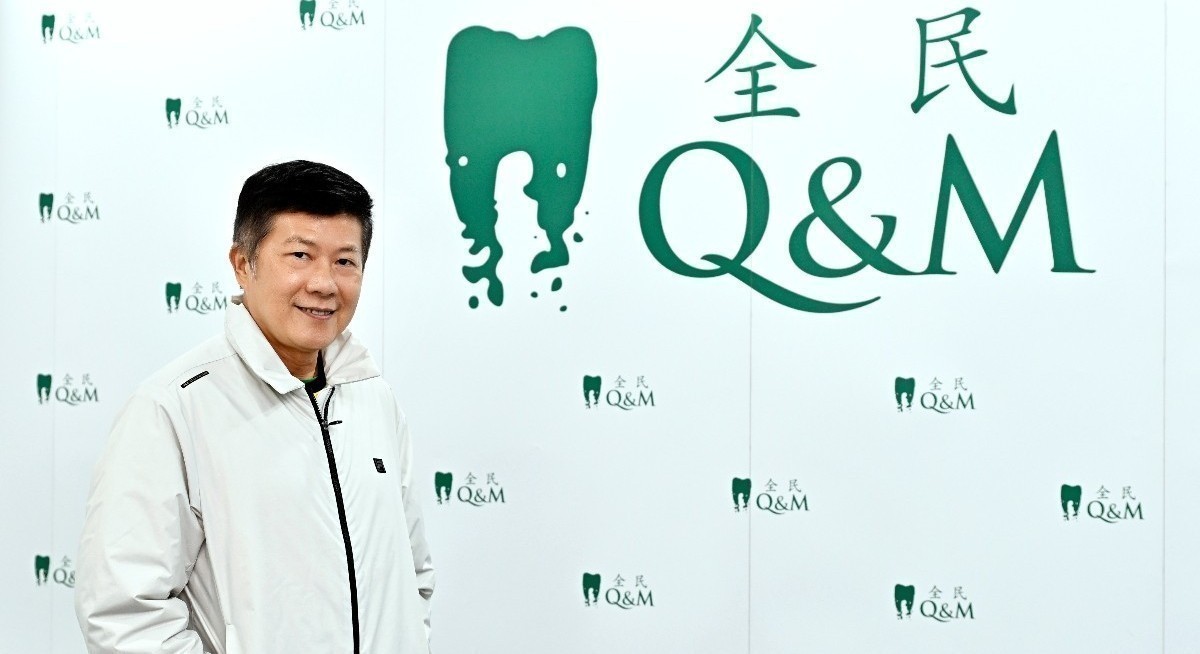


As a result, the company’s growth story is attracting more positive coverage from analysts. The most recent to join the fray is Troy Cheng of OCBC Group Research, who initiated coverage on this counter with a “buy” call and a fair value of 76 cents. “Q&M’s strategic direction in 2026 marks a decisive shift from being a Singapore‑focused clinic operator to building a diversified Asia Pacific dental platform,” says Cheng.
Dental visits by elderly on the rise
He observes that the frequency of dental visits by people here in Singapore rises sharply with age, with the 65–74 age cohort having the highest annual visitation rate at 73%. “This reflects structurally greater treatment needs among seniors, who require more frequent and higher‑value interventions such as implants, periodontal therapy, dentures and restorative work.
According to Cheng, middle-aged adults aged 35 to 64 are showing rising utilisation, too. “This cohort represents the largest share of Singapore’s resident population and benefits from expanding insurance coverage, higher health awareness and growing willingness to invest in oral wellness,” he says.
Cheng is of the view that operators with scale and accessibility, such as Q&M, are best positioned to capture incremental demand, with its brand recognition providing a form of natural leverage among elderly patients, the fastest-growing segment.
See also: With no ‘sell in May’, SGX enjoys higher target prices on ‘strong’ May
Acquisition spree
Next, Q&M is embarking on an active growth bid through a series of acquisitions outside its home base in Singapore, which currently accounts for the largest share of revenue.
Once it completes the targeted acquisitions in Australia and Thailand, alongside ongoing expansion in Malaysia and China, the company’s revenue base is set to diversify meaningfully across five Asia Pacific markets. “This marks a structural shift from single‑market dependence to a multi‑market regional platform, reducing concentration risks while expanding the addressable market,” says Cheng.
Q&M pays for its acquisitions by enticing dentists to take shares as well, with lengthy moratoriums of up to 15 years. From Cheng’s perspective, this is a way to reduce the risk of talent flight, since attrition is a “persistent” risk in the healthcare business. “We view this as a best-practice incentive design for a talent-dependent business model,” he says.
See also: DBS lays out case for DFI Retail to move ahead with Hong Kong supermarket consolidation
Last but not least, Q&M possesses an “underappreciated technology asset” in its tech subsidiary, EM2AI, which is an “embedded recurring revenue stream” not yet fully priced in by the market. Cheng says that EM2AI’s AI-powered solutions serve more than 1,100 clinics across five countries, generating Software-as-a-Service-like subscription income that diversifies Q&M beyond pure clinic revenue. “As digital dentistry adoption accelerates across Southeast Asia, EM2AI’s network effect — and the data advantage it generates — will compound in value,” says Cheng.
Key risks
On the other hand, the key risk is elevated leverage with the series of acquisitions. Cheng notes that with the $130 million debt, Q&M’s net debt-to-equity ratio reached 19% for FY2025, a “significant step-up” from historical norms. Upon completion of the acquisitions in Australia, Thailand, and Singapore, leverage rises materially. Cheng estimates FY2026 net debt at around $268.5 million, implying a net debt-to-equity ratio of around 1.9 times, well ahead of earnings contributions, which will only build from FY2027 onwards as the acquired clinics scale. While the MTN carries a fixed 3.95% coupon, a prolonged higher-for-longer rate environment beyond the MTN’s tenor could increase refinancing costs. “If the three acquisitions close simultaneously before earnings accretion materialises, the group may face pressure to raise equity to manage leverage, which would dilute existing shareholders,” warns Cheng.
Cheng also points out that as Q&M deepened its China exposure by consolidating Aoxin Q&M as a subsidiary. According to Cheng, the government is increasingly scrutinising foreign-affiliated healthcare providers. “Any regulatory crackdown, pricing controls or licensing restrictions could impair Aoxin’s earnings contribution, just as it becomes more material to group profitability,” he says. With Q&M poised to have a significant presence in numerous markets, it is exposing itself to multi-currency translation risk as it reports in the Singapore dollar, which has gained against other currencies, he says.
In the most recent FY2025, the company reported lower earnings. Still, Cheng points out that its core earnings remain stable and that the drop was due to accounting effects from the consolidation of Aoxin Q&M and EM2AI, rather than a deterioration in underlying operations.
As such, Cheng’s view is reinforced that headline historical figures understate the platform’s true earnings power. He expects revenue to grow at a 13.8% CAGR between FY2026 and FY2030, reaching $376.8 million. In contrast, earnings are expected to grow faster, from $9.3 million to $35.4 million over the same period, driven by operating leverage.




