


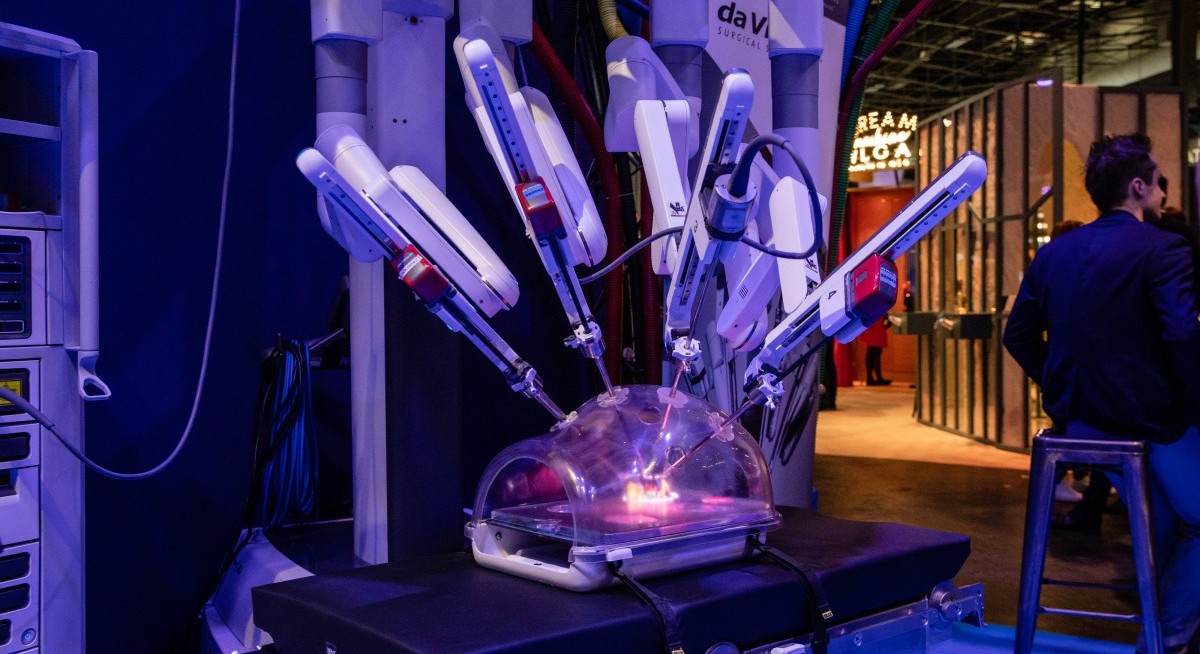


That said, one company which fits the description of a seemingly expensive company but has a good valuation and long-term prospects is Nasdaq-listed Intuitive Surgical. Intuitive Surgical is a US$145 billion ($188 billion) company that designs, develops, manufactures and sells surgical and endoluminal systems. The company’s flagship products are the da Vinci surgical and Ion endoluminal systems.
When it comes to surgeries in healthcare, certain themes are key to determining the quality of products and services in the industry. Intuitive Surgical not only addresses them but also differentiates itself by having a business model that revolves around and prioritises these factors. The company’s products and services are centred on minimally invasive care.
Competitive advantage
Minimally invasive care or surgery (MIS) uses specialised instruments compared with traditional open surgery (TOS). Compared to TOS, MIS involves performing operations through smaller incisions rather than large cuts to access internal organs and tissues, which minimises damage to skin, muscles, and other tissues, leading to less pain, a lower risk of infection and faster recovery periods. Essentially, MIS is life-enhancing care that improves clinical outcomes, enhances the patient experience and equips healthcare professionals with better equipment to support surgical procedures.
Currently, the issue is that TOS is not only used in almost every part of the body but also remains a prevalent form of surgery. However, MIS is increasingly adopted. Aside from reducing pain, trauma, and suffering for the patient, MIS also reduces hospitalisation costs, which favours businesses that utilise it, such as Intuitive Surgical.
See also: Singtel’s Thai associate is its new divestment tap to fund capex, dividends and buybacks
Specifically for da Vinci, Intuitive Surgical provides a suite of offerings that enhance its competitive edge. This is achieved through a global network of field service engineers and distributors, which provides services such as installation, repair, maintenance, around-the-clock technical support, and system monitoring. Furthermore, customised analytics and consultations are provided to hospitals to optimise the experience. The Ion endoluminal system is a flexible, robotic-assisted, catheter-based platform that utilises instruments and accessories primarily targeting lung-related procedures.
Intuitive Surgical’s latest da Vinci 5 and current systems under development incorporate and leverage AI, enabling better insights that help surgeons enhance procedure success and patient experience. These AI-driven tools are key to giving the company’s surgical and endoluminal systems a competitive edge, as more actionable data enables surgeons to adapt surgeries for better outcomes. To support this, da Vinci-related procedures grew by an average of 17% and 87% y-o-y from 2020 to 2025 for its multi-port and single-port systems, respectively. Ion has also grown a healthy 51% y-o-y over the same period.
As of March 31, the installed base of da Vinci systems is well diversified globally, with 6477, 2257, 2049, and 612 systems in the US, Europe, Asia, and the rest of the world, respectively. This implies good diversification and reduces investment risk for the investor. For both the da Vinci and Ion endoluminal systems, the company recognises revenue through either sales or sales-type lease agreements. Recurring revenue for the company is recognised under fixed-payment or usage-based operating lease agreements, as well as service arrangements. The company’s business model is sustainable because its systems, instruments, and accessories have limited lifespans and will either expire or wear out over time. At this point, they will either need to be repaired through service contracts or replaced. As of 1Q2026, Intuitive Surgical’s recurring revenue is at a healthy 86% of total revenue.
See also: Is sentiment turning towards ComfortDelGro’s beaten-down shares?
Analysing the numbers
Now, to the quantitative aspect and financials of Intuitive Surgical. The company’s P/E and P/B ratios appear high at first glance at 48.3 times and 8.2 times, respectively. However, this is just a surface-level look at the company’s financials, which is insufficient to determine the company’s valuation.
Chart 1 shows Intuitive Surgical’s 10-year historical financials along with its forecast figures over the next two financial years. The company has been performing consistently well on almost all fronts, except for a slight drop in free cash flow between 2022 and 2023, post-Covid. The estimates from analysts also indicate strong growth potential, which the company is likely to achieve given its strong recurring revenue and high-quality earnings.
For a 10%, 20%, 30% and 40% weight for revenue, net income, operating cash flow and free cash flow, respectively, the company’s weighted value growth CAGR over one-year, three-year, five-year and 10-year periods would be 48.6%, 31.6%, 18.4% and 15.2%, respectively. Over one-year, three-year, five-year and 10-year periods, the company’s share price CAGR has been –21.2%, 7.0%, 5.9% and 18.7%, respectively. Comparing price growth to weighted value growth over multiple periods, Intuitive Surgical is mostly undervalued, as its weighted value CAGR exceeds its share price CAGR over most periods. Further, year to date, Intuitive Surgical’s share price has fallen 29.2%, contradicting the company’s positive short-term financial estimates and guidance.
In terms of profitability and moats, Intuitive Surgical has performed consistently well. Chart 2 illustrates the company’s return on equity (ROE), return on assets (ROA), operating margins and net income margin over the past 12 financial quarters.
Now, considering the company’s high P/E and P/B ratios, they do not truly indicate that the company is overvalued. It needs to be compared against peers, as price ratios should be assessed against both peers and historical averages. The rationale is that if an entire industry’s P/E or P/B ratio is high, then being on the lower end of this price multiple would indicate that the company is relatively cheap or undervalued. Also, if the company trades at a lower multiple than its historical average, it is relatively undervalued, even if its absolute value is high.
Compared to peers, Intuitive Surgical trades at a 66% discount to its P/E but a 33% premium to its P/B. Hence, the company is mixed in terms of relative valuation to peers. However, as shown in Chart 3, the company is trading at the lower end of its historical P/B range relative to the mean, implying it is cheap. The company’s earnings and free cash flow yields are 2.1% and 2.0%, respectively, both of which are significantly lower than the risk-free rate of 4.5%. Again, since the yield is the reciprocal of price ratios such as P/E, Intuitive Surgical generates a higher yield relative to competitors.

For more stories about where money flows, click here for Capital Section
The company’s balance sheet and financial safety are also excellent, with strong liquidity and solvency ratios. Intuitive Surgical has cash, quick and current ratios of 3.0, 3.7 and 4.9 times, respectively. It also has net cash with no positive net interest expense. Additionally, the company has a whopping Altman Z-score of 41, well above the safe benchmark score of three, indicating almost no risk of bankruptcy.
Finally, Intuitive Surgical has 24 “buy” calls, 10 “hold” calls and 1 “sell” call, with an average target price of 41.6% above its current trading price of US$402.95. Based on an in-house valuation using multiple methods (see Charts 4a and 4b), the fair value of the company over the next 12 months is US$485.24, which is over 20% above its current trading price. Singapore investors seeking to purchase this stock can do so without much hassle through their international trading account, as the company is a large-cap US stock listed on Nasdaq.




