

Lim’s penchant for Korean food stems from her love of Korean entertainment and reality game shows such as Physical: Asia and The Devil’s Plan. Watching celebrities having ramyeon piqued her interest in it.
In a typical Sheng Shiong outlet, or any other supermarket for that matter, there will be at least a row of shelves packed with all kinds of instant noodles, including local favourites such as Maggi Mee, Indomie — deemed by some as the world’s favourite instant noodle — and increasingly Korean brands such as Samyang and Nongshim.

For public servant Merilynn Seng, it was the taste and innovativeness of ramyeon that made her an ardent fan of it. This is in spite of the relatively higher price of ramyeon as compared to other Asian brands. For instance, a five-pack bundle of South Korea’s viral and spicy Buldak Ramen could set you back by nearly $9, while a five-pack bundle of Indonesia’s Indomie cost only about $2.50.
See also: GFL Environmental weighs take-private amid interest from buyout firms — Bloomberg
“I am cutting back on eating instant noodles now, so once in a while when I do eat it, it has to have an innovative flavour and be very interesting before I would eat it,” she says.
A growing legion of ramyeon fans around the world like Lim and Seng have helped drive sales for South Korean food companies like Samyang Foods and Nongshim. Shares of South Korea-listed Samyang and Nongshim are up by nearly 65% and 15% respectively year to date.
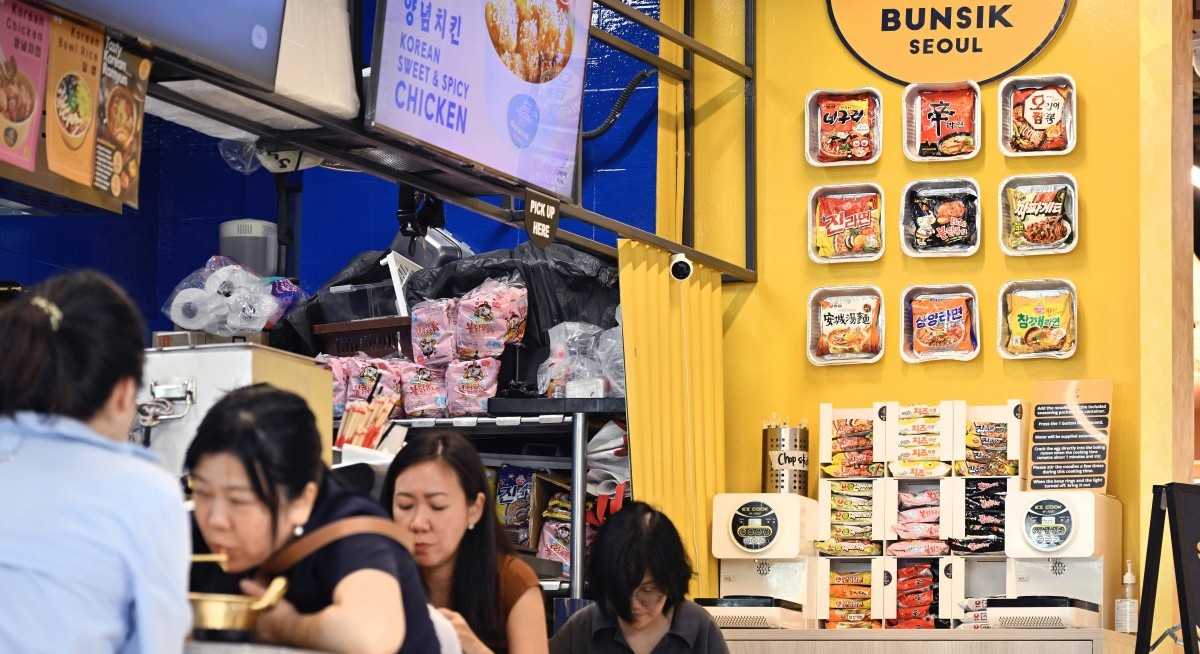
Restaurants and supermarkets looking to cash in on ramyeon fever in Singapore have started setting up DIY ramyeon stations in-store. These stations, which can be found in places like Lotte Mart Express at VivoCity’s FairPrice Xtra outlet, are no different from the ones seen in South Korean convenience stores. Customers can pick their favourite ramyeon packets and add their preferred toppings like cheese slices and eggs, before cooking them at the self-serve machines.
See also: Czech billionaire Strnad mulls buying 14% stake in Pirelli — Bloomberg
Krystal Kim, co-founder of Seoul Bunsik, a Korean street food establishment in Singapore, was surprised by the popularity of the DIY stations when she introduced them to her customers. “For Koreans, it’s so simple. It’s like chicken rice in Singapore. For Singaporeans, they found it very fun to try and experience what they’ve seen in Korean dramas and movies,” Kim says.
So far, the DIY stations tend to be more popular among Seoul Bunsik’s younger customers, who are not afraid to try new things. “For the older generation, they will come and stare at it for a long time but never want to try it. They are afraid. It’s actually very simple to cook, so it’s a mindset,” Kim adds.
Analysts from Macquarie say that a shifting consumer preference toward higher-end instant noodles could help drive market share gains for Korean brands in foreign markets like the US. This could be a huge growth opportunity for South Korea’s instant noodle makers, considering how saturated its own domestic market has become.
Macquarie’s Linda Huang, Natsuko Douglas, Jun Choi, and Marissa Putri say in their Nov 12 report, Crazy tasty noodles, that the global ascendance of Korean pop culture could turn Samyang into a key market share winner in the US for the next five years. Samyang’s instant noodle market share in the US could more than double in the next three years, reaching an estimated 23.9% in 2028, up from an estimated 11.4% this year, they write.

Born in Japan, instant noodles are now a global phenomenon
The inexorable rise of ramyeon comes as a surprise considering how instant noodles were invented in Japan, not Korea. The world was introduced to instant noodles in 1958, when the founder and CEO of Nissin Foods, the late Momofuku Ando, invented Chicken Ramen. Then, over a decade later in 1971, Ando invented Cup Noodles, marking the very first time instant noodles were served in a cup.
For more stories about where money flows, click here for Capital Section
While Japan has been able to build up a strong brand presence in the US, Macquarie says South Korean companies like Samyang have also stepped up their presence in recent years by leveraging the soft power of the Korean entertainment wave, or Hallyu, to woo consumers.
Macquarie’s analysts say the convergence of multiple tailwinds — Hallyu’s cultural influence, the rise of single-person households that lean toward instant noodles for convenience, as well as a general preference among millennials (those born from 1981 to 1996) and Gen Zers (1997 to 2012) for exotic and international flavours — will “create a multi-year runway for continued growth.”
This could mark a change in fortunes for South Korean noodle makers, who see limited growth in their domestic market because of plateauing volume growth and strict government price controls. In June, Nongshim’s stock price fell by 8% over the course of a week after South Korea President Lee Jae-myung raised concerns over ramyeon prices and pushed for price control measures.
Nongshim’s stock closed at KRW392,000 ($334) on June 13 after opening at KRW423,000 on June 9. Samyang’s counter, on the other hand, barely moved, closing at KRW1,196,000 on June 13, after opening at KRW1,195,000 on June 9.

Part of that resilience stems from Samyang’s aggressive expansion into overseas markets, unlike Nongshim which is more reliant on the domestic market. Taeyeon Kim, a Korean cuisine specialist and director of the food diplomacy organisation the Kimchi Institute, says Samyang is able to do well in international markets because it is able to tailor its products to different countries. “Most ramyeon brands have the halal certification, so it’s something that everyone can try,” she adds.
According to Macquarie, 77.3% of Samyang’s sales come from overseas markets. The company is best known as the maker of Buldak Ramen, an ultra-spicy noodle which went viral on social media in 2014 after people began challenging each other to finish the noodles without drinking any water or beverages.
Since then, Samyang has followed up on its success by coming up with newer flavours, such as carbonara, cheese and curry-flavoured Buldak. Kim, who is based in the Netherlands, says the carbonara flavour is more popular there as well as in other European countries than in South Korea.
“People here really like carbonara Buldak. It’s actually their go-to because it’s not as spicy as the original ones. Samyang’s success is partly due to their localisation,” Kim says.
Macquarie lists Samyang as one of their top buys within the instant noodles market, with a target price of KRW1,900,000. The analysts say in their report that Korean noodle makers will be able to offset the impact from President Donald Trump’s tariffs on Korean products by raising prices. “Unlike the domestic market, overseas operations allow flexible pricing adjustments to offset cost inflation and tariff exposure,” they add.
China, Indonesia, and the Philippines matter too
South Korea isn’t the only game in town when it comes to instant noodles. According to the World Instant Noodles Association, China leads the world in instant noodle consumption, at over 43.8 billion servings in 2024. Indonesia, which came in second, consumed nearly 14.7 billion servings in 2024.
Macquarie says China’s instant noodle brands are late comers when it comes to breaking into overseas markets. Their overseas presence remains limited, and brand recognition is largely confined to overseas Chinese customers and communities.
For China, the Macquarie team name Hong Kong-listed Tingyi Holding as one their top buys, with a target price of HK$14.70 ($2.45). Tingyi is best known for its Master Kong noodle brand and has the largest market share for instant noodles in China.
The analysts note that Tingyi has set up an international business division in late 2024 to export its noodles to the US, Europe, and Asean, but “do not expect Tingyi to play an important role in the global noodles market any time soon”.
Closer to home, in Southeast Asia, Macquarie lists Indonesia’s Indofood CBP (target price: IDR11,500 or $0.90) and the Philippines’ Universal Robina (target price: PHP88 or $1.90) as top buys. Indofood’s acquisition of the overseas noodle producer Pinehill in 2020 is a crucial part of the company’s overseas strategy.
Pinehill is the largest noodle producer in the Middle East and Africa, and operates in eight key markets: Saudi Arabia, Egypt, Kenya, Serbia, Morocco, Turkey, Nigeria, and Ghana. Macquarie expects Pinehill to record much faster growth than Indofood’s domestic business, and will eventually account for 39% of Indofood’s noodle revenue by 2028.
Indofood’s stock is down by nearly 27% year to date. In October, the Singapore Exchange announced Indofood as one of three Indonesian listed blue chips to be traded in Singapore as a Singapore Depository Receipt (SDR). SDRs are traded in Singapore dollars and represent beneficial interest in an underlying security listed on an overseas exchange. They are not issued by the underlying companies.
As for Universal Robina, Macquarie says the company’s efforts to grow market share through increased marketing and product innovations appear promising. Universal Robina has seen its noodle sales grow faster, at 5% y-o-y in 3Q2025, than its peer Monde Nissin, whose noodle sales have declined by 2% y-o-y over the same period. Universal Robina and Monde Nissin’s stock is down by nearly 18% and 32% year to date respectively.
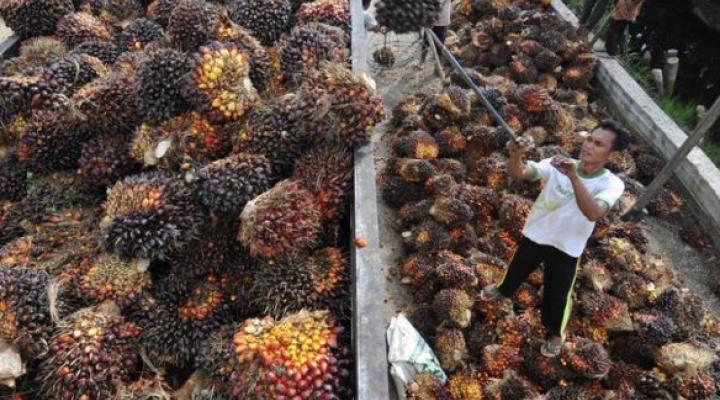
While Macquarie expects crude palm oil prices to stay elevated going into 2026, it says higher prices are unlikely to pose a risk to instant noodle makers. Palm oil is a common ingredient for making instant noodles.
Macquarie’s sensitivity analysis indicates that a 10% increase in crude palm oil price will result in a profit reduction of 2-3%, except for Tingyi, whose profit will reduce by 6% due to its lower operating profit margin. Raising prices by 1% will cover cost inflation, all else being equal.
Knock-on effects
Samyang’s share price gains this year have taken place amid a broader rally in South Korea’s stock market. The country’s KOSPI Composite Index is up by over 69% year to date, amid the government’s attempts to revitalise the stock market with its Corporate Value-Up Programme. The initiative seeks to narrow the country’s persistent “Korea discount” — a tendency for its companies to have lower valuations than its peers due to poor corporate governance and a lack of transparency.
Ramyeon’s popularity, and in turn the fortunes of noodle makers like Samyang, are likely to endure, says the Kimchi Institute’s Kim. Instead of being just a fad, ramyeon may even help to grow Korea’s broader food industry.
“Ramyeon is really a gateway to other Korean food. As soon as people, especially the younger generation, try Korean ramyeon, they will want to experience kimchi, tteokbokki, and other Korean sauces. That will result in synergy as well,” Kim says.