


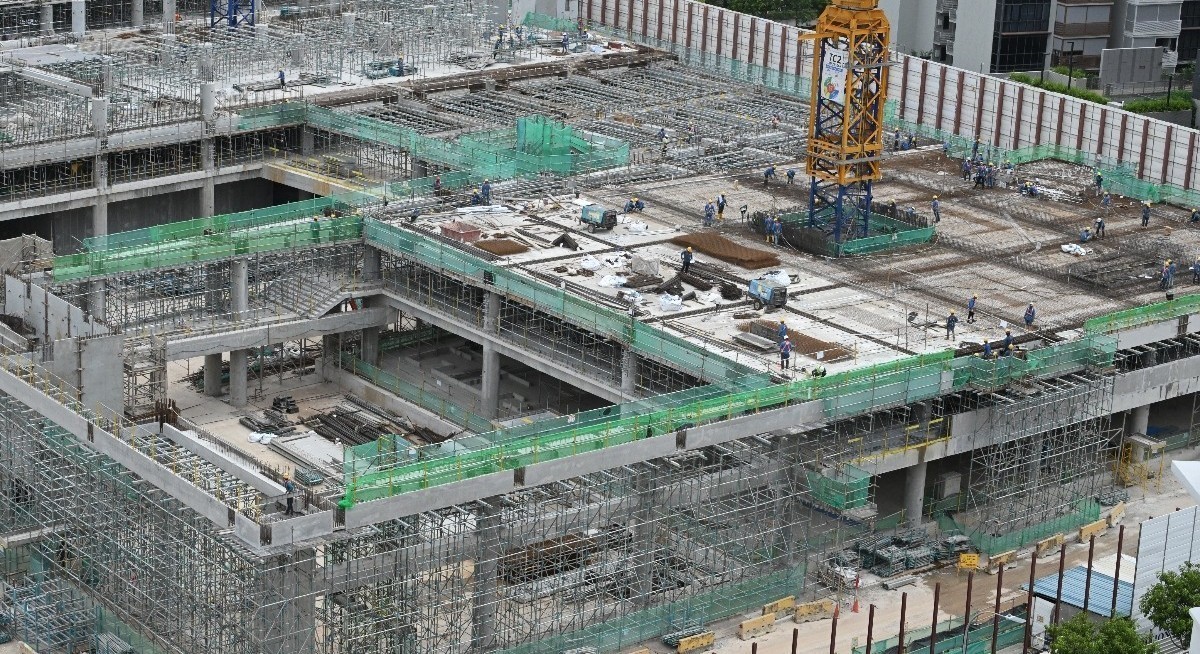


UOB Kay Hian analysts Tang Kai Jie and Heidi Mo have initiated coverage on Reclaims Global with a “buy” call and 56 cents target price, as they believe that the company, as one of Singapore’s top three earthworks and excavation contractors, is set to ride strong construction tailwinds.
The company has built a strong execution record and established relationships with major public sector clients. It has become a key partner in large-scale infrastructure and redevelopment projects, supporting its long-term growth opportunities.
They see a robust earnings outlook for the company, thanks to its solid pipeline and sustained project momentum. Revenue grew 14.9% y-o-y to $21.8 million in 1HFY2026 ended July 2025, driven by strong excavation and logistics demand and multiple project wins.
“With about 75% of revenue from long-term projects, the company enjoys multi-year earnings visibility and steady contribution from ongoing and upcoming infrastructure developments,” write both Tang and Mo.
See also: Broker's Digest: OUE REIT, HPH Trust, JustCo, CapitaLand Investment, Addvalue, CICT
“Growth is driven by public institutional projects, housing developments, and major infrastructure initiatives such as Changi
Terminal 5 and Tuas Mega Port. The industry is projected to grow at around 6%, creating significant opportunities for construction service providers like Reclaims Global to benefit from the ongoing upcycle,” adds the team.
In 1HFY2026, projects extending over 12 months contributed revenue of about $16.4 million, equal to 75% of FY2025 revenue’s $30.5 million, which was an increase from FY2024’s $13.5 million.
See also: Citing defensive yield, Beansprout initiates coverage on United Hampshire US REIT
While the company does not disclose a formal order book figure, the analysts say the pipeline is growing, supporting the multi-year growth view. Last November, Reclaims Global won a $15.5 million order to supply labour and machinery for earthworks and disposal works, with completion expected by FY2027. “The contract is anticipated to contribute positively to Reclaims Global’s revenue and earnings growth,” state the analysts.
Last October, the company raised $7.8 million by issuing shares at 39 cents each to fund new growth. It has paid off its debt and is now in a net cash position of $18.5 million.
It has maintained a steady dividend payout of 1.2 cents for both FY2024 and FY2025, translating into a yield of about 5%. “We expect dividend payout to remain strong going forward,” they add.
Tang and Mo’s target price of 56 cents is pegged to 12 times FY2027 earnings, in line with its historical mean. The counter is trading at 8.7 times FY2027 earnings, with a high ROE of 17%. — Teo Zheng Long
ASL Marine
Price target:
UOB Kay Hian ‘buy’ 35 cents
‘Thriving’ business
UOB Kay Hian analyst Heidi Mo reiterated her “buy” call on ASL Marine in her Jan 13 note, raising the target price to 35 cents from 33 cents previously.
For more stories about where money flows, click here for Capital Section
Her bullishness is underpinned by several reasons. Firstly, Mo believes ASL’s repairs segment will drive the shipyard’s next phase of growth. She notes that the ship repairs segment has grown at a CAGR of approximately 3% since 2019, with a 7% y-o-y increase in 2025 repair yard visits.
The analyst supports her argument by citing sector trends that support growth in the repairs business. These include older vessels that require approximately 20% more work than prior survey intervals when entering their 15-year special surveys. Vessel surveys are mandatory, periodic inspections by classification societies to ensure ships remain structurally sound and meet safety standards.
Furthermore, Mo says that decarbonisation and retrofit requirements are compelling owners to undertake drydocking regardless of freight or commodity price cycles. According to her, the repairs business is a “recurring, higher margin” earnings pillar that is less prone to economic cycles and volatility.
Secondly, Mo believes ASL’s charter business provides a “high quality” and relatively defensive earnings base. ASL’s near-term earnings visibility is anchored by its charter business, which has $82 million in infrastructure-linked chartering contracts.
According to Mo, Singapore’s multi-decade marine projects, including Tuas Mega Port and coastal protection works, are expected to drive sustained demand for tugs, barges, crane barges, and dredging-related assets, with ASL presumably working on some of these projects.
While companies like ASL are exposed to the cyclical nature of the offshore oil and gas sector, Mo believes it has shifted from “speculative” newbuilds serving this sector to a focus on repairs and chartering. That said, any re-entry into oil and gas would be a bonus.
Finally, Mo says that ASL’s balance sheet has strengthened after nearly a decade of paring debt. Borrowings, as high as $592 million in 2016, stood at less than $179 million as at June 30, 2025.
Thanks to higher revenue and lower debt, ASL generated $46 million in operating cash flow, enabling the company to resume dividends for the first time in nearly a decade. Mo is optimistic that as the company continues to deleverage, more free cash flow will be generated, which can provide higher shareholder returns via dividends, potentially through FY 2027.
Mo’s target price of 35 cents is based on 11.6 times FY2026 earnings. The counter is now trading at just 9 times. — Lin Daoyi
NTT DC REIT
Price target:
UOB Kay Hian ‘buy’ US$1.42
Lucrative yield
UOB Kay Hian analyst Jonathan Koh has initiated “buy” on NTT DC REIT on Jan 9 as he likes the REIT’s “lucrative yield” and sees incremental upside from asset injections.
“NTT DC REIT has a global right of first refusal over its sponsor’s stabilised data centres covering 123 properties with a capacity of 2,000 megawatt (MW), of which 130 MW are high-conviction potential acquisitions for execution over the next three to five years,” says Koh, who has a target price of US$1.42 ($1.83).
The REIT, according to Koh, is considering the acquisition of a hyperscale data centre in Frankfurt, Germany, with a net property income (NPI) yield of 6% and a weighted average lease expiry (WALE) of 10 years in 1HFY2026 ending Sept 30.
In 2HFY2026, the REIT’s overall portfolio occupancy is expected to improve to 97.7%, driven by a scheduled ramp-up of existing tenants and the addition of new tenants.
“Occupancy at CA1 is expected to increase by 7.5 percentage points to 99% as major leases fully ramp up in 2HFY2026. Occupancy at CA3 is projected to reach 100% by 4QFY2026 after securing new tenants [while] occupancy at SG1 is likely to improve by 2.6 percentage points to 96% by FY2027 as new leases commence,” Koh points out. CA1 and CA3 refer to the REIT’s data centres in Sacramento, California, while SG1 refers to its data centre in Serangoon North.
Koh also likes NTT DC REIT’s prospects, given that its largest tenant is a Fortune 100 US electric vehicle company, which accounted for 29.9% of its base rent as of September 2025. This tenant’s leases have a WALE of eight years and a 3% rental escalation. The company is also expanding its autonomous taxi service to new geographical areas and has unveiled a new product, an autonomous humanoid robot, which could create more demand for data centre capacity.
Koh’s target price of US$1.42 represents a 42% upside to the REIT’s IPO price of US$1. He expects the REIT to distribute 5.4 US cents per unit for FY2026 and 8 US cents for FY2027. At current prices, this makes it the data centre REIT with the highest yield of 7.2% annualised for FY2026 and 8% for FY2027. In contrast, Digital Core REIT is at 6.6%, Keppel DC REIT at 4.6% and Mapletree Industrial Trust at 6.1%. — Felicia Tan
Food Empire Holdings
Price target:
UOB Kay Hian ‘buy’ $3
Prospects of resolution in Ukraine
UOB Kay Hian analysts John Cheong and Heido Mo have maintained their bullish “buy” rating and $3 target price for Food Empire Holdings, citing a possible resolution to the Russia-Ukraine war and its implications for key markets. In addition, ongoing share buybacks will provide further support to the share price, the analysts state in their Jan 14 note.
Russia and Ukraine are key markets for Food Empire. Despite the conflict, the company’s revenue for 9MFY2025 ended December 2025 reached a record US$427 million ($550 million), with Russia contributing 31% and Ukraine, Kazakhstan and the Commonwealth of Independent States contributing 26%. “As of Dec 25, tentative progress in the US-led peace discussions has raised hopes of de-escalation,” Cheong and Mo write.
Noting that the US and Ukraine are looking to finalise a peace deal at the upcoming World Economic Forum in Davos later this month, any progress made toward a ceasefire will likely benefit Food Empire, given that it would support demand recovery in both Russia and Ukraine, they add.
In addition, Food Empire’s earnings have benefited from an appreciation of the Russian ruble, which has gained more than 40% against the US dollar over the past year. “This was supported by Russia’s strong export surplus, stringent capital controls, and elevated domestic interest rates, alongside a broader weakening of the US dollar,” the analysts write.
Besides Russia and Ukraine, Cheong and Mo say Food Empire’s ongoing share buybacks will lend further support to the company’s share price “in the near term.” Food Empire repurchased a total of 2.68 million shares after resuming its share buybacks in 4Q2025.
“While the company does not have a formal buyback mandate, this move underscores management’s confidence in the company’s long-term prospects and commitment to enhancing shareholder value, while also providing a positive signal to the market,” the analysts note.
Their target price of $3 is based on a 19 times P/E for FY2026 earnings, which is at a 1.5 standard deviations above the company’s long-term historical mean. At 17 times FY2026, Food Empire is now trading at a “deep” 32% discount to its regional peers’ 25 times on average. — Kwan Wei Kevin Tan
Thai Beverage
Price target:
Aletheia Capital ‘sell’ 39 cents
Weak demand, tighter regulations
Aletheia Capital analyst Nirgunan Tiruchelvam has downgraded Thai Beverage (ThaiBev) to “sell” from “buy” amid a weak domestic demand backdrop in Thailand and tighter alcohol restrictions.
“ThaiBev’s core spirits business is exposed to Thailand’s weak domestic demand backdrop. Household debt remains elevated at [around] 90% of GDP, while real wage growth has lagged inflation, constraining discretionary spending,” says the analyst in his Jan 6 report.
Over FY2022 to FY2024, ThaiBev’s spirits volumes fell by a CAGR of 2%. With this, Tiruchelvam has lowered his outlook to low-single-digit volume growth, down from the mid-single-digit recovery.
He sees limited headroom for pricing, with average selling price (ASP) growth expected to slow to 1%–2% per year, which is insufficient to offset cost pressures. Given this, ebitda margins for ThaiBev’s spirits business are unlikely to expand “meaningfully” from FY2025 to FY2027.
Thailand’s tighter alcohol regulations across advertising, sponsorships, and point-of-sale visibility have also led Tiruchelvam to lower his BeerCo volume estimates to mid-single-digit growth, down from the previous forecast of 6%–12% annual growth. He adds that he sees margin upside capped for the beer business.
With a risk that the government may reimpose restrictions on afternoon alcohol sales, the analyst has lowered his volume forecasts for spirits and beer in the core Thai market by 15% from FY2026 to FY2027.
In FY2026, the analyst sees a 15%–20% cut in ThaiBev’s dividends, reducing its forward yield to 4%. This would mark a contrast with its consistent dividend policy to date, driven by stable cash generation and contributions from key subsidiaries such as Sabeco.
While recent dividends show management’s confidence in the group’s underlying cash flows, payout sustainability will remain linked to operating performance and leverage trends. “Over the medium term, ThaiBev’s ability to sustain dividends while funding strategic initiatives will be an important driver of shareholder returns,” he says.
He adds that market expectations that ThaiBev would spin off its beer business have faded, with investors increasingly discounting the IPO entirely, which limits ThaiBev’s ability to unlock value or support higher payouts.
This could change, however, after Kitipong Urapeepatanapong, the chairman of the Stock Exchange of Thailand (SET), said the SET may welcome listings of alcoholic beverages. He adds that ThaiBev, as well as its peers, is a good prospect for a new listing.
To Tiruchelvam, ThaiBev’s valuations appear “demanding” at FY2025 P/E of 9.9 times and 6.4 times EV/Ebitda. “There is slowing growth, rising regulatory risk and a weakening dividend outlook,” he says. In addition to his downgrade, the analyst has lowered his target price to 39 cents from 72 cents previously. — Felicia Tan
Elite UK REIT
Price target:
PhillipCapital ‘accumulate’ GBP0.39
Successful re-gearing to raise asset values
PhillipCapital analyst Hashim Osman, in his Jan 7 note, downgraded his call on Elite UK REIT to “accumulate” following recent share price gains, while keeping his target price at GBP0.39 ($0.68).
Recent lease renewals, such as Theatre Buildings, have achieved a 5% rental reversion and Osman expects reversion to be at least on par with current UK CPI, which is 3.5% as of November 2025. In his view, the successful re-gear will help to justify cap rate compression, which can increase asset values and have a knock-on effect on gearing.
Osman says the Department for Work Pensions (DWP), the REIT’s key tenant, has “limited relocation optionality” in UK’s Tier 2 and 3 cities due to the lack of comparable alternatives. With UK unemployment at the highest level since early 2021, the government will be under significant pressure to expand employment services infrastructure. “We believe Elite UK REIT is well-positioned to secure favourable lease renewals with DWP,” he reasons.
Meanwhile, Osman says work to repurpose Lindsay House as a student accommodation asset has started, and will cost around GBP15 million to GBP17 million. This property is near the University of Abertay and the University of Dundee.
“We note that for the academic year 2023/2024, the number of international students at the University of Dundee and Abertay University fell 27% and 11% y-o-y, respectively.
“However, given the structural undersupply of purpose-built student accommodation [PBSA] relative to the current international student population (4,620 PBSA beds vs 73,915 population as of 2023/2024), Lindsay House may still benefit from constrained supply dynamics,” says Osman.
The REIT is also mulling acquisitions, most likely from its sponsor, which Osman says now owns two assets of interest: the fully leased Queensway House in East Kilbride, a 217,674 sq ft campus office with a weighted average lease expiry (WALE) of six years. The second is 150 Broomielaw, in Glasgow, a 96,759 sq ft Grade A office fully let to Scottish Enterprise with a WALE of five years.
In his view, Elite UK REIT’s acquisition track record indicates a preference for assets with existing UK-government leases at modest bolt-on deal sizes of GBP5 million to GBP15 million, and clear strategic rationale centred on lease re-gearing (e.g., removal of break options or WALE extension), alongside efforts to diversify tenant exposure from DWP.
Finally, Osman sees various upside potential for Elite UK REIT, which includes higher-than-expected rental escalation post-lease regearing and Lindsay House PBSA delivering an above-market yield, with the current estimated yield on cost is 7%. — Teo Zheng Long
PropNex
Price target:
UOB Kay Hian ‘buy’ $2.51
‘Solid’ Singapore property market
UOB Kay Hian (UOBKH) analyst Adrian Loh reiterated his optimism in PropNex by raising the counter’s target price by more than 25% to $2.51 and maintaining its “buy” rating.
In a research note dated Jan 8, Loh believes that with a Jan 7 closing price of $1.96, it is now an opportune time for investors to explore the PropNex, given “multiple” nearand medium-term catalysts.
These catalysts include an 80% y-o-y increase in profit in FY2025, a potential special dividend, higher HDB prices and UOBKH’s optimistic forecast for new property launches in the first half of 2026. In addition, Loh holds a favourable view of the company’s 56% return on equity and forecasted 5.6% free cash flow yield for FY2025.
For the new launches, UOB believes they should be attractively priced, as pricing will likely be linked to lower land-cost benchmarks, whereas later launches will be centred on higher Government Land Sales (GLS) bids.
With a significant number of resale flats costing more than $1 million last year and with news headlines focusing on $1.5 million as the new benchmark, Loh believes that certain segments of the HDB market will remain resilient, with prices expected to rise. This is despite transaction volume declining around 12% to 25,256, attributed to the new flat supply
Overall, UOBKH is upgrading its earnings forecasts for FY2025 to FY2027 by around 5% to 10%. Loh attributes this to higher gross margins (especially from new launches) and stronger-than-expected unit volumes for 2025.
UOBKH has revised the expected dividend per share by one cent to nine cents, with a payout ratio of 80%. Pointing out that the counter’s average payout ratio from 2023 to 2024 was 116.5%, Loh will not be surprised if there is a higher-than-expected payout ratio for 2025. — Lin Daoyi




