




Karoonyavanich declined to name the sector or the sponsor of the upcoming REIT in the fourth quarter. He did, however, nod in agreement to assets such as data centres, hospitality, healthcare and industrial and logistics, and we detected a whiff of recognition that commercial assets could make a comeback.
Are the sponsors foreign or local? Well, there is at least one large blue-chip local sponsor, by the sounds of it.
“The [REIT IPOs] will be backed by large groups. From that perspective, you can see that data centres needing capital are still going to be very strategic in nature. It’s an asset class that still needs to have capital to continue,” says Karoonyavanich. “There will be other blue-chip issuers as well; capital recycling is very important.”
Who could these blue-chip issuers be? The rumour mill has gone into overdrive. On April 2, Bloomberg reported that AirTrunk, the data centre operator Blackstone Inc bought in 2024, has picked banks for a REIT listing in Singapore that may raise about US$1.5 billion ($1.9 billion). Citigroup, DBS and Jefferies Financial Group will help the Australian company prepare for the IPO, notes Bloomberg, and the IPO could be launched this year.
See also: A growing Temasek’s multifold challenge of mandate, liquidity and returns
AirTrunk is not a blue-chip. Is Blackstone a blue-chip name? In 2022, it curbed redemptions of its troubled Blackstone REIT (BREIT), and in March this year, its US$82 billion flagship private credit fund BCRED was hit by a wave of redemptions.
Elsewhere, Singapore-based DayOne Data Centers is reported to be preparing a US$5 billion-plus IPO in the US. Minor International, Thailand’s largest hotel and restaurant chain operator, is reported to have picked the Singapore Exchange (SGX) as the venue of its first REIT. The potential IPO, probably in 2H2026, may be worth about US$1 billion.
Data centre and hospitality REITs similarly require regular capital expenditure to keep properties relevant and up to date. Both are vulnerable to obsolescence; investors in these REITs may need to fund upgrades and enhancements. Data centres, in particular, require substantial capital. Malaysia’s IOI Properties is reportedly preparing for a REIT IPO here, possibly next year, with IOI Central Boulevard and South Beach.
See also: Why Temasek’s total portfolio emissions will rise before (hopefully) falling
Will the mysterious REIT IPO in 4Q2026 have UOL Group-Singapore Land Group (SingLand) as the sponsor? Market chatter on this is getting louder. As far back as December last year, JP Morgan issued a report referring to UOL’s 2025 AGM. In April 2025, when a shareholder asked whether UOL would consider listing a REIT, Group CEO Liam Wee Sin replied that UOL may consider establishing a REIT under the right market conditions.
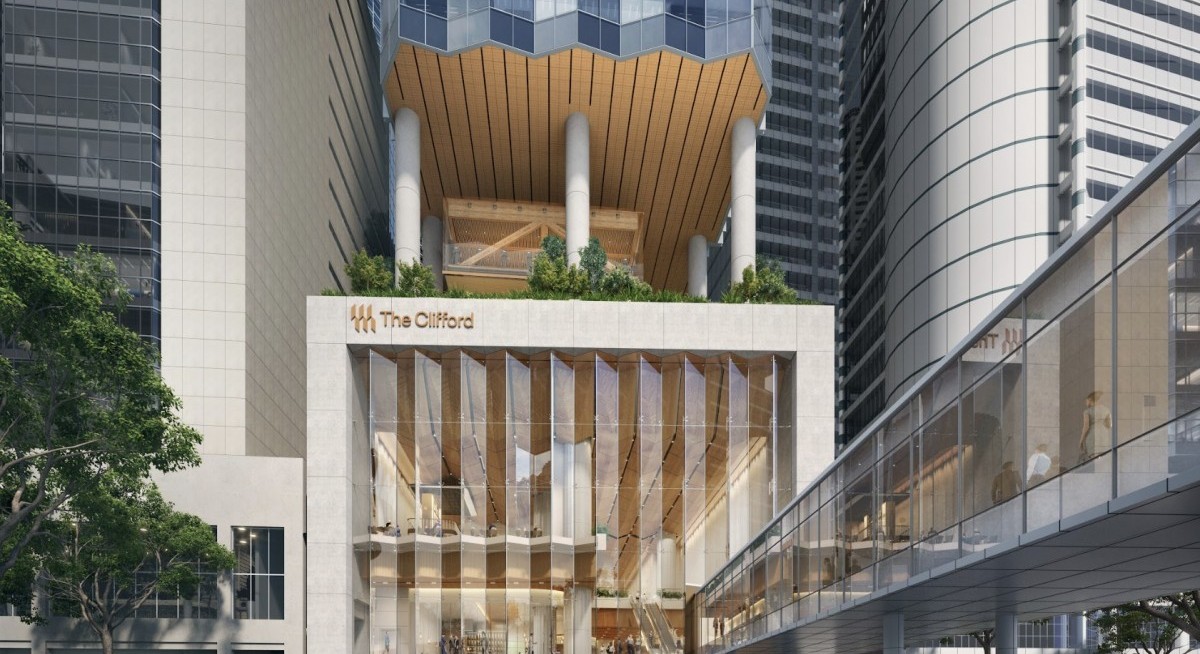
UOL holds 50.35% of SingLand. SingLand, in turn, owns properties such as Singapore Land Tower, The Clifford, The Gateway, SGX Centre 2, West Mall, UIC Building and Marina Square.
According to JP Morgan, UOL and Singapore Land (together) have $8.7 billion of Singapore commercial assets. A key consideration is for a REIT to offer above 5% yield to compete against office REITs such as Keppel REIT and Suntec REIT, says JP Morgan. Keppel REIT is trading at 5.7% while Suntec REIT is trading at 4.65%.
In 2H2025, SingLand submitted a revised proposal to the Urban Redevelopment Authority under the strategic development incentive scheme to transform the Marina Square complex into Singapore’s first hyper-mixed development, with the addition of three buildings comprising a residential tower, a serviced apartment block and a mixed-use tower with hospitality, office and performing arts spaces.
A DBS Group Research report says the development scheme will be unveiled in 1H2026. “In our view, the securitisation of the [UOL] group’s hotel or office portfolio represents a credible and value-accretive pathway. Such a transaction would raise capital for redeployment while allowing UOL to maintain its traditionally conservative balance sheet. A separately listed hotel or office platform could help narrow the group’s NAV and RNAV discount,” adds the DBS report.
Based on chatter within the CBD, the securitised assets are likely to be mainly commercial.




