




Turning to oil production costs, a Rigzone report dated March 27 notes that the latest Dallas Fed Energy Survey asked exploration and production firms what WTI (West Texas Intermediate) oil price they need to cover operating expenses (opex) for existing wells. Based on a sample size of 80 companies, the average price across the entire sample was approximately US$43 ($55.51) per barrel. According to the survey, the average break-even price is US$66 per barrel, while the average break-even price in the Permian Basin is US$67 per barrel.
No surprise then that UOB Kay Hian analyst Adrian Loh and Singapore Exchange market strategist Geoff Howie have highlighted the advantages of a company such as RH Petrogas, an oil exploration company.
Loh, in a report dated March 30, has raised his patmi estimates for RH Petrogas by 6%-9% in FY2026-FY2027 to account for higher oil price estimates, “mildly offset by slightly lower production estimates, a weaker US dollar and higher production costs required to maintain its ageing production assets”. According to Loh, every US$1 per barrel increase in the company’s realised oil price would raise its earnings by 5.6%.
But, “a key near-term risk is the Taco trade — an abrupt end to the war in the Middle East could result in a sell-off of oil-related equities,” Loh writes.
See also: Internship, education or audition?
The Taco trade
Consider a company that has reinvented its business model to become a key partner for oil, gas and renewable energy producers.
Seatrium’s One Seatrium Global Delivery Model is a centralised and coordinated execution platform integrating people, AI and assets worldwide. An example is the production of FPSOs, used in the production and transportation of liquefied natural gas (LNG). The topside is fabricated in Seatrium’s China yard, where it has access to lower-priced steel. A partner yard managed by Seatrium fabricates the hull and further fabrication and engineering are done in the Singapore yard.
See also: It's never too late to rethink policies
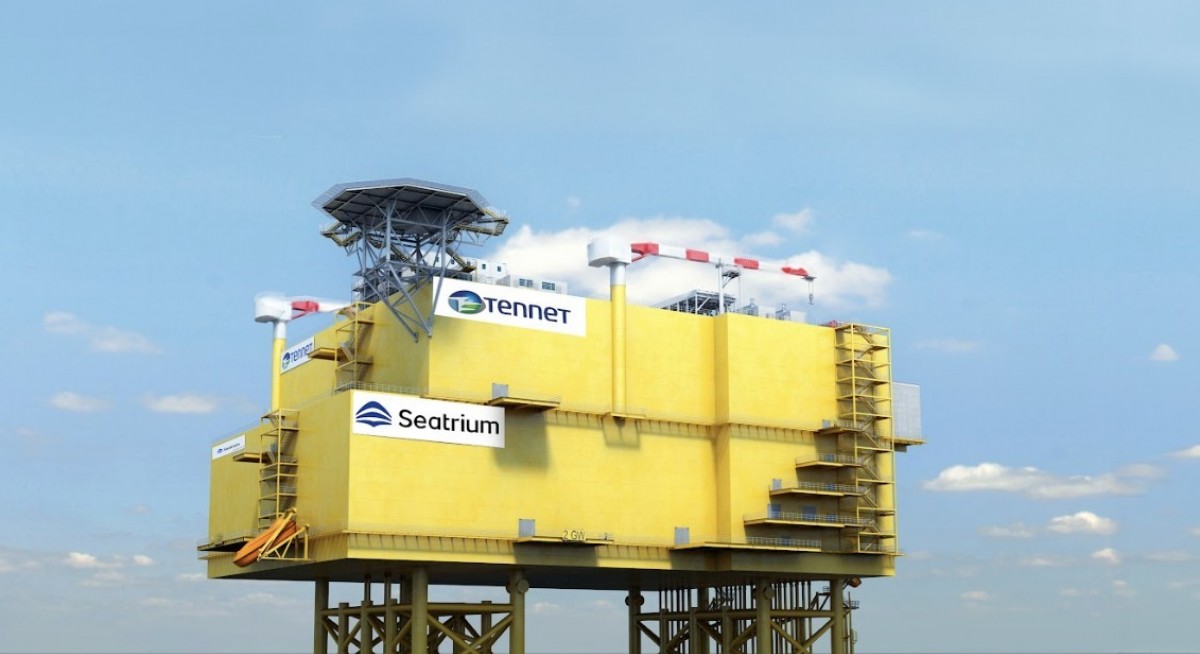
In FY2025, revenue from offshore wind, which contributed 18% of total revenue, rose by 60% y-o-y, driven by the 2 gigawatt and 2.2GW HVDC (high voltage direct current) converter platforms built for TenneT. These platforms connect and convert energy from the North Sea offshore wind farms to the onshore grid in Germany and the Netherlands. As of the end of December 2025, Seatrium’s order book comprised 66% oil and gas and 33% offshore wind.
Pivot to renewables
Citigroup cites Seatrium as a beneficiary of high oil and gas prices and the pivot to renewables. “The scenario of higher oil prices for longer theoretically could address the order pipeline visibility issue with 72% of target projects in oil and gas in South America primarily and 22% of targets in offshore wind as higher oil prices incentivise both oil and renewable energy producers to accelerate or add to projects,” Citi adds, in its report dated March 27.
Other sectors considered ‘Taco trades’ include banks. Rising inflation may lead to higher interest rates, although this could eventually affect GDP growth and credit costs. The local banks are likely to benefit from increased flows into Asean and Apac. The STI ETF could continue to benefit as the local market has held up better than global markets.
During a results briefing on Feb 26, before the Iran war, Chris Ong, group CEO, Seatrium, said: “If we believe that the world is starved of power, and also the growth of digital and AI, floating assets are very sound. There are many things in the market that may be too premature for us to say, but [our] $2 billion of conversion prospects ties into the whole energy type of products, because the speed to market is very important.”




