




Raffles HealthyLongevity is the clinical backbone of the group’s vision, a Ministry of Health-licensed medical centre focused on preventive health, early intervention and healthy ageing. It marks a shift from reactive treatment to continuous, preventive care.
Its philosophy is anchored on three principles: precision, prevention and performance, with care tailored to each individual through data-driven insights, medical diagnostics and ongoing monitoring. The aim is not only to detect illness earlier but to identify risk factors before they develop into disease.
R17 sits within the same space as Raffles HealthyLongevity. It is a personalised “medi-wellness destination” focused on lifestyle optimisation, recovery and well-being. While Raffles HealthyLongevity provides clinical and diagnostic care, R17 supports the behavioural and lifestyle changes that sustain long-term outcomes.
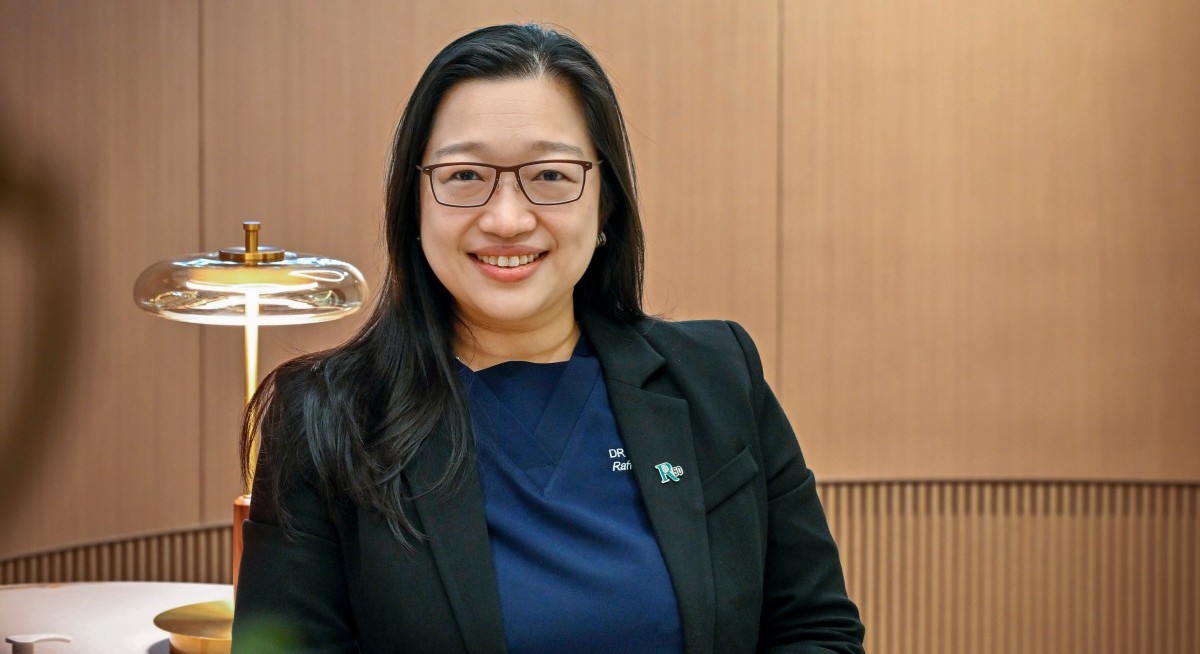
Dr Sarah Lu, managing director of Singapore healthcare at RMG and executive medical director of Raffles Hospital, says integrating wellness into the wider treatment-focused hospital creates continuity of care that brings medical insight into everyday practice.
See also: Wellness enters mainstream as longevity draws capital
While Lu acknowledges the wellness market is becoming crowded, RMG aims to add value across its hospitals, specialist clinics and primary care services.
“We decided to go in with a more ‘medi-wellness’ focus, because that will complement the rest of our offerings and more traditional healthcare models,” says Lu, who is also the daughter of Dr Loo Choon Yong, executive chairman of RMG. She also emphasises that the wellness offerings are complementary, rather than disruptive, to the group’s services.

See also: Water flows, wellness follows: Therme Group doubles venues in global expansion
Clinician-led care
Lu says patients who go to Raffles HealthyLongevity or R17 enter a tailored longevity programme. They undergo a structured assessment spanning Western medicine, traditional Chinese medicine (TCM), mental health, nutrition and health coaching within a coordinated framework.
Lu describes this as a response to a longstanding gap in care. “Many patients are already seeking support from different places — TCM practitioners, nutritionists, psychologists — but often they are doing it all separately, with no coordination or medical oversight,” she adds.
The longevity model brings these strands together. A wellness coach acts as the central point of contact while clinicians across disciplines collaborate on case discussions to align treatment plans, ensuring interventions are safe and coherent.
It shifts away from fragmented, consumer-driven wellness towards a more structured, clinician-led approach. Integration extends to diagnostics and specialist care, with patients referred within RMG for further investigations, from endoscopy to imaging, if underlying conditions are identified.
At the same time, non-clinical interventions — from sleep optimisation to stress management — are guided by data and tracked over time. Wearable technology, for instance, allows clinicians to monitor sleep, recovery and stress patterns, enabling more personalised recommendations. “We use wearables in our centre to help us monitor patients longitudinally via a dashboard,” says Lu, highlighting how continuous data is increasingly shaping patient care.
This convergence of medical oversight and lifestyle intervention sets the model apart from conventional wellness centres as an extension of healthcare rather than an alternative.
To stay ahead of Singapore and the region’s corporate and economic trends, click here for Latest Section

Shaping longevity care
At the heart of this initiative is Lu, a breast surgeon by training whose clinical experience has shaped her perspective on wellness and longevity. She also represents the next generation of leadership within the group, balancing continuity with change.
Growing up around medicine, she initially resisted following her father into the profession. “I grew up thinking that I never wanted to be a doctor,” she says, describing childhood evenings spent waiting for him to come home for dinner.
It was only later, after exploring other paths, that she chose medicine, drawn by what she describes as a sense of calling.
While Lu says her father even tried to dissuade her from becoming a doctor, his influence is evident in her philosophy today. In earlier interviews, she has echoed a similar principle: “If we look after our patients properly, the business will look after itself.”
That ethos has also shaped the development of the longevity programme. Lu says her father initially had reservations about moving into the wellness space, cautioning against approaches that lacked scientific rigour. “He said that we cannot sell things, we need to make sure that everything we do is evidence-based,” she adds.
This insistence on clinical validity led the team to spend over a year researching and testing potential services before launch, ensuring each intervention is grounded in data.
Lu says this venture into wellness does not mean she is stepping away from her surgical practice but rather extending the range of offerings available to patients, adding: “What I find most rewarding in medicine is not simply treating a condition, but actually accompanying my patients through different seasons of their lives.”
In her work as a breast surgeon, she has observed how several lifestyle factors often intersect long before any formal diagnosis is made. “Sleep, stress, weight and recovery are all tightly interconnected,” she says, noting that many patients present with similar underlying challenges even in the absence of disease.
As a result, programmes have been developed to enable clinicians to address these issues earlier, before illness develops and after acute episodes.

The healthspan shift
Longevity-focused care is rising as Singapore’s life expectancy reaches around 83.5 years, though Lu notes longer lives do not necessarily mean healthier ones. “We don’t just want to live longer, we want to be purposeful, productive and engaged throughout our added decades of life.”
Through its programmes, Raffles HealthyLongevity seeks to distinguish between lifespan and healthspan. Its scope includes gut microbiome testing, metabolic assessments, exercise genomics and recovery therapies, which are not clinical treatment but may be transformative over time when applied early and consistently.
The group is cautious about moving beyond its clinical focus. “We have very deliberately not added aesthetics into this,” Lu says, noting that the priority remains on foundational health rather than cosmetic enhancement.
RMG sees scope to expand the model across its network, including in regional markets such as China. The approach will remain measured, guided by clinical evidence and patient outcomes rather than market trends.
Separately, Maybank Securities analyst Eric Ong maintains a “buy” recommendation on RMG with a $1.20 target price. He describes Raffles HealthyLongevity as a physician-led, multidisciplinary centre focused on helping individuals achieve healthier, longer lives. Ong expects more meaningful contributions in 2HFY2026.
On the company side, Lu says: “We hope to be profitable, but we will revise our forecast as we go along and as the brand grows. We also hope to increase the services that we can provide under this umbrella, depending on the needs of our market segment.”
Photos: Albert Chua/The Edge Singapore




