


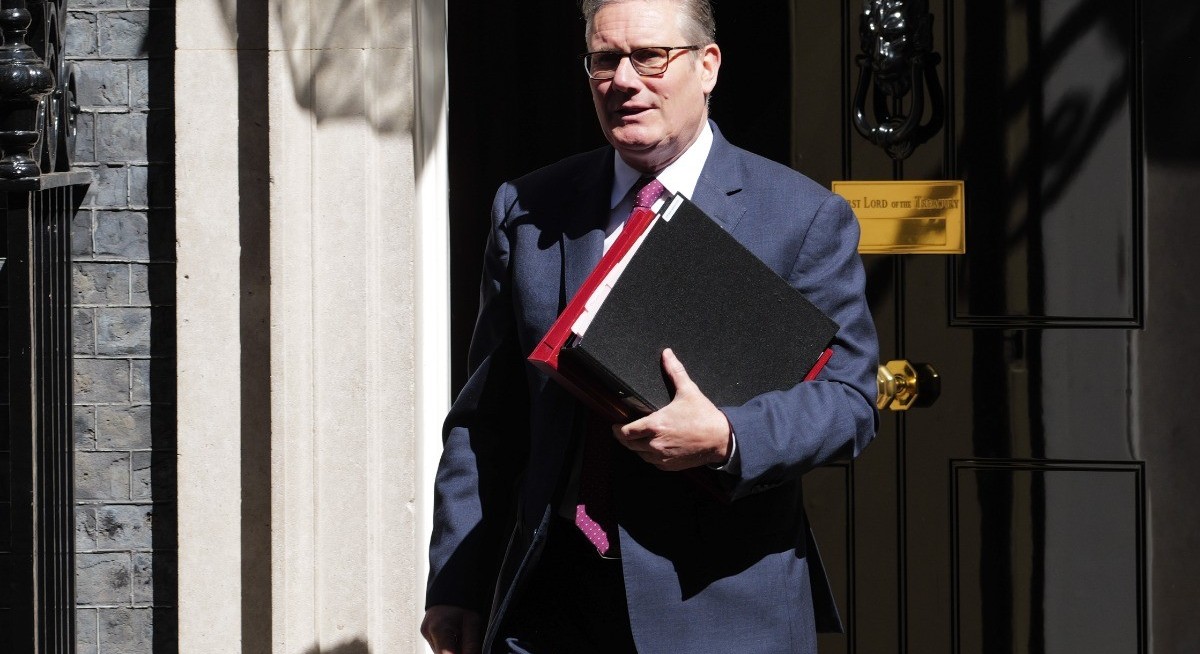


(May 12): The UK bond market tumbled, driving long-term bond yields back to the highest in nearly three decades, as speculation over Keir Starmer future as the prime minister renewed concern about the weakened state of Britain’s finances.
Gilts fell across the board on Tuesday, with the 30-year yield briefly touching 5.81%, the highest since 1998. The pound slid 0.6% to US$1.3523. NatWest Group plc and Lloyds Banking Group plc fell at least 3% as analysts speculated that the industry faces higher taxes under a new administration.
Even as Starmer rebuffed calls for his resignation in a Cabinet meeting on Tuesday, investors were analysing what his possible replacements would mean for the bond market.
The chief concern is that any new Labour leader would be more left-leaning and may loosen the fiscal rules that have restrained borrowing. With the economy already facing a crunch from higher energy prices and faster inflation, the fragmentation of British politics has become another source of market anxiety.
“The simple reality is that this latest pressure in a now long line of political upheavals merely adds to the view that no matter who is in power, no matter their political leaning, there does not appear to be a credible plan to restore the country’s finances,” said Matt Cairns, the head of fixed income strategy at Rabobank. “Gilts will remain under pressure, regardless of today’s outcome.”

See also: IMF tells UK to stick to fiscal plan as Starmer rivals circle
Gilts pared some of the moves later in the session. The 30-year yield rose as much as 14 basis points and was trading at 5.79% as of 2.41pm in London on Tuesday. In equities, the UK moves were broadly in line with the rest of the global market. The FTSE 100 Index dipped 0.4% and the mid-cap index fell 1.3%.
While bond markets around the world have sold off recently as oil prices stay stubbornly high, the combination of the UK’s heavy debt load, political infighting and a sluggish economy have left it especially vulnerable. Chancellor of the Exchequer Rachel Reeves has previously said debt costs account for around GBP1 in every GBP10 the government spends.
And with borrowing costs climbing higher, the government will have to spend even more. The 20 basis-point jump in the 10-year yield since last Friday adds an estimated GBP2 billion ($3.44 billion) to the debt interest bill by the end of the decade, according to Bloomberg Economics.
See also: Revolt against Starmer revives UK debate over undoing Brexit
Among the likely Labour candidates, Health Secretary Wes Streeting is seen as one of the most market friendly replacements. He has vouched for a deeper trading relationship with the European Union, citing it as the best way to grow Britain’s economy. He added that he is “really uncomfortable” with the level of taxation in the UK, saying that the government is asking a lot from individual taxpayers and businesses.
“Even if Starmer resigns, the political uncertainty is unlikely to end,” said Roger Lee, the head of equity strategy at Cavendish. “To stabilise the gilt market the government may have to commit to the fiscal rules and the only candidate seemingly prepared to do that is Wes Streeting.”
Angela Rayner, another possible contender, has attempted to reassure investors that the Labour Party will keep a tight grip on public finances. But she previously led a Cabinet revolt against Chancellor Rachel Reeves’ plans to slash welfare spending. She’s also faced scrutiny for her personal tax affairs, with her failure to pay enough property tax forcing her out of her role as the deputy prime minister last year.
Many are also expecting a challenge from Manchester Mayor Andy Burnham, even though he is not currently a member of Parliament. He’s criticised the government’s economic approach, claiming the country is “in hock to the bond markets”.
Last year, Burnham promised to increase government borrowing by GBP40 billion to pay for more council homes to be built. Members of Starmer’s administration were quick to dismiss this, warning that he risks spooking the bond market.
At least two Cabinet ministers — Energy Secretary Ed Miliband and Home Secretary Shabana Mahmood — have already urged the prime minister to set out a timetable for his departure. At least three junior minister had resigned in an effort to pressure Starmer to step down.

To stay ahead of Singapore and the region’s corporate and economic trends, click here for Latest Section
For investors, the recent episode is reviving memories of the market turmoil back in 2022, when former prime minister Liz Truss’ mini-budget sparked a crisis that sent the pound to a record low and gilt yields surging.
Since then, the gilt market has played a major role in UK political discourse. Starmer and Reeves have defined their agenda by a commitment to self-imposed fiscal rules designed to reassure investors they won’t borrow too much. That stance has curbed the government’s capacity to spend as generously on public services as many in the Labour Party would like, fueling discontent among lawmakers.
“The market is trying to price in a probability of more gilt unfriendly policies,” said James Lynch, an investment manager at Aegon Asset Management. “There is more room for underperformance.”
Uploaded by Tham Yek Lee




