


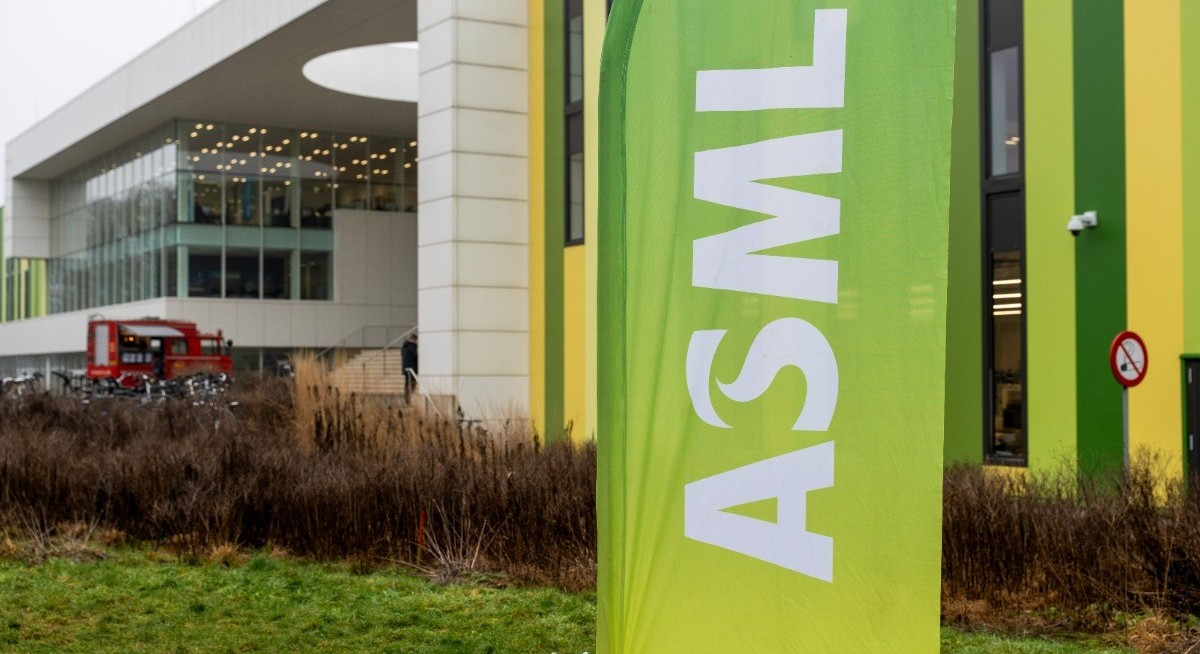


(April 23): Taiwan Semiconductor Manufacturing Co (TSMC) will hold off on deploying ASML Holding NV’s most cutting-edge lithography machines for chip production through 2029 to save money, dealing a potential setback to the Dutch maker of the costly equipment.
The Taiwanese chipmaker has no current plans to adopt ASML’s latest high numerical aperture extreme ultraviolet lithography machines, or high-NA EUV, which fetch upwards of €350 million (US$410 million or $522.97 million) apiece, TSMC deputy co-chief operating officer Kevin Zhang told reporters. Zhang also announced that the company’s leading-edge A13 chip will go into production in 2029. TSMC is ASML’s largest customer, according to Bloomberg’s supply chain data.
“We continue to be able to harvest the benefit from current EUV,” Zhang said, adding that the next-generation high-NA EUV machines are “very, very expensive”.
Its decision may not bode well for ASML. Investors are watching for adoption of high-NA EUV machines, and ASML expects the gear to enter high-volume production in 2027 and 2028 as it targets revenue of as much as €60 billion in 2030.
ASML’s US-traded shares fell as much as 5.5% in intraday trading. The stock had gained 36% this year in New York through Tuesday.
TSMC’s technology choices also have a wide-ranging impact on the semiconductor industry. It is the largest buyer of equipment, with the biggest budget for new plants and gear. The company is also a leader in manufacturing techniques often emulated by rivals.
See also: SoftBank seeks US$10 bil margin loan backed by OpenAI shares — Bloomberg
ASML’s high-NA EUV machines are an enhancement to the optical systems that help chipmakers shrink their transistors further and make more advanced semiconductors for AI applications. TSMC has acquired a very small number of the machines, but has only used them for research rather than mass production. Zhang said the company is exploring ways to make its chips more powerful without the use of high-NA EUV equipment.
The costs of modern chipmaking are becoming increasingly prohibitive, and the world’s top semiconductor manufacturer needs to be prudent about spending to maintain profitability. A state-of-the-art chip plant now takes roughly US$20 billion ($25.53 billion) to US$30 billion to build, while ASML’s entry-level EUV lithography machines, required to make the most advanced AI chips, come with a price tag of more than US$200 million.
Faced with high expenses and its ongoing overseas expansion, the Taiwanese company is planning record capital expenditure that could approach US$56 billion in 2026. At the same time, it revised up its long-term gross margin earlier this year to 56% and higher, betting that its hefty spending will end up delivering satisfactory returns to investors. TSMC is the primary AI chip manufacturer for the likes of Nvidia Corp, Advanced Micro Devices Inc and Broadcom Inc.
See also: Microsoft to face UK class action over cloud computing licencing
Zhang said progress at TSMC’s first advanced chipmaking site in the US is going well, with the initial fabrication plant in Arizona making chips at yields comparable to its facilities in Taiwan. The second factory in the state will go into production next year, he said.
Uploaded by Chng Shear Lane




