


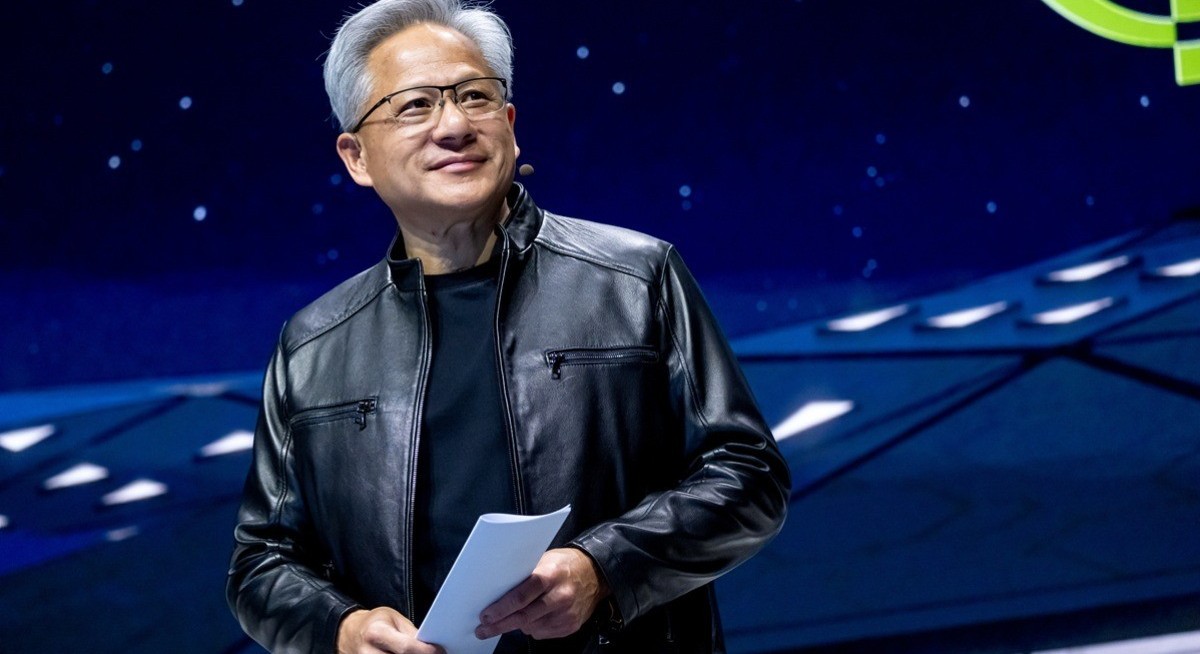


(April 16): Nvidia Corp chief executive officer Jensen Huang said that Anthropic PBC’s Mythos breakthrough shows that the US should seek greater cooperation with China so artificial intelligence (AI) researchers in the world’s two largest economies can agree on how to safely use the increasingly powerful technology.
“We want the United States to win, but I think having a dialogue and having a research dialogue is probably the safest thing to do,” Huang said in an interview Wednesday (April 15) on the technology-focused Dwarkesh Podcast. “It is essential that we try to both agree on what not to use the AI for.”
Huang expressed concern that US-China tensions over trade and security issues have impeded coordination on crucial research. “This is an area that is glaringly missing because of our current attitude about China as an adversary,” he said. “It is essential that our AI researchers and their AI researchers are actually talking.”
Over the past year, Huang has pressed the Trump administration for relief from US export restrictions that have blocked sales of Nvidia’s top AI processors to China on national security grounds. In December, US President Donald Trump agreed to allow Nvidia to ship its less advanced H200 AI chips to Chinese customers, a significant easing of measures aimed at restraining China’s growth in AI.
Huang’s push for wider access to the Chinese market has put Nvidia at odds with Anthropic, whose CEO has favoured stricter export controls and called the H200 decision a “mistake” in January. Though the two firms have nearly opposite positions on China, Nvidia is one of Anthropic’s key suppliers and an investor in the AI company, which makes the popular Claude chatbot.
Nvidia is putting US$10 billion into Anthropic, though Huang said last month it would likely be the company’s last investment. As part of a November deal, which also involved Microsoft Corp, Anthropic is committed to taking as much as one gigawatt of computing capacity from Nvidia.
See also: Wealthy Asians chasing returns pour US$25 bil into AI startups
When asked whether US export controls have constrained China, Huang said that the Chinese market isn’t bound by a lack of computing power due to the country’s abundant energy resources, skill in making “mainstream” chips and the ability to bundle more processors together.
The amount of computing capacity required to train Anthropic’s Mythos model, which has only been released to select companies and government officials due to its powerful cybersecurity capabilities, is “fairly mundane” and “abundantly available in China,” he said.
“They have so much energy. They have data centres that are sitting completely empty, fully powered,” Huang said. “If they wanted to, they can just gang up more chips, even if they’re seven-nanometre,” he said, referring to a less advanced chip manufacturing process.
See also: EU unveils age verification app as social media bans gain steam
“Their capacity of building chips is one of the largest in the world,” he said.
Uploaded by Liza Shireen Koshy




