


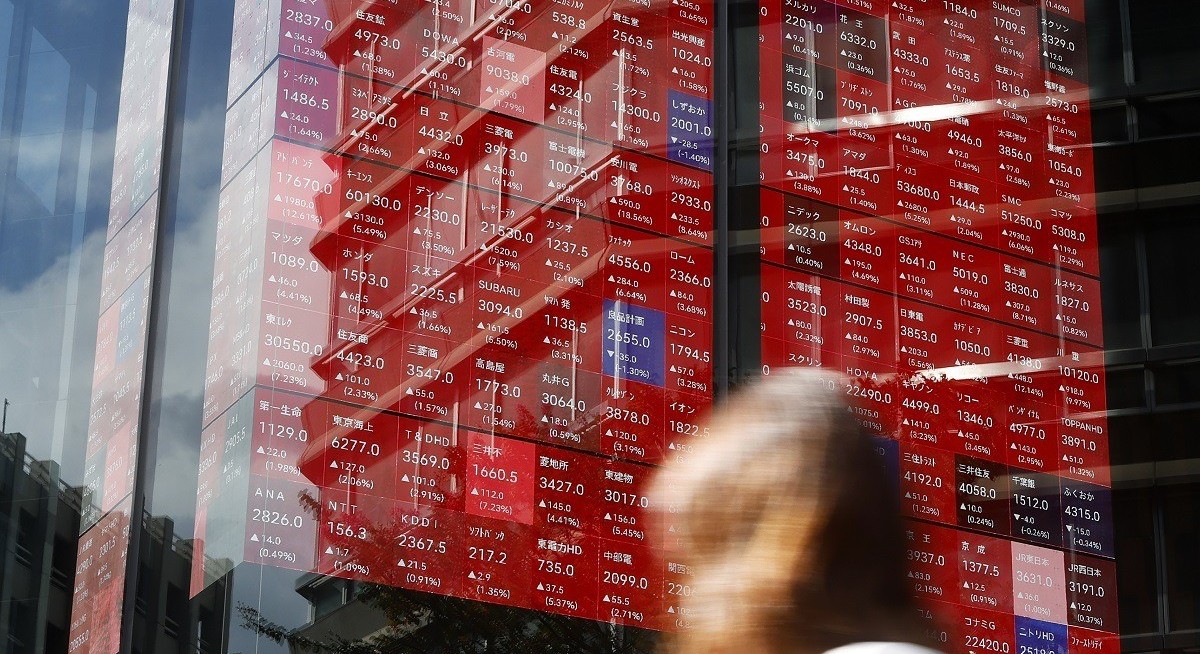


A key Asia tech gauge has jumped about 6% so far this year, beating a 2% gain in the Nasdaq 100, as investors rotate toward the region at the core of the global semiconductor supply chain. The shift reflects growing scepticism that US tech can sustain its AI-driven rally after years of outsized gains.
Strong fundamentals are reinforcing the move. Samsung Electronics Co last week posted preliminary operating profit that more than tripled to a record and Taiwan Semiconductor Manufacturing Co’s revenue exceeded estimates. Stellar stock market debuts of Chinese AI firms are also adding to the optimism.
“This really comes down to a shift in where investors see the best risk-reward right now,” said Dilin Wu, a research strategist at Pepperstone Group Ltd in Australia. “US tech is like a mature gold mine — already rich in value. Asian tech, on the other hand, is like an under-explored mine — still undervalued but fundamentally strong, ready to reward those who notice it.”
The MSCI Asia Pacific Information Technology Index is trading at a forward price-to-earnings multiple of 16.3 times, compared with about 25 times for the Nasdaq 100 Index and the Philadelphia Stock Exchange Semiconductor Index. That’s even as the Asian gauge has outperformed the Nasdaq by 33 percentage points since the end of 2024, and the Philadelphia measure by about two percentage points.
See also: Thailand moves to seize US$420 mil assets linked to scammers

A variety of money managers are investing in Asia tech as they set their portfolios for 2026. George Molina, head of trading at Templeton Global Investments, notes a mix of hedge‑fund, long‑only and passive demand into the cohort, notably in Korea and Hong Kong. In Japan, he sees investors who trimmed AI exposure into year-end adding back.
The flows are boosting share prices. TSMC, Samsung and its South Korean peer SK Hynix Inc — three of Asia’s biggest tech stocks — have already surged between 8% and 16% this year. In Hong Kong, shares of chipmaker Hua Hong Semiconductor Ltd are up more than 20%.
See also: Samsung claims lead in race to ship AI memory chips to Nvidia
Earnings potential
Another major reason behind the bullishness is higher earnings growth potential. Aggregate earnings-per-share for companies part of the equity benchmarks in South Korea and Taiwan — Asia’s two tech-heavy markets — are seen climbing 79% and 36%, respectively, over the next 12 months, according to data compiled by Bloomberg. That’s versus a forecast of 28% growth for Nasdaq firms.
With Samsung’s preliminary results — boosted by higher memory prices — out of the way, attention now turns to TSMC’s full-year earnings this week. Expectations of improving profitability have already seen about half a dozen brokerages raise their price targets for the stock since the start of the year.
Amid all this positive sentiment, Vey-Sern Ling, managing director at Union Bancaire Privee in Singapore, says the main risks for Asian chipmakers are a pulllback in AI spending and geopolitics, especially for Taiwan.

Concerns have been mounting over the hundreds of billions of dollars Big Tech has pledged to spend on AI infrastructure. Capital expenditures from Microsoft Corp, Alphabet Inc, Amazon.com Inc and Meta Platforms Inc are expected to rise 34% to roughly US$440 billion ($566.3 trillion) over the next year, according to data compiled by Bloomberg.
China tech
To stay ahead of Singapore and the region’s corporate and economic trends, click here for Latest Section
Meanwhile, China is another key element of investing in Asia tech.
Enthusiasm over the nation’s tech prowess has only grown in the new year, buoyed by DeepSeek’s paper outlining a more efficient approach to developing AI, the rising global popularity of Kuaishou Technology’s video editing AI model and Beijing’s self-sufficiency drive.
Earnings growth for a gauge of China’s tech megacaps is poised for a major inflection point in 2026 when it’s expected to overtake Magnificent 7 for the first time since 2022, according to Bloomberg Intelligence.
Also underpinning the buoyant sentiment is a growing pipeline of AI-related companies looking to list in Hong Kong and mainland China. Last week alone saw listings by two firms that are seen as challengers to global sector leaders including OpenAI.
“AI is a multi-year global growth driver, and North Asia’s technology ecosystem spanning hardware, software, and infrastructure positions the region at the forefront of this trend,” said Gary Tan, a portfolio manager at Allspring Global Investments in Singapore.
Uploaded by Magessan Varatharaja




