


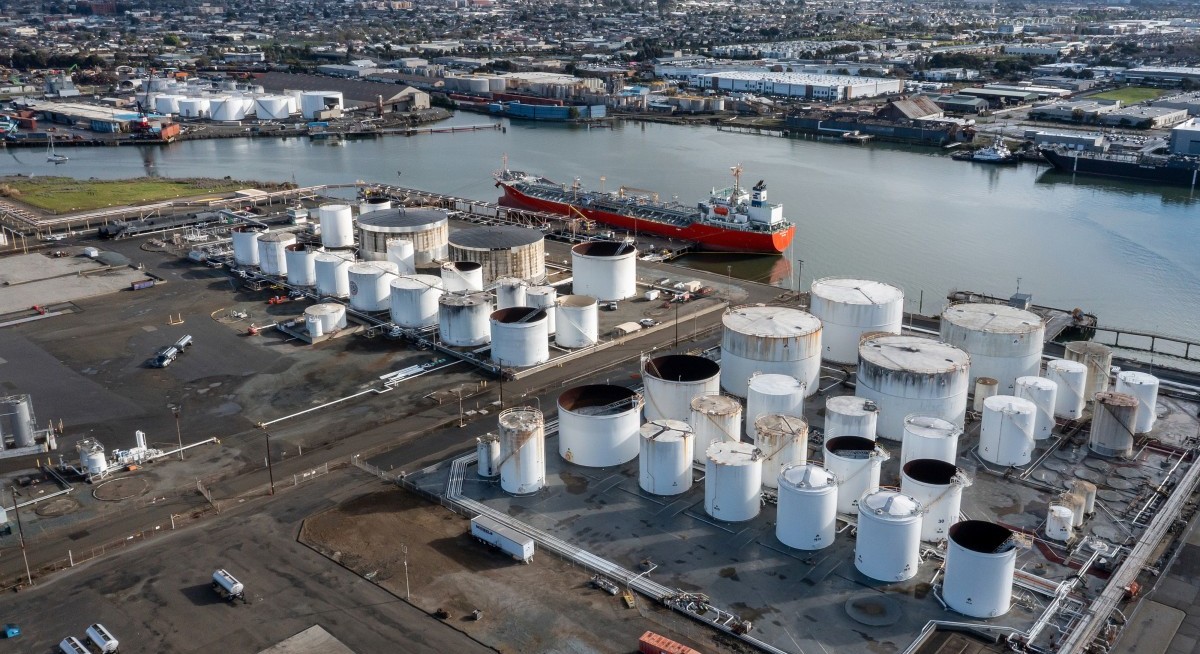


(March 5): It’s never been more expensive to ship crude from the US to Asia, though some deals are starting to fall through already with rates sky-high.
The global energy industry has been rocked by the widening Middle East fighting, with the impacts playing out in spiking oil prices, snarled shipping and fears of higher inflation.
As of Wednesday it costs just over US$29 million to hire a supertanker to take two million barrels of crude from the US Gulf Coast to China, the most on record, according to the Baltic Exchange in London. That’s about double the cost from two weeks ago.
The shipping rate is also equivalent to about US$14.50 a barrel, which equates to almost 20% of the West Texas Intermediate futures price, which were hovering around US$75 a barrel on Wednesday.
Prices of WTI and global benchmark Brent surged this week after the US and Israel launched a barrage of strikes on Iran and the Islamic Republic responded with attacks on its Middle East neighbors. The conflict has effectively stopped traffic in the Strait of Hormuz, a key shipping route.
With the flows from the Persian Gulf disrupted, Asian buyers have turned to US barrels. At the same time, Atlantic Basin supplies have become more expensive, with premiums surging.
See also: Trump says US will escort, insure oil tankers amid the Iran war
The activity has helped lift prices for US grades such as Mars Blend, whose premium to WTI crude hit the biggest since 2020, according to General Index data.
Still, it’s uncertain how long the momentum can last.
A number of the supertanker bookings to load crude from the US Gulf Coast circulating in the market this week have begun to unravel over the last 24 hours, according to Tankers International.
See also: Oil jumps again as US escort plan for Hormuz fails to bring calm
Thai refiner PTT had provisionally booked a ship at around US$29 million, according to shipbrokers familiar with the costs. However, that deal fell through later, Tankers International data indicates. It’s not uncommon for vessel bookings to fail when earnings move quickly.
On the industry’s benchmark route — the Middle East to China — earnings have soared to US$475,000 a day, though the number of actual bookings taking place is limited because of the blockage of Hormuz.
Available tankers are so scarce that charterers are now paying daily rates close to what offshore drillers must fork over to lease the most-sophisticated floating rigs. Transocean Ltd was charging an average of US$470,000 a day for ultra-deepwater rigs during the final three months of 2025.
Uploaded by Isabelle Francis




