


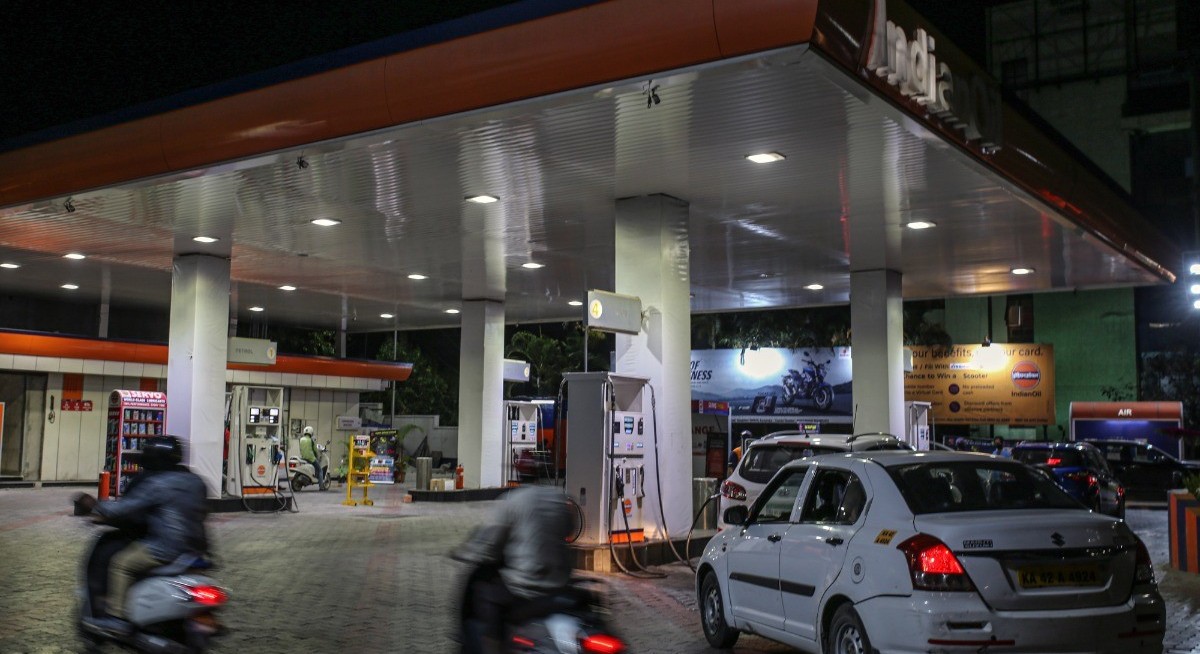


(May 25): India’s state-run fuel retailers raised gasoline and diesel prices for the fourth time in 10 days in a delayed response to the Iran war pushing up the cost of crude, a move that boosts inflationary risks.
Indian Oil Corp, Bharat Petroleum Corp and Hindustan Petroleum Corp — which together control about 90% of India’s fuel retail market — increased gasoline prices in New Delhi by 2.6% to 102.12 rupees (RM4.24) a litre and for diesel by 2.9% to 95.20 rupees, according to company statements and website data. Prices have been raised across India but vary from state to state due to local taxes.
The latest hike brings cumulative increases over the last 10 days to 7.8% for gasoline and 8.6% for diesel. The prices for the fuels are at the highest level since May 2022.
India deregulated retail fuel pricing years ago but Indian Prime Minister Narendra Modi’s government had effectively frozen pump prices for nearly four years. That policy became increasingly difficult to sustain as the Iran war sent crude prices sharply higher and the rupee weakened against the dollar, deepening losses for state-run refiners.

A surge in fuel consumption during the agricultural harvest season and increasing disparities with non-state retailers have also strained inventories, adding to pressure to raise prices.
See also: Oil rises after three-day drop with US-Iran talks in focus
Even after the latest adjustment, government-owned retailers are still selling fuel below market-linked levels. “Oil marketing companies have been posting losses which have now narrowed to slightly less than six billion rupees daily, from 10 billion rupees,” Sujata Sharma, joint secretary in the oil ministry told reporters in New Delhi during a media briefing Monday.
“We expect more action to come by through another retail fuel price hike and a hike in liquefied petroleum gas prices,” said Radhika Piplani, economist at Motilal Oswal Financial Services Ltd. “The higher prices of fuel would have a bearing on inflation, which we expect to climb to 5.7% on year for the current financial year as against the Reserve Bank of India expectation of 4.6%,” she said.
The Reserve Bank of India’s Monetary Policy Committee is scheduled to meet June 3-5 for an interest-rate decision. Sonal Varma, Nomura Holding Inc’s chief economist for Asia ex-Japan, expects the central bank to adopt a wait-and-watch approach. The fuel price hikes will have a cumulative impact of 38 basis points on the consumer price index, she said.
See also: Oil near US$100 seen as base case over next 12 months on Iran war
State-run companies are selling diesel to bulk users at premiums of at least 40 rupees a litre above retail pump prices, encouraging commercial buyers and motorists to shift purchases to subsidised retail stations. The surge in demand has led to dry-outs at several fuel stations and raised concerns over supply shortages.
Indian Oil said on Saturday that diesel sales at its retail outlets climbed 18% in the first 22 days of May from a year earlier while gasoline sales rose 14%.
India has been among the economies hardest hit by the Middle East conflict because of its dependence on crude and fuel shipments passing through the Strait of Hormuz, a critical waterway that has been mostly blocked since the war began in February.
The government this month introduced a series of measures aimed at containing the economic fallout as higher oil prices pressure the rupee and accelerate foreign investor withdrawals from local equities.
The shares of the state-run fuel retailers rose on Monday. Indian Oil, Bharat Petroleum and Hindustan Petroleum all climbed as much as 4% or more.
Uploaded by Arion Yeow




