


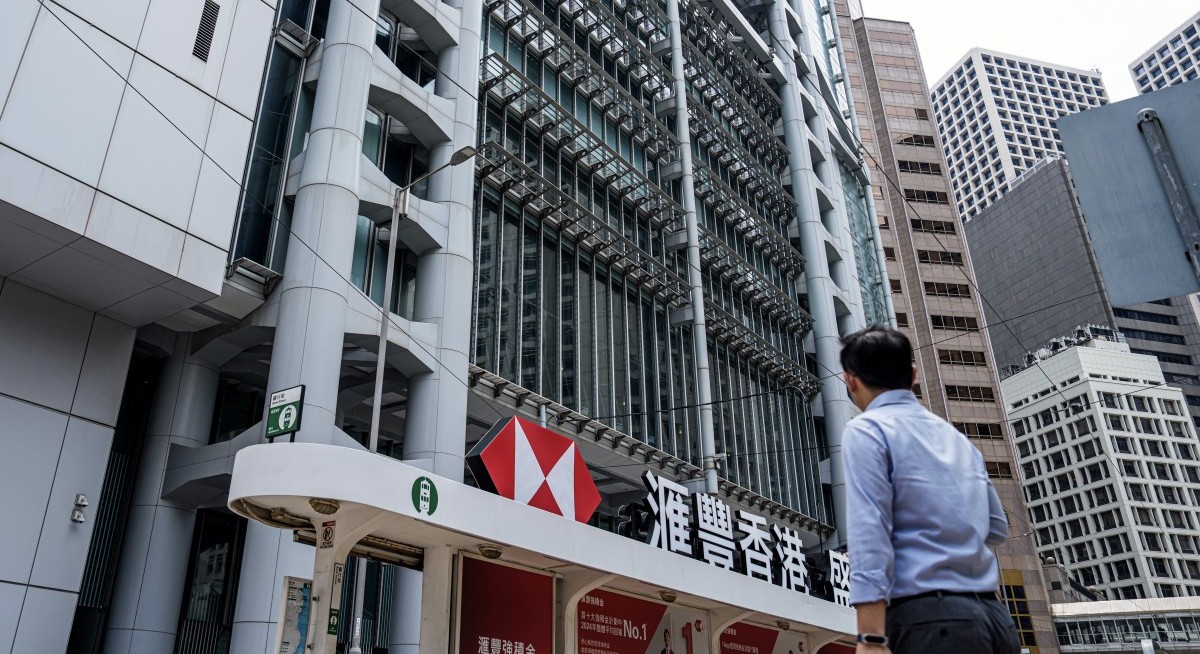


The group is currently carrying out targeted strategic reviews of its retail businesses in Indonesia, Australia and Egypt, in addition to its insurance business in Singapore (HSBC Life Singapore), but no decisions — including on whether to sell — have been made.
Group CEO Georges Elhedery, who was in Kuala Lumpur early last week on his first official visit since taking the helm in September 2024, stresses that Asia — along with the Middle East — remains central to HSBC’s strategy.
Providing insight into the rationale for business exits, he says the group’s priority wherever it operates is to hold a leading position in its businesses: ideally No 1 and at the very least among the top three.
“So, we’re looking at our businesses and evaluating where it is that we are the best at what we do, and we double down on that. And, if there are areas where we realise we are actually not even in the top five, then we reconsider — either we invest to be in the top five, or we think this is an opportunity for someone else who can better invest in it,” Elhedery, 52, tells The Edge in an exclusive interview at HSBC’s head office in Tun Razak Exchange.
See also: RM80 bil Johor Tech Smart City to anchor AgTech and AI development in Kulai
According to him, there are no other countries in which HSBC is currently mulling options for its retail business, apart from the ones already announced — that is, Indonesia, Australia and Egypt. HSBC would retain its corporate and institutional banking (CIB) operations in those markets even if it does end up exiting retail banking there.
Elhedery spearheaded a restructuring of HSBC shortly after taking the reins in a bid to simplify and refocus the group on its strongest businesses and regions, while cutting costs and exiting lower-return activities.
This resulted in HSBC being organised around four businesses since January 2025: its Hong Kong and UK operations — regarded as the home markets; CIB, its largest earnings contributor; and international wealth and premier banking (IWPB).
See also: Resorts World Sentosa suit: Malaysian court rules gambling debt not enforceable
“In Malaysia, in terms of CIB, we’re probably the best at what we do. In terms of the retail bank, our focus has been to be a premier and wealth bank — so, a bank that services the middle class, the affluent, with capabilities that are quite unique. And in doing [that], we can easily be the best international bank, if we’re not already, and we think that’s a very valuable proposition,” Elhedery says, when asked whether HSBC may be considering a sale of its retail assets in Malaysia.
“It’s a repositioning of our opportunity in Malaysia, which has been going on for a number of years, [as opposed to an exit],” he says of the retail business. There are currently two wealth centres in Malaysia, with another two expected to be added by year’s end.
With its 142-year history in Malaysia, HSBC is one of the country’s longest-serving foreign banks. It opened its first office in Penang in 1884, mainly to support trade flows between the country, China and other regional markets.
HSBC has invested capital of more than RM13 billion ($4.2 billion) in Malaysia, including more than RM1 billion in its head office in TRX. The group expects to deploy additional capital of RM1 billion into the Malaysian business over the next three years as it looks to uplift its technology infrastructure, expand wealth centres and further support clients’ financial needs.
Last month, Bloomberg reported that several major Asian banks, including Singapore’s three banks (DBS Group Holdings, Oversea-Chinese Banking Corp and United Overseas Bank) and Malaysia’s CIMB Group, were preparing to submit offers for HSBC’s retail banking business in Indonesia. A transaction might value the assets at more than US$200 million ($256 million), with formal bids expected by mid-March, it said, citing unnamed sources familiar with the matter.
Elhedery notes that HSBC has yet to make a decision on whether to sell the Indonesian retail business, neither has it set a timeline to conclude any of its strategic reviews.
“We’ll be making these decisions at pace. So, I have to take the time it takes, but we’ll do it as fast as we can following due process,” he states.
To stay ahead of Singapore and the region’s corporate and economic trends, click here for Latest Section
UK-based Elhedery plans to spend the next few months in Asia, operating from the group’s Hong Kong office while travelling to other markets. “It’s proper time spent in Asia, as an illustration of the importance of Asia [for us],” he says. “About a third of the group profits [come] from Hong Kong, and about 20% come from the UK. So, between these two, about 50% of our profits come from the home markets. Asia ex-Hong Kong is a major contributor of the remaining 50%.”
In February, HSBC reported a profit before tax (PBT) of US$29.9 billion for the financial year ended Dec 31, 2025 (FY2025), down about 7% from US$32.3 billion in FY2024. The CIB business contributed the most (or US$11.4 billion) to PBT, followed by the Hong Kong operations (US$9.6 billion), the UK operations (US$6.7 billion) and IWPB (US$4.4 billion). Profit after tax in FY2025 stood at US$23.1 billion compared with about US$25 billion the previous year.
The drop in its bottom line was due mainly to one-off charges, restructuring costs and impairment losses of US$2.1 billion related to China’s Bank of Communications, in which HSBC has a stake. The group’s underlying business performance, however, remained solid.
HSBC’s return on average tangible equity (RoTE) — a key financial metric that measures how much profit it generates relative to its tangible equity — was 17.2% (15.6% in FY2024), excluding the impact of notable items.
Given the better-than-expected performance, it set a more ambitious RoTE target of at least 17% every year from 2026 to 2028, excluding notable items. (A year earlier, it had a “mid-teens” target, excluding notable items.)
It is also aiming for year-on-year revenue growth over the same period, rising to 5% growth in 2028 compared with 2027, excluding notable items and on a constant currency basis. It expects its dividend payout ratio to be maintained at 50%.
The Middle East challenge
Just three days after HSBC announced its results and raised its targets on Feb 25, however, the US and Israel launched large-scale airstrikes on Iran. This has since erupted into a wider conflict in the Middle East as Iran retaliated in some parts of the region, sending oil prices skyrocketing. Brent crude was trading slightly above US$100 a barrel on March 13, from around US$73 before the war.
HSBC, which bets on the Middle East’s increasing trade and investments in Asia and other markets to fuel its growth, has a presence in nine countries there — Qatar, Oman, Bahrain, Egypt, Kuwait, Algeria, Saudi Arabia, Tűrkiye and the United Arab Emirates.
Elhedery describes the events in the Middle East as “distressing”, but adds that the group’s conviction in the Gulf Cooperation Council’s (GCC) fundamentals and its future is “unchanged”.
In terms of HSBC’s financial exposure to the Middle East, he says: “There is no concern with that because we think the structural [growth] and the fundamentals of the GCC, in particular, are strong and they will see through this crisis, which, hopefully, is as short-lived as possible.” The group is fully engaged in supporting its colleagues, customers and partners there, he adds, with work-from-home capabilities heightened for staff.
It is understood that HSBC temporarily closed its three branches in Qatar last week in tandem with government guidelines.
JPMorgan, in a research report on March 12, sees HSBC and Standard Chartered plc as the major European banks most exposed to the conflict in the Middle East, and potentially facing the greatest earnings risk.
Its analyst forecasts that the Middle East accounts for around 4% of HSBC’s PBT and about 12% of Standard Chartered’s. He noted, however, that both lenders stand to benefit from the surge in market volatility as corporate clients move to hedge their exposure to volatile oil prices and currencies, which generate fees for the banks.
HSBC Global Investment Research’s global economic growth forecast of 2.7% for this year, set prior to the Middle East conflict, remains unchanged thus far. Its growth forecast for both Asia ex-Japan and Malaysia is 4.5%.
Over the last 12 months, HSBC shares in Hong Kong have gained a solid 51.5% to close at HK$122.50 ($20.00) on March 13, for a market value of HK$2.1 trillion (RM1.05 trillion). Its highest close during the period was HK$143.399 on Feb 27. It paid out a total dividend of 75 US cents per share last year, lower than the 87 US cents of the previous year, which had included a special dividend.
HSBC Bank Malaysia’s latest financial statements show that it registered a net profit of RM1.19 billion for the first nine months of FY2025 (9MFY2025), down slightly from about RM1.3 billion in the same period the previous year. Total assets stood at RM102.96 billion. Its wholly-owned Islamic banking subsidiary, HSBC Amanah Malaysia Bhd, made a net profit of RM274.98 million in 9MFY2025 compared with RM301.9 million in 9MFY2024.
This story first appeared in the March 16 issue of The Edge Malaysia




