


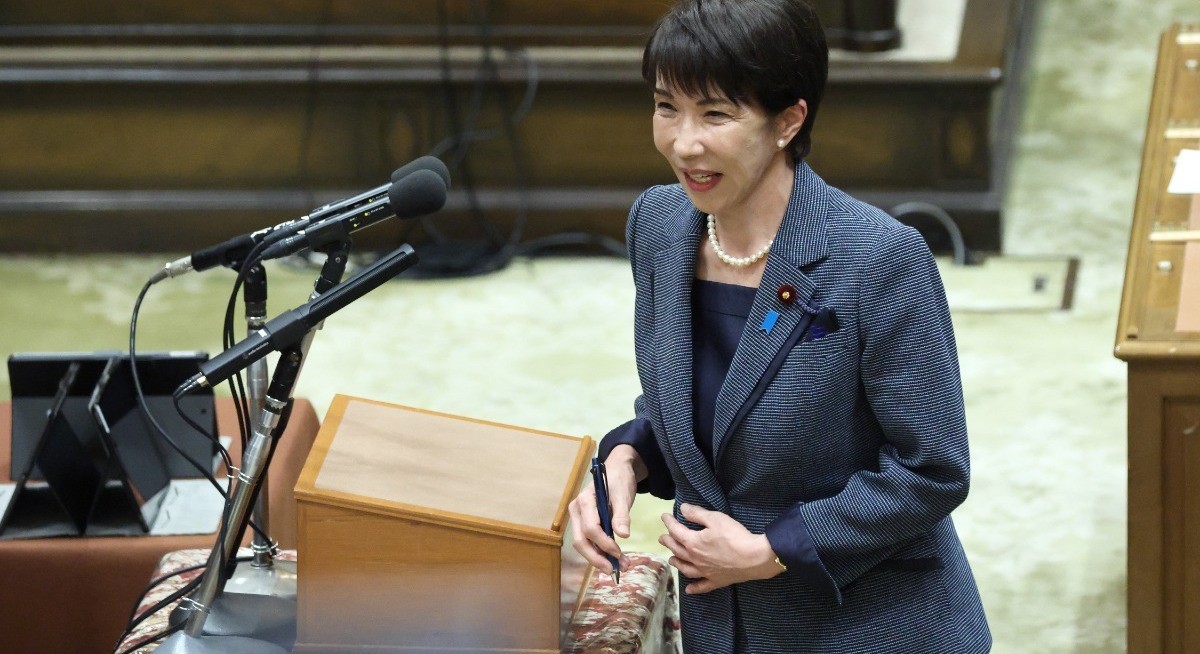


(May 25): Japanese Prime Minister Sanae Takaichi said the government will finance its extra budget without increasing bond issuance on a calendar basis, in a likely attempt to ease market concerns over government finances.
Takaichi said Monday that the supplementary budget will total just over ¥3 trillion, largely in line with a level indicated by Finance Minister Satsuki Katayama on Friday. Takaichi said the extra budget will be submitted to parliament as early as next week.
The prime minister said that some bond issuance planned under last fiscal year’s budget will likely be cancelled after accounting for higher-than-expected tax revenue and other unused spending, enabling the government to keep bond issuance unchanged on a calendar basis.
“We therefore believe this can be implemented without affecting the government bond market,” Takaichi said.

Takaichi’s remarks come as markets remain wary of expanded fiscal spending, a factor that has contributed to a selloff in Japanese government bonds alongside a broader global rise in yields fuelled by concerns over war-related inflation.
See also: Japan regulator urges firms to use cash for growth, not returns
The 10-year yield stood at 2.69% at the end of Monday afternoon in Tokyo, down a bit from a recent peak on hopes of the conflict in the Middle East de-escalating.
After repeatedly insisting that an extra budget wasn’t necessary, Takaichi shifted her stance last week. The flip-flop suggested the government was already loosening its purse strings with a supplementary budget barely a month after parliament passed the annual budget.
But so far the change of stance has been well received by the public. A Mainichi newspaper survey conducted over the weekend showed that 63% of respondents positively evaluated the decision compared with 18% who didn’t.
See also: Japan’s regional bank merger wave to create US$74 billion lender
Avoiding extra bond issuance on a calendar basis will improve the optics for investors concerned about Takaichi’s spending plans. Japan is currently reviewing revenue and expenditure data for the previous fiscal year ahead of the settlement of accounts in June.
Takaichi said steadily lowering the country’s debt-to-GDP ratio will also help maintain market trust.
The government has said the purpose of the extra budget is to cushion the blow from the war in Iran rather than stimulate the economy, with energy subsidies to be a key feature.
Takaichi already asked her government to compile the budget in such a way to ensure utility prices over the summer months are kept at levels lower than last year.
Separately, the government is offering gasoline subsidies that cap prices at around ¥170 per litre.
Takaichi said her cabinet will approve reserve fund use for electricity and gas subsidies on Tuesday and expects it to cost about ¥500 billion.
“We will provide subsidies for electricity and gas bills for the months of July through to September, when usage gets particularly high,” Takaichi said. She added that with the subsidies, the average household will save about ¥5,000 over the three months of summer.
To stay ahead of Singapore and the region’s corporate and economic trends, click here for Latest Section
“As the situation in the Middle East continues to be uncertain, we will continue to take necessary action flexibly, not limited to just electricity and gas subsidies,” she said.
Takaichi added that the government will be able to secure oil supply beyond the end of this year until next spring.
Takaichi remains broadly popular, with a recent Yomiuri survey showing that 64% support her. Despite the high approval ratings, supply-chain disruptions and the economic hurt from the Iran war appear to be at the fore of voters’ minds and will continue to test Takaichi’s leadership.
Uploaded by Arion Yeow




