




Cornerstone investors including Apricot Capital, Asdew Acquisitions, Cache Capital, ICH Synergrowth Fund, Maybank Securities (on behalf of certain high net worth clients), as well as individuals Cheah Chi Kong, Johnathan and Deepak Lakhi Ramchandani, will subscribe for approximately 29.5 million cornerstone shares.
Meanwhile, the public tranche is offered 2.0 million shares.
The IPO will close at 12.00pm on Jan 21 and the listing and trading of the shares is expected to commence on a “ready” basis at 9.00am on Jan 23.
SAC Capital is sponsor, issue manager, underwriter and placement agent for the IPO.
See also: Carlsberg said to file for India IPO to raise US$700 mil
Tan Kian Tiong, partner and head, capital markets of SAC Capital says: “The proposed listing of The Assembly Place comes at a time when Singapore’s stock market is seeing stronger momentum and active liquidity. We expect positive interest in the retail tranche of the proposed Invitation.”
Expansion plans
In a media briefing on the group’s IPO, CEO and founder Eugene Lim says that TAP is Singapore’s largest co-living operator, commanding about 34% of market share. It positions itself as Singapore’s largest and most diversified “Community Living” operator, with about 3,422 keys across 100 property assets as at Dec 17, 2025. Its main revenue driver is the Community-Driven Stays segment, which contributes more than 90% of revenue from FY2022 to FY2024.
See also: Foundation Healthcare seeks to raise $242 mil in largest SGX healthcare IPO since 2012
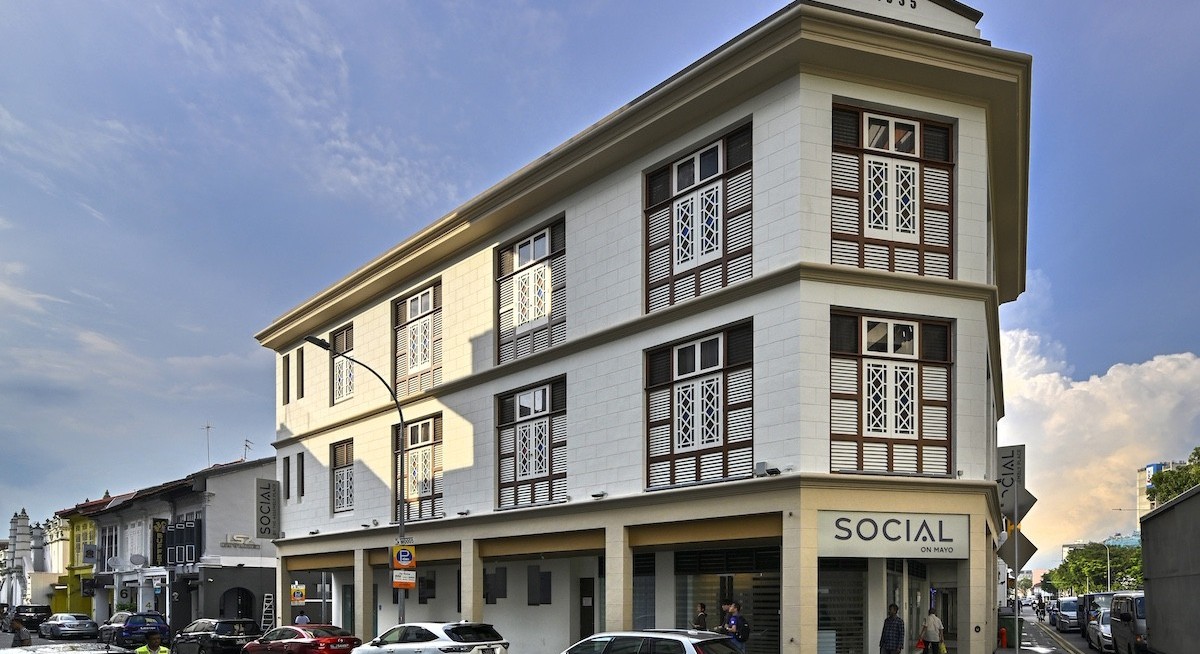
Lim explains that TAP currently has six brands across five living sectors. It has The Assembly Place, its social community living brand; Campus and Stay student accommodations; hotel and service apartment brand Social; TSTAP for healthcare professionals; and an intergenerational living concept called Commune.
The group’s expansion plans lean heavily on an asset-light model. It says this approach helped it grow from 311 keys in 2021 to about 3,422 keys by Dec 17, 2025, while maintaining financial flexibility. TAP also highlights occupancy exceeding 90% since FY2022, which it attributes to its community-led positioning and member engagement via physical communal spaces, digital channels and monthly community-wide events.
Operationally, the company is also leaning on in-house technology. TAP says it has developed its own customer relationship management system and TAP App, and that proprietary tools help it run with a lean team of just 42 employees, translating to an employee-to-key ratio of about 1:81 as at Dec 17, 2025.
Management is positioning the listing as funding for expansion, while sticking to a direct-lease, asset-light playbook and selective co-investments. Lim says: “The IPO proceeds will enable us to accelerate our growth plans and strengthen our market position by giving us capital to access new brands, new products, new markets and new customers.”
He adds that technology will remain central to scaling: “To support our portfolio expansion while maintaining our operationally lean and asset light model, we will continue to pursue direct lease agreements with property owners, and invest in digitalisation across our IT value chain, including regular upgrades to our in-house CRM and IT system and TAP app.”
In the same statement, Lim also points to the brand proposition TAP believes differentiates it in a crowded rental market. “As we begin a new chapter as a listed company, we will continue to build strong brand loyalty among our members through our community-driven approach, which has become synonymous with our brands and contributed to our performance over the years,” he says.
Lim frames digitalisation as the mechanism to grow keys without a commensurate rise in headcount, citing Singapore’s high labour costs and the need to “own the code” rather than rely on off-the-shelf systems. He says TAP expects to continue hiring post-listing, but not at a rate that matches the portfolio’s expansion, arguing that operational leverage should improve as its key count scales.
To stay ahead of Singapore and the region’s corporate and economic trends, click here for Latest Section
“The beautiful part of our business and being an asset light operator is that we are able to reach 10,000 keys and our manpower can remain the same. You can see [if and when that happens] our bottom line will improve quite significantly,” says Lim.
On growth targets, TAP says it plans to expand its portfolio to more than 10,000 keys by end-2030, via direct leasing and strategic alliances and joint ventures, including an expansion into the workers’ dormitory business. It also intends to expand into Southeast Asia, with its first stated move being a 66-key property in Bangsar, Kuala Lumpur, expected to be operated as a hotel with Community Living elements under its “Social by The Assembly Place” brand in 2026. As at Dec 17, 2025, the group says it has secured additional properties expected to add about 610 keys, including Bangsar, over the next two years.
According to the report prepared by the industry consultant, Knight Frank, prospects across the living sectors served by TAP are positive. The report estimates the addressable market value of Singapore’s residential co-living segment could reach about $9.7 billion by 2030, while hotels and serviced apartments could reach about $2.5 billion by 2030 (based on economy and mid-tier room revenue). It also estimates international student enrolment growth of 2.5% per annum over the next five years, and flags accommodation demand tied to a planned healthcare workforce of 82,000 by 2030.




