


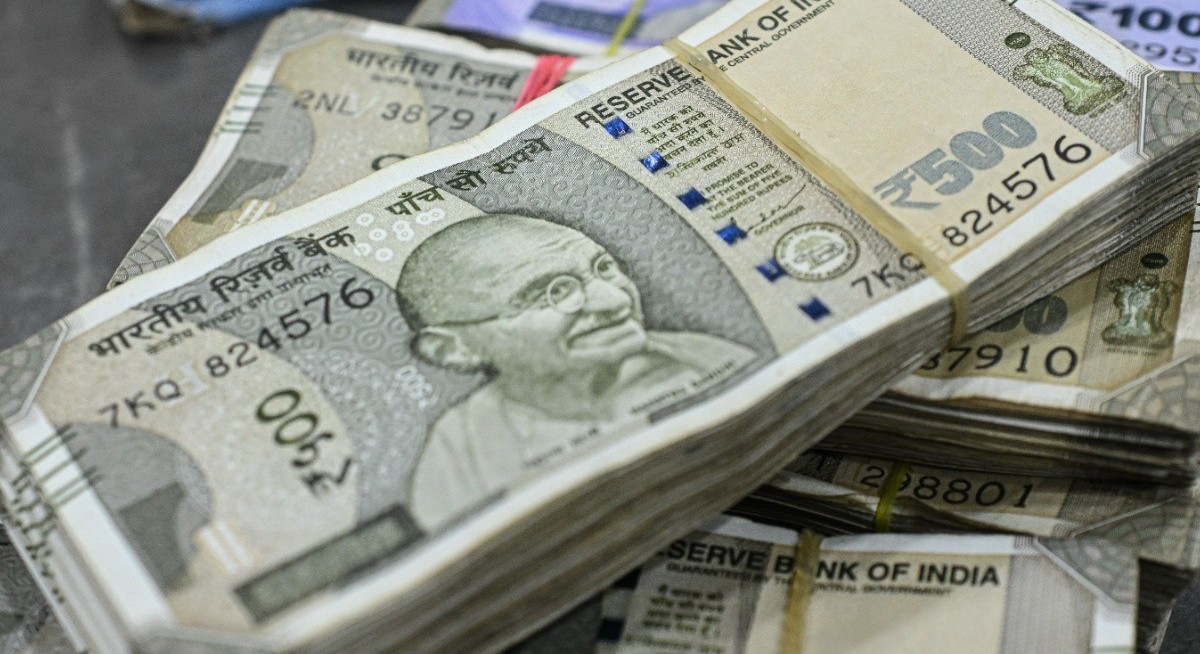


(April 2): The Indian rupee jumped by the most in over 12 years after authorities stepped up their push against speculation, extending curbs to offshore derivatives just days after tightening limits on banks’ local positions.
The rupee advanced as much as 1.7% to 93.25 per dollar on Thursday — the most since September 2013 — as currency trading resumed after a two-day break. The gains came despite a broad weakness in most regional currencies as US President Donald Trump signalled an escalation in the Iran war.
The Reserve Bank of India said late Wednesday that authorised dealers were prohibited from offering non-deliverable derivative contracts involving the rupee to resident or non-resident users. Lenders can still offer deliverable FX contracts for hedging, but users can’t offset those trades with positions taken offshore, according to the statement.
The central bank is trying to shore up the rupee by stamping out some of the most popular ways to bet against it, after direct intervention in the market failed to arrest a slide to a record low. Traders have typically used offshore derivatives known as non-deliverable forwards, and arbitrage trades — buying dollars onshore and selling them in the NDF market — to build short positions.
“This is a stronger measure to curtail the offshore speculation against the rupee,” said Dilip Parmar, a currency analyst at HDFC Securities. “I expect a sharp appreciation on Thursday.”
The new rules take effect immediately and come just days after the RBI took its boldest step in more than a decade by capping lenders’ daily onshore currency positions at US$100 million ($128.77 million). The directive sent banks scrambling to unwind about US$30 billion of arbitrage trades. People familiar with the matter estimate that between US$4 billion and US$10 billion has been unwound so far.
See also: India delays stricter trading loan rules as volatility climbs
The earlier curbs offered only brief support for the currency. The rupee initially jumped on Monday before reversing course and falling to a new low. It closed at 94.83 per dollar, with the gap between the day’s high and low the widest since 2013.
The RBI on Wednesday also instructed banks not to allow clients to rebook any FX derivative contracts — deliverable or non-deliverable — once they’ve been cancelled. Banks were also told not to undertake any FX derivative contract with their related parties.
The offshore NDF market is large and often sets the tone for rupee pricing. Average daily offshore trading in the rupee across Singapore, the UK, the US and Hong Kong was about US$149 billion in 2025, according to the Bank for International Settlements — more than double the US$72 billion traded onshore.
See also: India forces banks to unwind rupee bets, squeezing short sellers
“The latest curbs signal an attempt to ensure the exchange rate is determined in the onshore market where the RBI has better control, and to restrain speculative attacks,” said Abhishek Upadhyay, an economist at ICICI Securities Primary Dealership.
Much of the arbitrage trade still needs to be unwound before an April 10 deadline set by the authorities. Banks have sought a delay, a possibility that kept some on the sidelines earlier this week even as the RBI has shown no sign of backing down.
If the rupee remains under pressure, the RBI has other tools it can deploy, including tighter capital controls or limits on foreign investors’ ability to take money out of the country — steps that may support the currency but risk denting India’s investment appeal.
Jefferies analysts Prakhar Sharma and Vinayak Agarwal said the RBI likely acted because earlier measures had limited impact, and the latest steps make the rules more “water-tight”.
“On the back of these rules, banks expect the rupee to appreciate,” the analysts wrote in a note. “Still, we believe that sudden & retrospective changes to rules, while appropriate in the current extreme situation, may affect the depth of rupee forex trading over the medium to long term.”
Uploaded by Chng Shear Lane




