


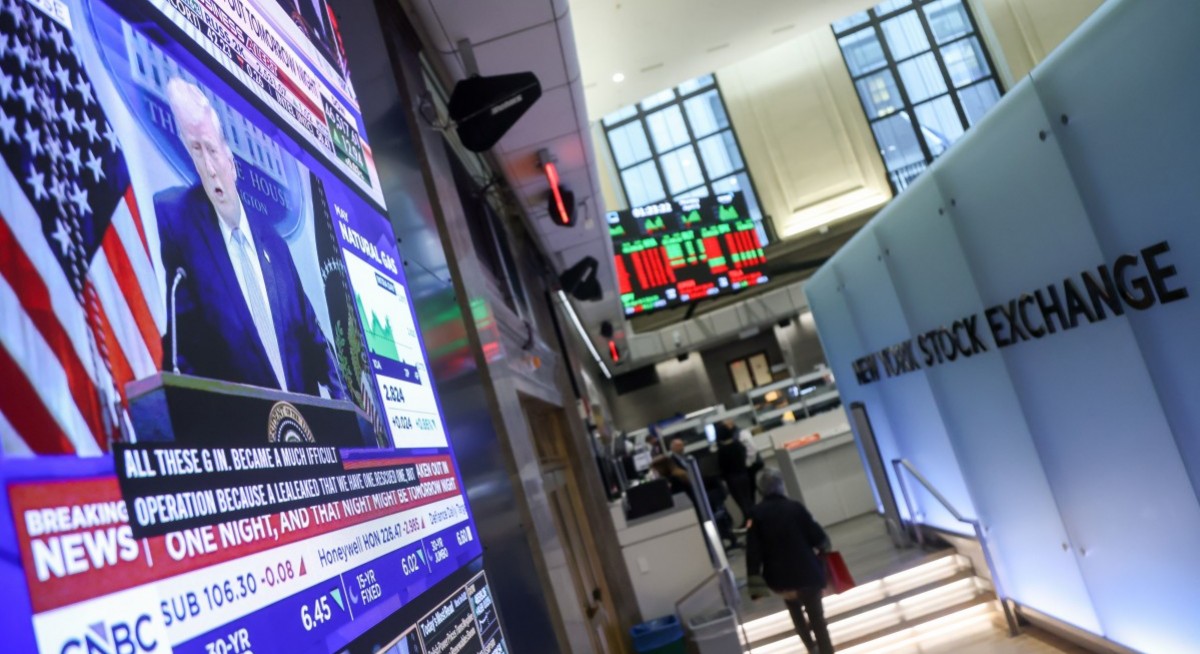


(April 13): The prospect that the Iran war will reintensify after the failure of peace talks threatens to spark fresh volatility across global markets, after a week that saw a fragile ceasefire drive stocks up and oil down by the most this year.
After the US and Iran were unable to reach a deal in negotiations over the weekend, President Donald Trump said the US will blockade the Strait of Hormuz. He posted on social media that “Any Iranian who fires at us, or at peaceful vessels, will be blown to hell!” Iran, meanwhile, said it wouldn’t allow the US to blockade the waterway, which carried about a fifth of global oil and liquefied natural gas before the conflict.
The escalating rhetoric heightens the focus on the truce between the two sides, which triggered a sharp rally for risky assets last week, with the S&P 500 Index climbing more than 3.5%, an MSCI gauge of emerging-market equities rising 7.4%, and bitcoin surging almost 10%. Futures on West Texas Intermediate oil tumbled 13.4% through last Friday, while Brent ended at around US$95 a barrel, down from roughly US$112 in March.
Trading resumes in earnest for US stocks, Treasuries and oil at 6pm New York time on Sunday. In early trading in Sydney to start the week, haven demand boosted the US dollar against major peers.
“The ‘peace dividend’ many traders priced in last Thursday and Friday is likely to evaporate” at the start of this week, said Francis Tan, Asia chief strategist at Indosuez Wealth in Singapore. “The failure of the talks shifts the mood back to defensive.”
Trump said the US will interdict any vessel that has paid a toll to Iran for safe passage through Hormuz and will clear mines in the strait. US forces will begin implementing a blockade of all maritime traffic entering and leaving Iranian ports on Monday at 10am New York time, the US Central Command said.
See also: Oil surges, US futures drop on Hormuz blockade
A blockade will add pressure to global oil markets by choking off the remaining trickle of shipments that have continued to move through the waterway.
Iran’s Islamic Revolutionary Guard Corps said any military vessels attempting to approach the strait “under any pretext” would be considered a violation of the ceasefire, according to Iranian state TV. Separately, Iran’s military adviser to the Supreme Leader said the country’s armed forces won’t permit the US to blockade the strait.
Investor calculus
See also: Abbott jury awards at least US$53 mil in infant-formula trial
Handicapping how markets will react to headlines has been a fraught process since the conflict erupted at the end of February. Big swings have been common as the US and Iran postured for negotiating advantage.
“Most investors that I know haven’t cut their positions — they are staying in the market but avoiding hard directional bets,” said Christophe Boucher, the chief investment officer of ABN Amro Investment Solutions in Paris. “It’s a tricky situation as the downside potential is quite steep but one can’t afford to miss a rebound.”
Adding to the potential for turbulence, first-quarter earnings season is about to start in the US, with analysts projecting S&P 500 profits will rise about 12% from a year earlier, the weakest since the second quarter of 2025. Goldman Sachs Group Inc kicks off the US reporting season on Monday.
Investors are eager to hear what corporate leaders have to say about the mounting risks, which include hotter inflation as a result of the war-sparked surge in oil, and the threat that consumers start to pull back. Data last Friday showed US consumer prices jumped the most since 2022, although the core measure was relatively tame, while consumer sentiment slumped.
Even as the fragile ceasefire sent traders back into risk assets last week, Wall Street strategists were warning that the war had already exacted a big enough toll on inflation, energy supplies and central banks’ ability to act that no quick fix was likely.
Fed implications
Speaking before the weekend’s news, Alexandra Wilson-Elizondo, Goldman Sachs Asset Management’s global co-head and co-chief investment officer of multi-asset solutions, said the Federal Reserve is likely to remain “firmly on hold” until clear evidence emerges on the direction of growth and inflation, though she still expects policymakers to cut interest rates before year-end.
To stay ahead of Singapore and the region’s corporate and economic trends, click here for Latest Section
Against that backdrop, higher bond yields are starting to look appealing to some investors. Two-year Treasuries, the coupon most closely attuned to expectations for Fed policy, yield around 3.8%, up nearly half a percentage point since the war began.
“We think the market has created opportunities to start dipping our toes back into fixed income, particularly in the US,” Wilson-Elizondo said. “Yields are a strong indicator of forward returns over the medium to long term.”
In other trading, Hungary’s currency gained after Prime Minister Viktor Orban conceded defeat in a landslide victory for the pro-European opposition in Sunday’s election. The result is seen as a bullish outcome, as it’s expected to help unblock access to billions of euros in European Union financing.
Uploaded by Isabelle Francis




