


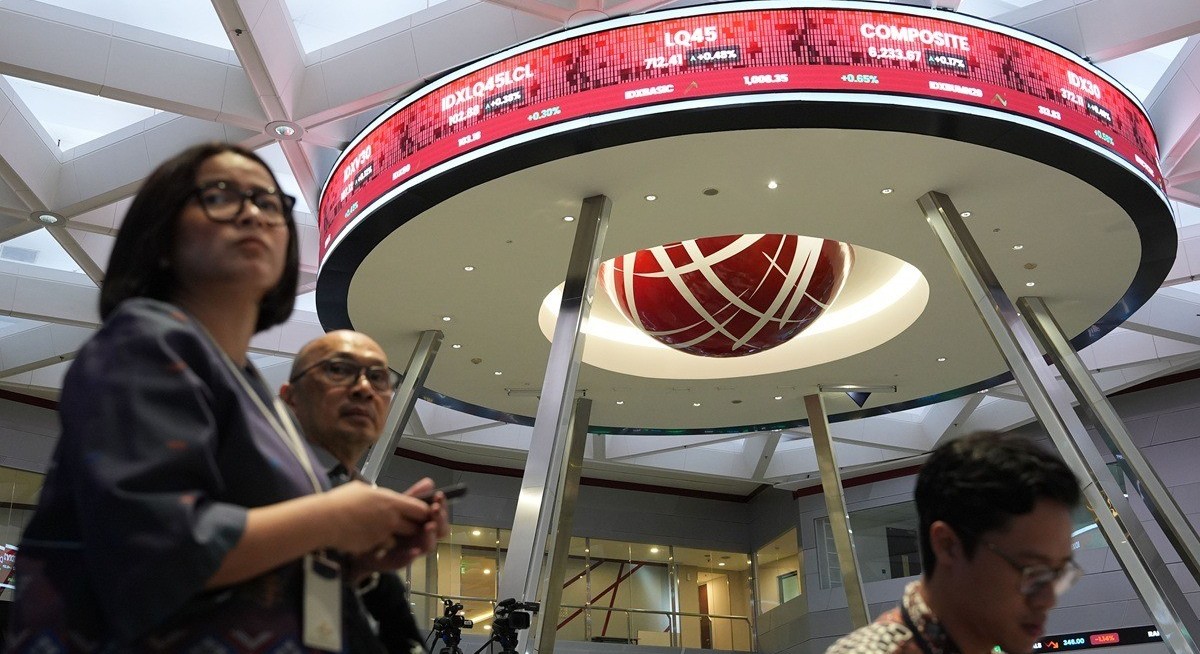


(June 19): MSCI Inc’s latest review of Indonesia’s market accessibility signalled to many investors that the risk of a downgrade to frontier-market status remains low, despite the index provider’s concerns over transparency and information flow in the world’s worst-performing stock market.
MSCI downgraded Indonesia’s assessment on information flow to negative on Thursday, citing limited transparency in shareholding structures, coordinated trading behavior that undermines price formation and a lack of corporate disclosure in English.
Other accessibility criteria were left unchanged, a result that some market participants viewed as reducing the likelihood of a broader market reclassification. MSCI’s annual accessibility review was based on data and market conditions as of May 31.
“The review highlights areas to fix, but it does not, in our view, build a credible case for frontier reclassification,” said Mohit Mirpuri, a partner of SGMC Capital Pte Ltd in Singapore. “Indonesia still scores strongly on key accessibility areas”, with only the information flow measure deteriorated, he said.
In response to the MSCI report, the Indonesian market regulator said it viewed the findings “as part of a constructive evaluation process and in line with the capital market reform agenda” authorities are implementing.
The Financial Services Authority will continue to closely work with MSCI, FTSE Russell, other index providers, and global investors to promote a clear understanding of the reforms already introduced and those in progress, it said.
See also: Indonesia taps insider to revive world’s worst stock market

Indonesian stocks swung between gains and losses on Friday, suggesting caution among investors ahead of MSCI’s market classification decision expected later this month. The benchmark Jakarta Composite Index was down 0.4% by 10.30am local time, erasing gains of as much as 0.7% in early trading. The rupiah fell 0.4%, trimming a weekly gain.
Uncertainty over the Southeast Asian market has lingered for months since MSCI cautioned of a possible downgrade to frontier status. Its earlier warning of a potential downgrade triggered a sell-off in shares and prompted regulators to roll out a series of reforms aimed at increasing market transparency. In its latest effort to bolster investor confidence, the country on Thursday tapped capital markets veteran Jeffrey Hendrik to lead its stock exchange.
See also: Vietnam stocks see biggest foreign inflows in nearly six years
The stocks have tumbled about 28% this year as traders fretted over potential MSCI downgrade and grappled with uncertainty surrounding President Prabowo Subianto’s economic policies and communication. The equity sell-off has also spread to the rupiah and government bonds, with foreign investors pulling a net US$4.2 billion ($5.4 billion) from stocks and bonds this year.
Some analysts warned that Indonesia could face as much as US$13 billion in outflows from global funds if MSCI downgrades the country to frontier-market status from emerging.
Currency pressure
“If Indonesia is downgraded, the outflows would be sufficient to drive the rupiah above 18,000 under current market conditions,” said Abbas Keshvani, an Asian macro strategy director at RBC Capital Markets in Singapore, in a note.
Since MSCI’s warning in January, the index provider has removed several stocks with highly concentrated ownership after regulators identified nine firms with elevated shareholder concentration.
The key risk from MSCI’s latest report “is not a classification downgrade, but a higher risk premium being assigned to Indonesia,” said Liza Camelia Suryanata, the head of research of PT Kiwoom Sekuritas Indonesia. “Until meaningful improvements are seen in transparency, free float quality and market integrity, foreign investors may continue to maintain an underweight stance.”
Uploaded by Tham Yek Lee




