


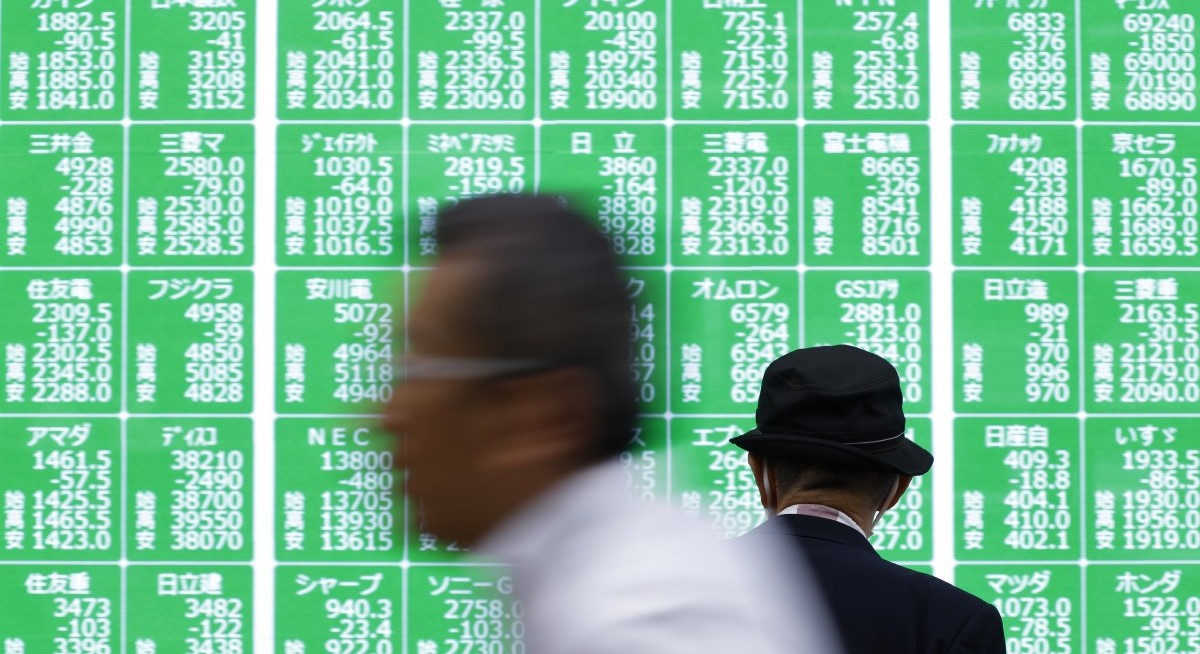


(March 3): Asian stocks opened lower Tuesday as a surge in oil prices linked to the Middle East conflict fuelled inflation concerns, sinking bonds and prompting traders to scale back bets on interest-rate cuts. The dollar and gold gained on haven demand.
The MSCI Asia Pacific Index fell 0.8%, with the Kospi gauge in South Korea — the world’s second best-performing market this year — falling 1.1% upon return from a long weekend. Futures contracts for the S&P 500 Index and the Nasdaq 100 also edged lower in early Asian trading after the underlying gauges erased initial losses to close little changed on Monday.
Traders remained focused on oil, with West Texas Intermediate crude building on Monday’s gains to trade over US$71 a barrel as Tehran threatened a full closure of the Strait of Hormuz — a crucial waterway for the movement of oil. European natural gas prices also soared as Qatar shut the world’s largest LNG export plant.
Yields on the benchmark 10-year Treasury edged up to 4.04% as concerns that rising energy costs would fan inflation prompted traders to curtail expectations of easing by the Federal Reserve.
Traders are now fully pricing in a first US rate cut in September, with expectations for a third reduction in 2026 nearly fading. That shift comes on top of global equity markets already unsettled by the billions companies are pouring into artificial intelligence and concerns over the technology’s disruptive impact.
“There are more questions than answers right now,” said Chris Larkin at E*Trade from Morgan Stanley. “A stabilising energy picture could have a positive ripple effect, while concerns about a longer-term disruption could have the opposite.”
See also: Wall Street turns to ‘haven-first’ strategy amid Iran crisis
As US-Israeli strikes on Iran reverberated across the Middle East, President Donald Trump insisted there was no fixed timeline, while Defense Secretary Pete Hegseth rejected the idea of an “endless” war with Iran.
Secretary of State Marco Rubio said the US military would step up its attacks against Iran and “the hardest hits are yet to come from the US military”. The next phase will be even more punishing on Iran than it is right now, he added.
As investors pared risk, haven assets drew fresh demand. Gold rose 0.6% to US$5,355 an ounce and silver climbed 1.6% to trade above US$90 an ounce. The Bloomberg Dollar Spot Index held its gains from the prior session, when it advanced 0.7%.
See also: Asian equities poised for best February on record
In other corners of the market, Australia’s 10-year yield jumped early Tuesday, as Reserve Bank Governor Michele Bullock said the central bank was “very alert” to the potential implications for inflation expectations from the Middle East conflict and is “well positioned” for a policy response if required.
Japan’s five-year bond yields also rose more than five basis points to 1.585%.
Meanwhile, the recovery in major equity indices in the US from session lows suggests that, for now, the market views the conflict as a relevant geopolitical risk, but one that remains financially contained in the immediate term, according to Antonio Di Giacomo at XS.com.
Morgan Stanley strategists led by Mike Wilson see the conflict as unlikely to derail their bullish view on US stocks, barring a sharp and sustained surge in oil.
“In the end, the Iran military action should remove major uncertainty in the world, and the stock market is expected to have a relief rally as new, pro-Western leadership in Iran emerges and crude oil exports resume,” said veteran strategist Louis Navellier.
Corporate highlights:
- Blackstone Inc is allowing investors to redeem a record 7.9% of shares from its flagship private credit fund, the latest sign of unease in an industry that’s faced a wave of withdrawals.
- US officials are considering caps on the number of AI accelerators Nvidia Corp can export to any one Chinese company, which would further constrain the chipmaker’s reentry into a crucial market.
- Fitch Ratings downgraded Paramount Skydance Corp’s corporate and long-term borrower ratings to junk following the media company’s agreement to buy larger rival Warner Bros Discovery Inc.
- Anthropic PBC’s artificial intelligence chatbot Claude and related consumer-facing applications went down on Monday, with the startup saying it has been grappling with “unprecedented demand” for its services over the past week.
- Nvidia agreed to invest US$4 billion in two companies that develop data centre optics that are essential for artificial intelligence.
- Apple Inc unveiled the iPhone 17e, the latest version of its lower-end smartphone, and a faster version of the iPad Air.
- BlackRock Inc’s Global Infrastructure Partners LP and EQT AB agreed to buy AES Corp for about US$10.7 billion in cash as the market heats up for power plant developers that can provide electricity for AI data centres.
To stay ahead of Singapore and the region’s corporate and economic trends, click here for Latest Section
Some of the main moves in markets:
Stocks
- S&P 500 futures fell 0.3% as of 9.42am Tokyo time
- Hang Seng futures rose 0.9%
- Nikkei 225 futures (OSE) fell 0.7%
- Japan’s Topix fell 1%
- Australia’s S&P/ASX 200 fell 0.8%
- Euro Stoxx 50 futures were little changed
Currencies
- The Bloomberg Dollar Spot Index was little changed
- The euro was unchanged at US$1.1688
- The Japanese yen was little changed at 157.46 per dollar
- The offshore yuan was little changed at 6.8944 per dollar
- The Australian dollar was little changed at US$0.7099
Cryptocurrencies
- Bitcoin fell 0.4% to US$69,150.09
- Ether fell 0.3% to US$2,038.50
Bonds
- The yield on 10-year Treasuries was little changed at 4.04%
- Japan’s 10-year yield advanced five basis points to 2.110%
- Australia’s 10-year yield advanced 10 basis points to 4.74%
Commodities
- West Texas Intermediate crude rose 0.2% to US$71.36 a barrel
- Spot gold rose 0.6% to US$5,353.68 an ounce
Uploaded by Chng Shear Lane




